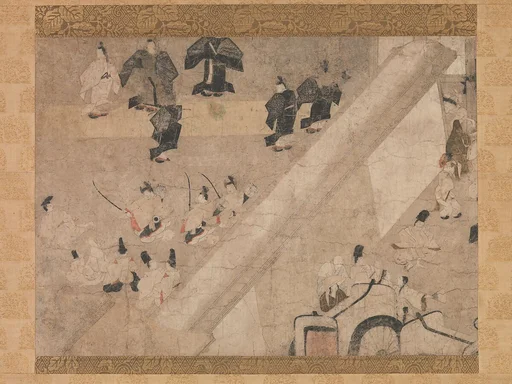
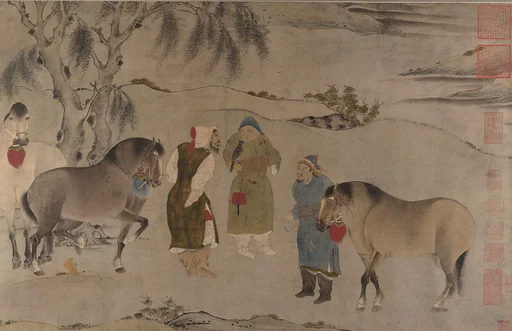
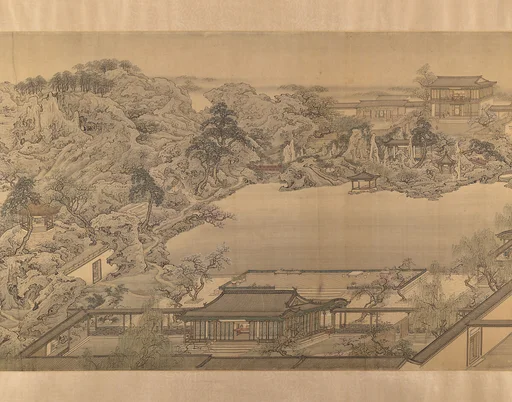
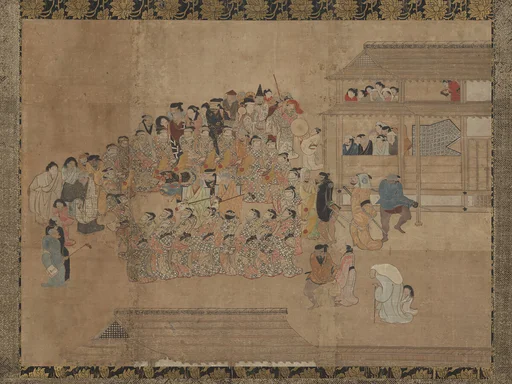
明 佚名 胡笳十八拍圖 卷|Eighteen Songs of a Nomad Flute: The Story of Lady Wenji
Unidentified artist
early 15th century · Handscroll; ink, color, and gold on silk · Asian Art
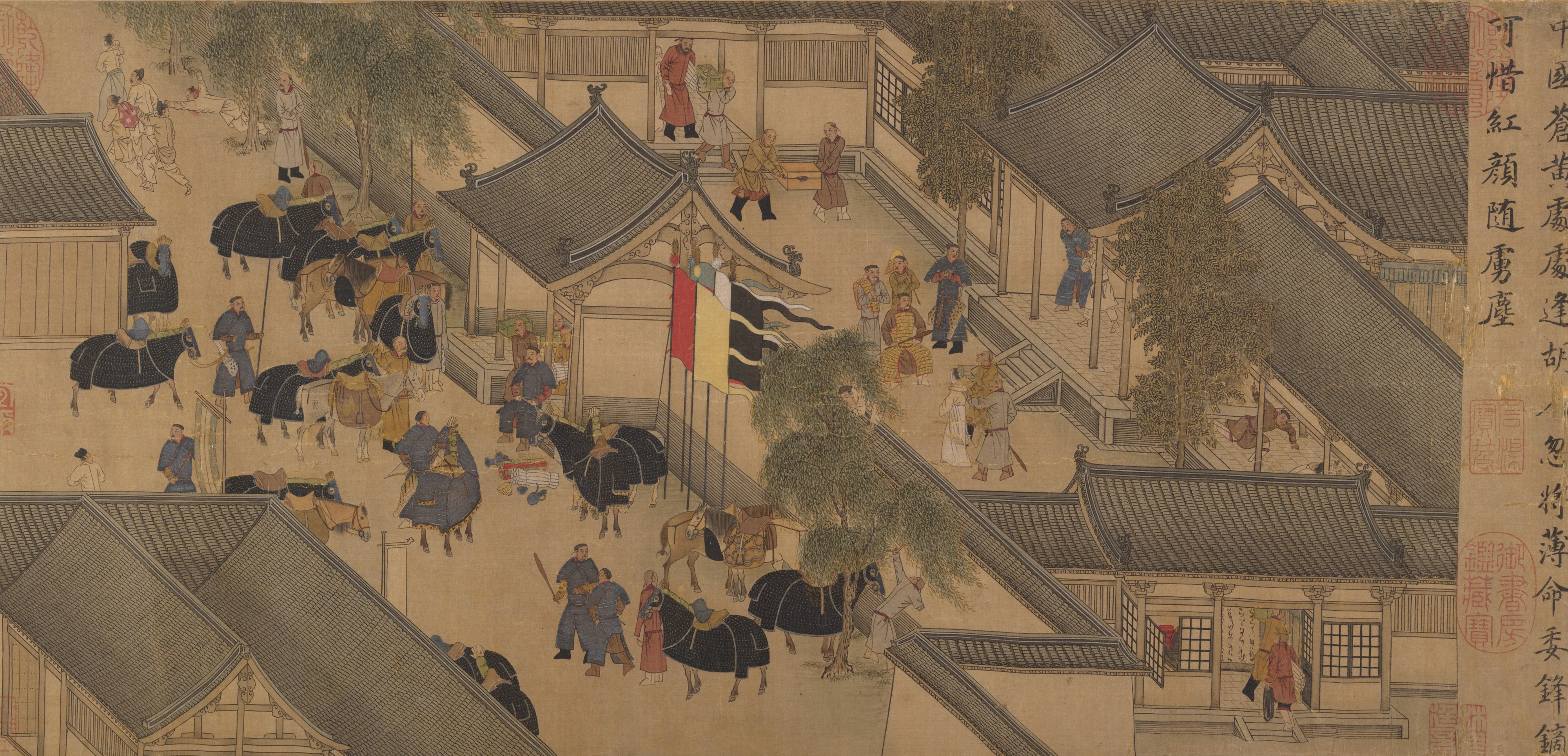
Represented here are scenes from the life of Lady Wenji (Cai Yan), who was abducted by a horde of marauding barbarians about A.D. 195 and spent twelve years among the Xiongnu, a Mongol tribe, as wife of their chieftain. She bore him two children before she was finally ransomed and returned to China. The Southern Song emperor Gaozong (r. 1127–62) probably ordered the story illustrated as a reminder of the capture of his kinfolk by the Jurchen Jin. In this scroll, the costumes of the nomad invaders are those of the Khitan people, who established the Liao dynasty (907–1125) in northeastern China. To the early Southern Song viewer, Eighteen Songs, which presents a historical drama in contemporary details, did not represent a mere historical romance but a true, pervasive national trauma. The illustrations to the third, fifth, thirteenth, and eighteenth songs in the Metropolitan's scroll—the oldest of five known versions that illustrate all eighteen of the songs—are almost exact copies of four album leaves in the Museum of Fine Arts, Boston. The Boston fragments appear to be all that is left of the original twelfth-century scroll. The texts of the songs, composed by Liu Shang (act. ca. 773), are inscribed in the calligraphic style of Emperor Gaozong
- Artist
- Unidentified artist
- Date
- early 15th century
- Medium
- Handscroll; ink, color, and gold on silk
- Culture
- China
- Department
- Asian Art
- Credit line
- Ex coll.: C. C. Wang Family, Gift of The Dillon Fund, 1973