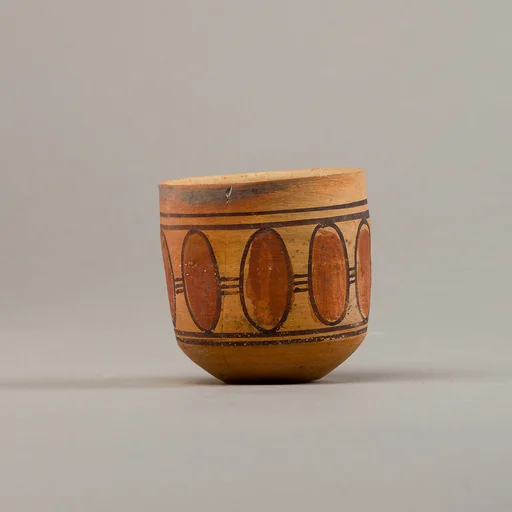
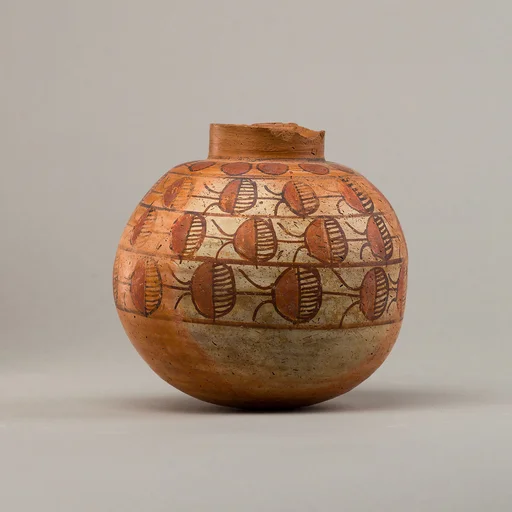
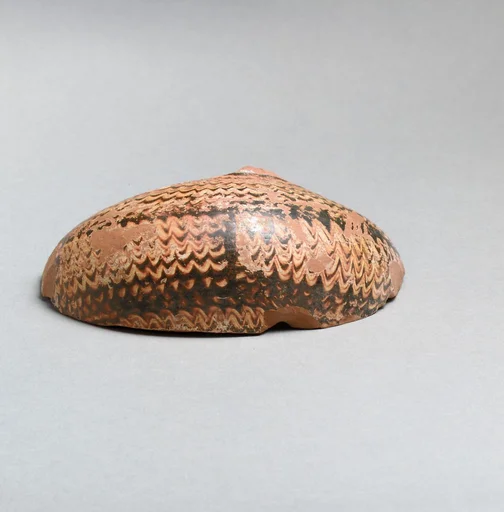
Cup with feather (?) decoration
Unknown
30 B.C.–A.D. 364 · Pottery, paint · Egyptian Art
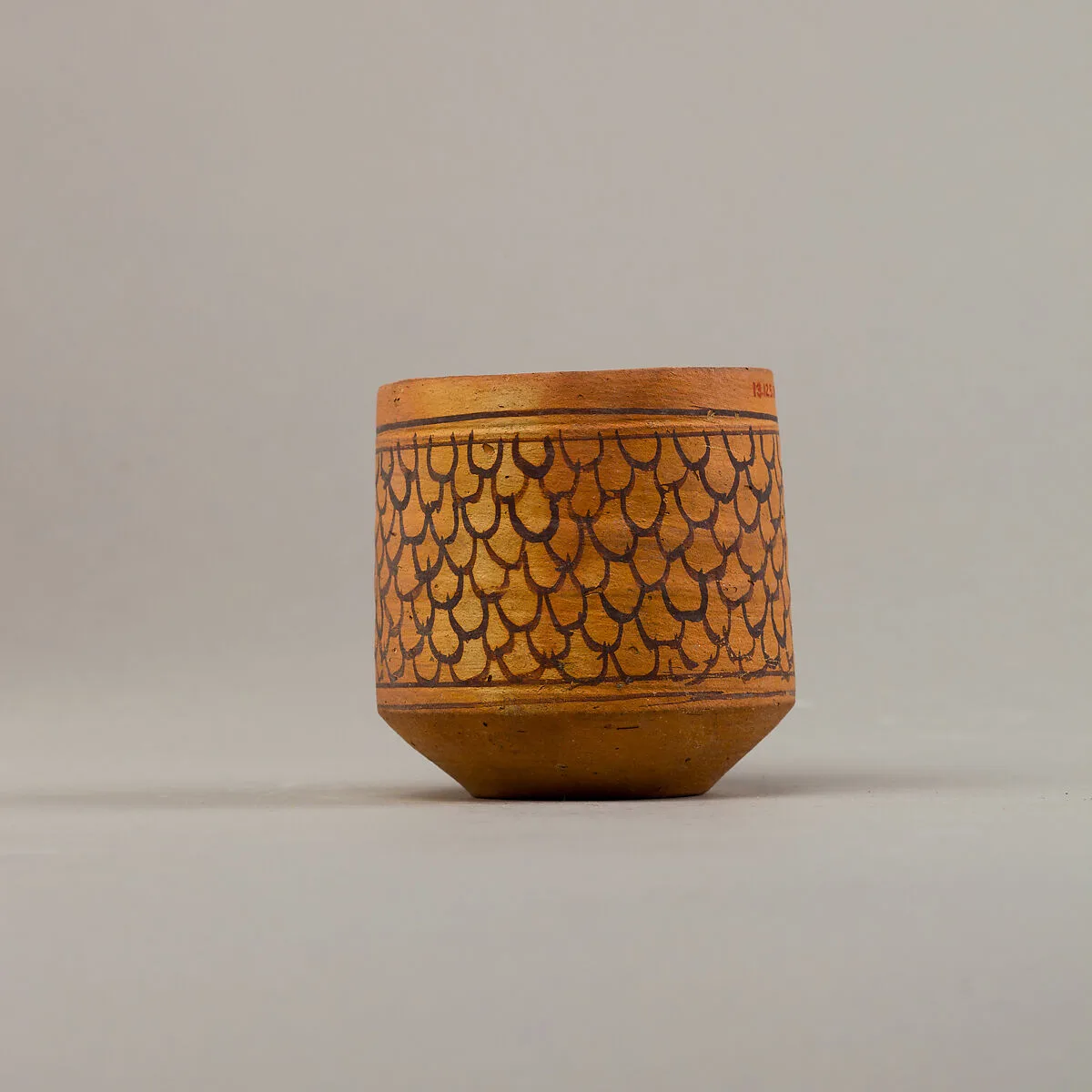
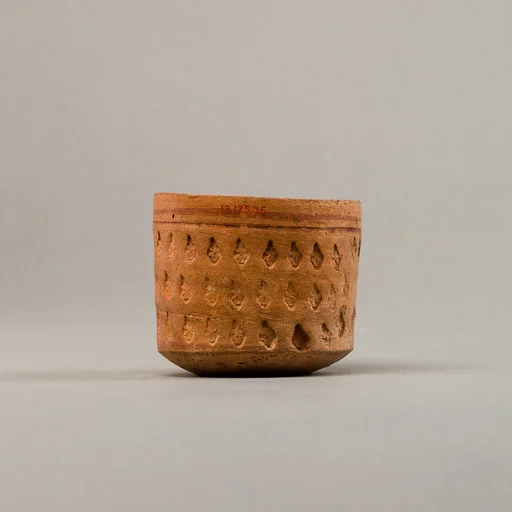
After a stable border had been established between Roman Egypt and areas controlled by Meroë, settlement in the Meroitic regions of lower Nubia intensified and economic prosperity grew. Several cemeteries of the first to third centuries A.D. have been found in this area. Inlaid woodwork, glass, metalwork, jewelry of faience, shell, metal, semiprecious stones, and politshed quartz, and a rich repertoire of pottery are characteristic objects in lower Nubian burials. Ceramics produced in Meroë are known mainly through the lower Nubian finds. Most of the pottery is painted, but stamped and barbotine (a type of applied clay decoration) wares are also represented. Among the examples of painted pottery the hands of different artists can be identified, and archaeologists have found vessels by the same painter at widely separated sites, testifying to a thriving ceramics industry and active trade, or possibly to the movement of painters. This beaker from Faras, a site north of the second cataract of the Nile, bears a feather pattern shared with Egypt.
- Artist
- Unknown
- Date
- 30 B.C.–A.D. 364
- Medium
- Pottery, paint
- Department
- Egyptian Art
- Credit line
- Rogers Fund, 1913