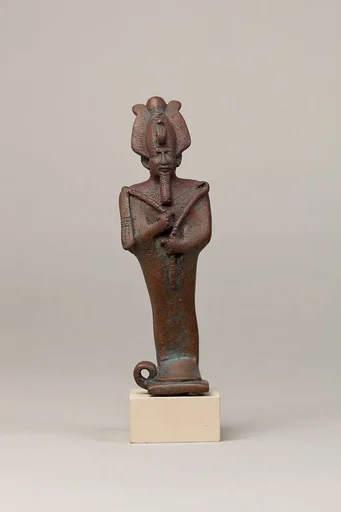
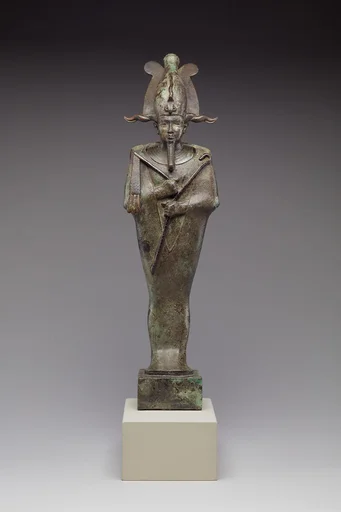
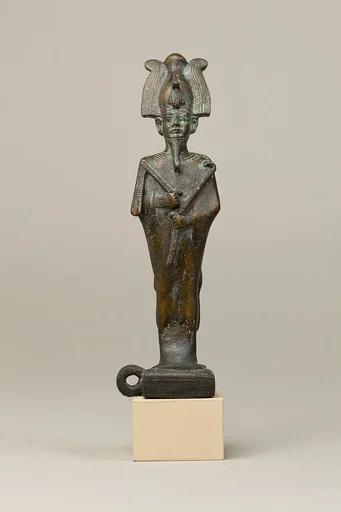
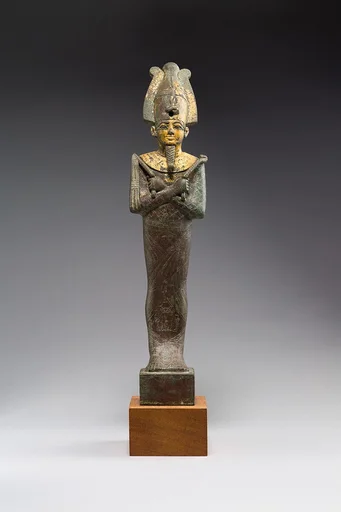
Osiris inscribed for Harkhebit, son of Padikhonsu and Isetempermes
Unknown
600–300 BC · Bronze, silver · Egyptian Art
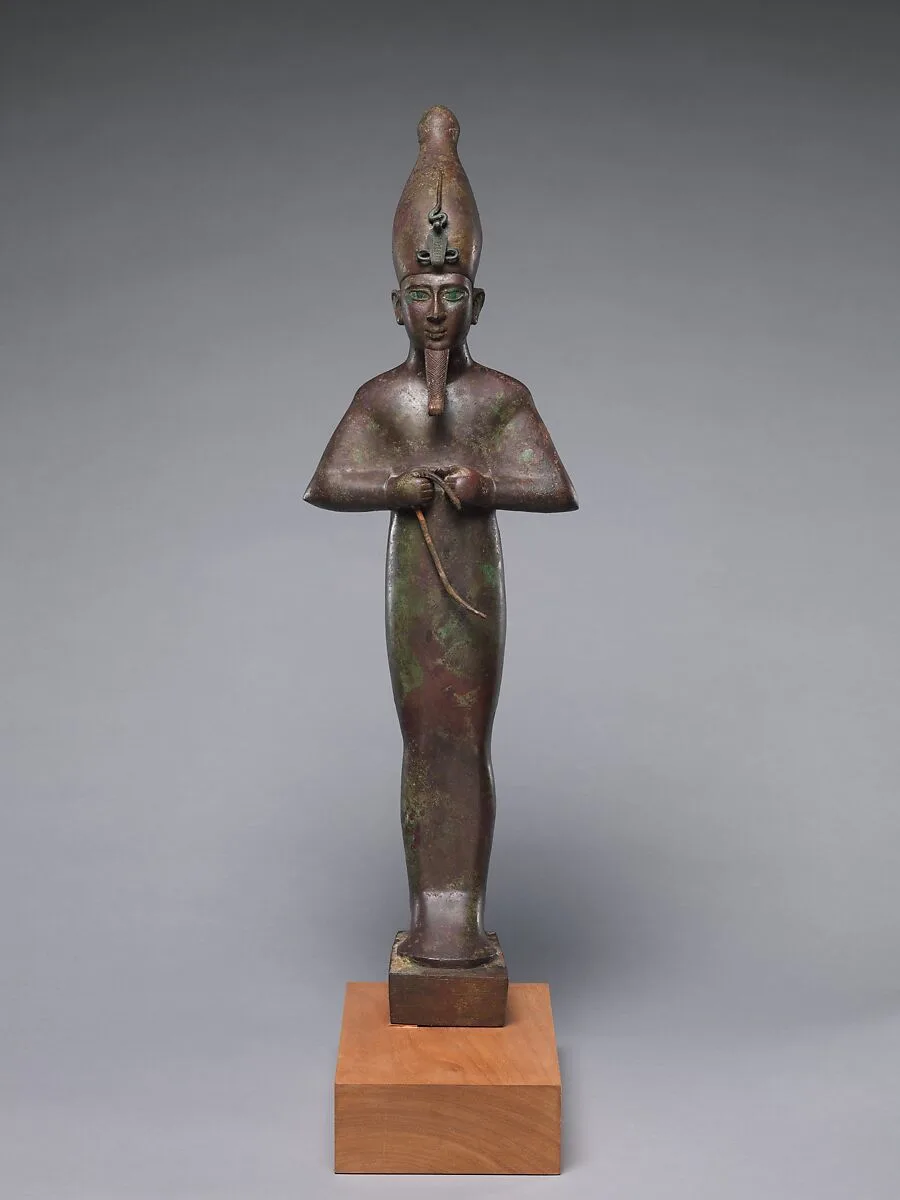
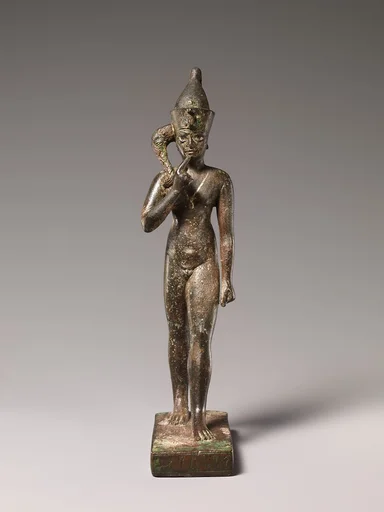
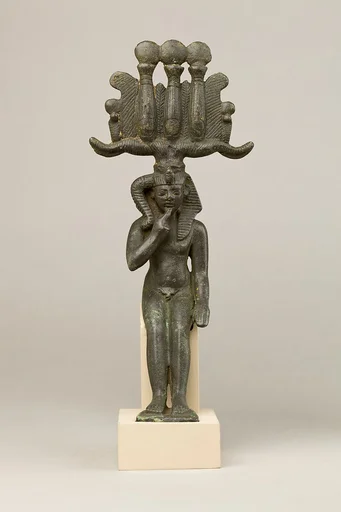
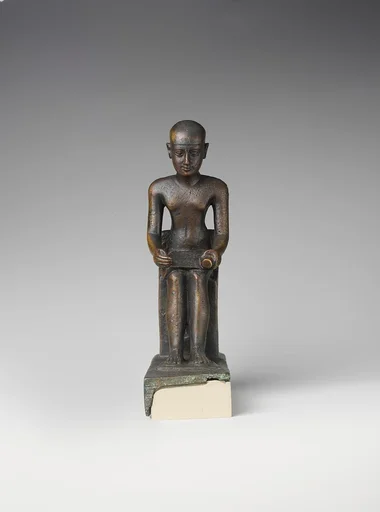
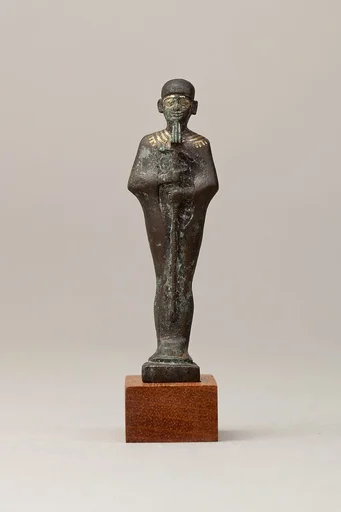
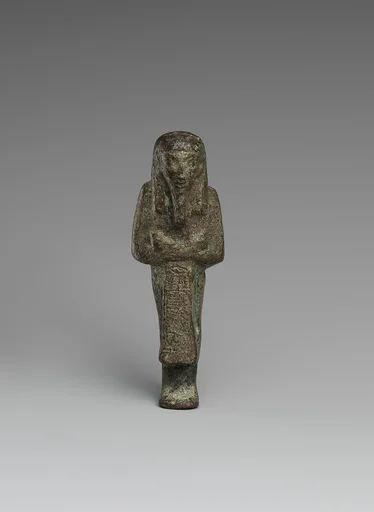
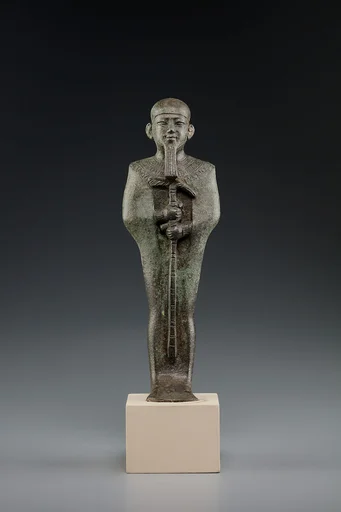
During the first millennium B.C. Osiris’s cult became dominant and was observed in seemingly every temple in the land. This large Osiris was dedicated somewhere at Memphis. After a period, which might even be hundreds of years, it was removed with other figures – including 10.175.131, .132 and .134 - for respectful burial within the temple precincts. The statue's facial features - upturned eyes and a small curved mouth - recall early to mid-Saite Period style. Various factors need consideration, but it may be that this statue, like the statue of Nefertum 10.175.131 that has similar features, dates to a period long before it was cached away, probably sometime in the fourth or third century. The name of the dedicator's mother means Isis-is-in-the-birth-house and she gave her son, the dedicator, a name meaning Horus-is-in-the-marshes, referring to Isis giving birth to Horus and concealing him in the marshes during his infancy.
- Artist
- Unknown
- Date
- 600–300 BC
- Medium
- Bronze, silver
- Department
- Egyptian Art
- Credit line
- Rogers Fund, 1910