Untitled
Unknown
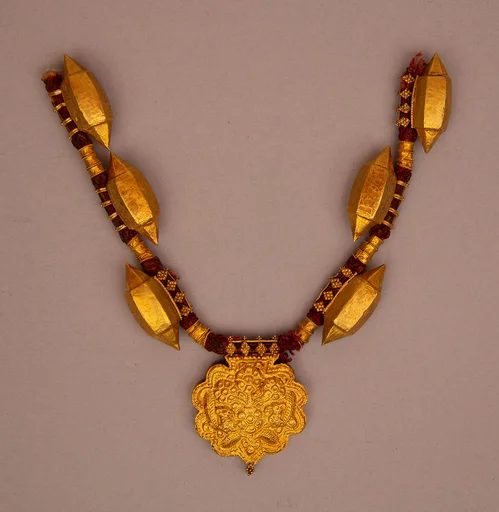
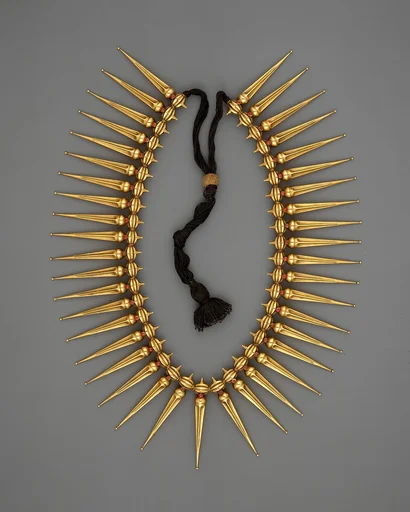
late 19th century · Gold strung on black thread · Asian Art
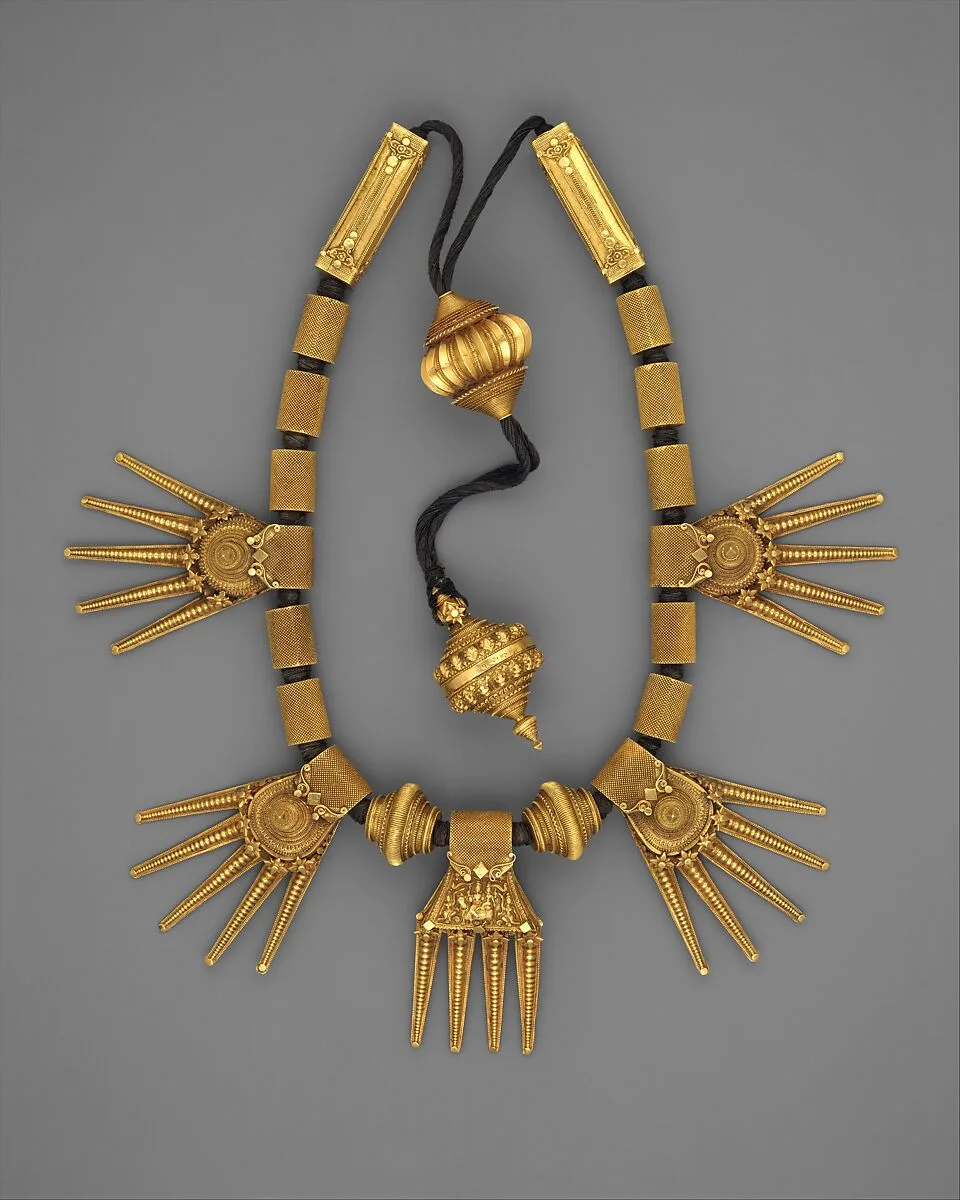
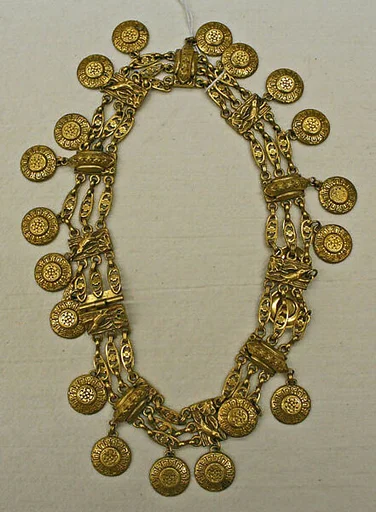
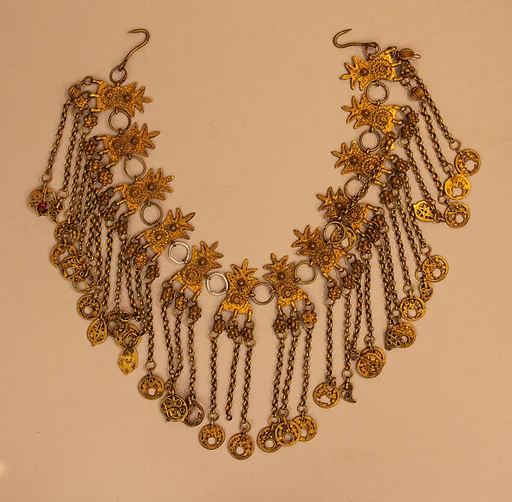
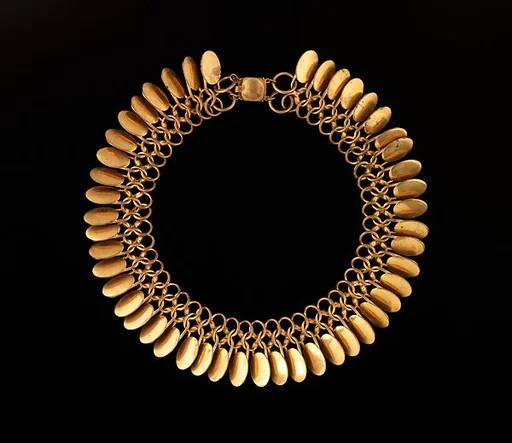
Elaborate necklaces of this type were presented by the groom’s family during wedding celebrations of the Chetiar community, a Shaivite mercantile caste, and formed part of the bride’s wealth (stridhan) thereafter. The necklace was initially part of a dowry given to the bride by the groom at a climactic moment in the ceremony, the three knots ritual. This form of necklace is known as a Kali-Tiru; the elaborate Thali type, as seen here, generally includes a central Shiva and Parvati on a medallion. The four fingers of the central pendant are understood as denoting the four Vedas.
- Artist
- Unknown
- Date
- late 19th century
- Medium
- Gold strung on black thread
- Culture
- India (Tamil Nadu, Chetiar)
- Department
- Asian Art
- Credit line
- Gift of Cynthia Hazen Polsky, 1991