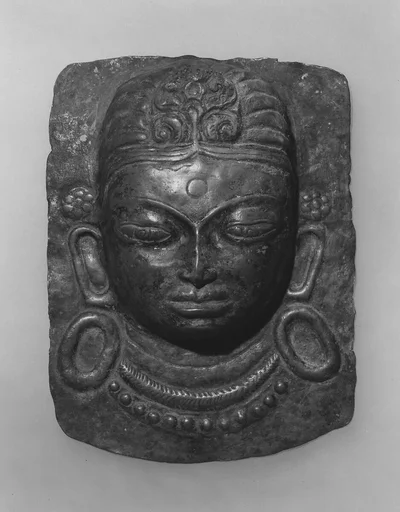
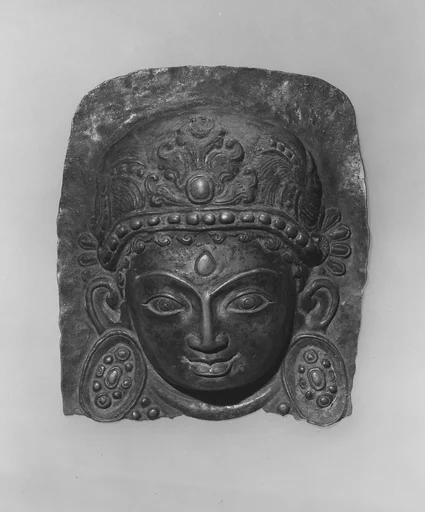
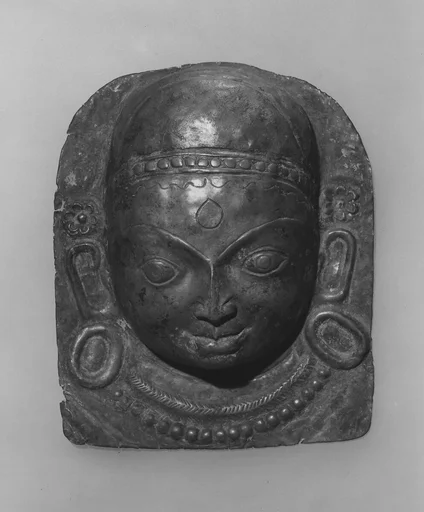
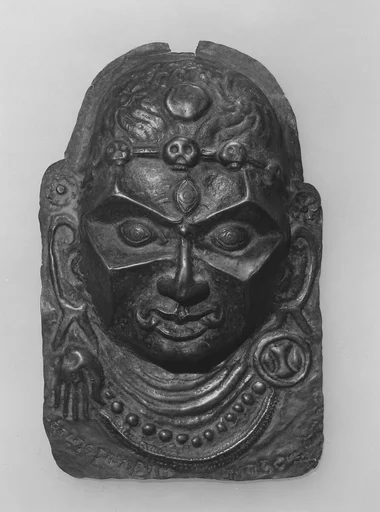
Untitled
Unknown
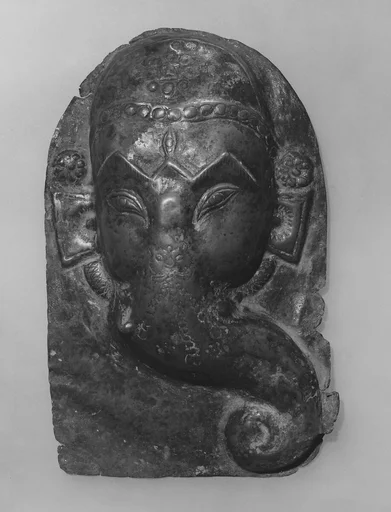
probably 14th–16th century · Repoussé copper alloy · Asian Art
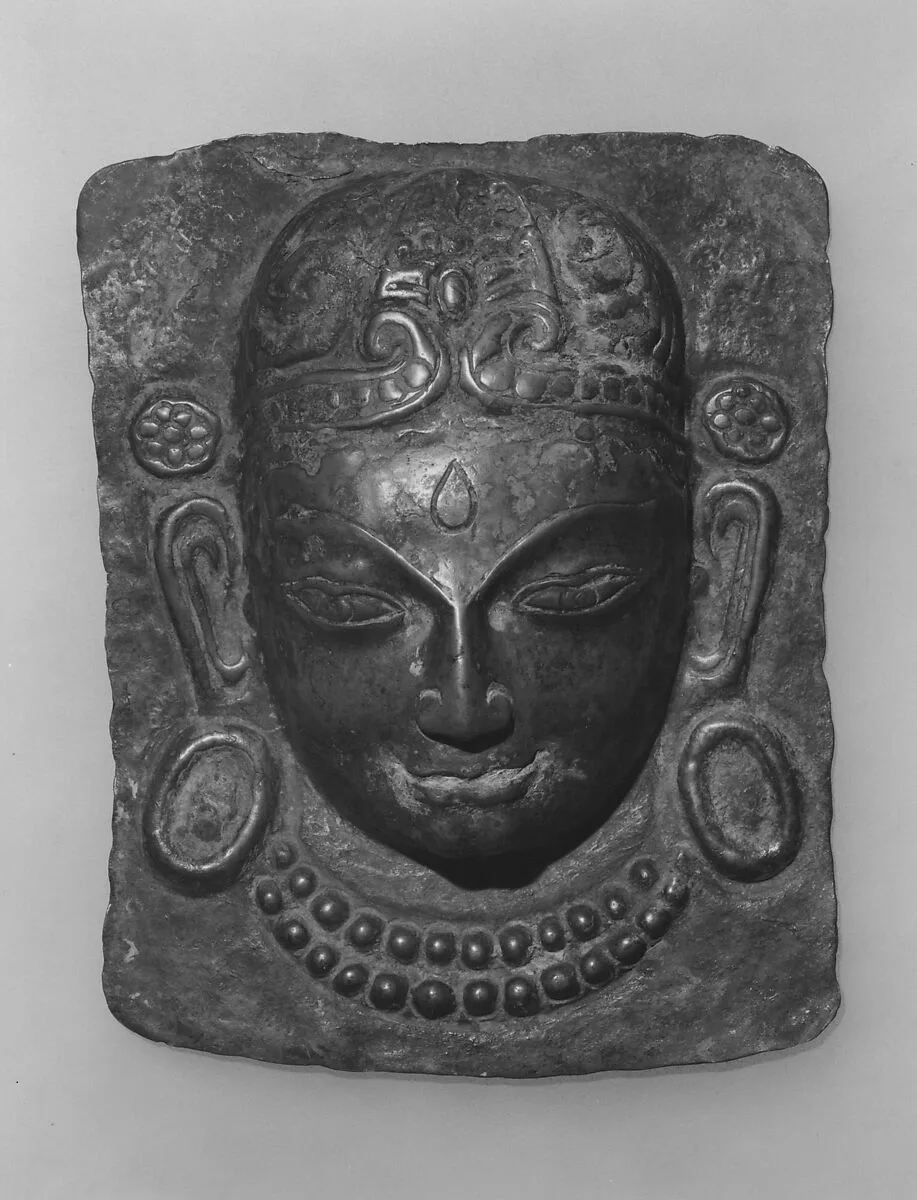
These "masks" were likely intended for use in the creation of lifelike effigies of the gods, the metal face to be affixed to a carrying frame and the figures dressed in textiles. Such constructions were intended for processional use, as seen in related practices in the Hindu communities of Himachal Pradesh, in the western hills of north India, where image-palanquins of this type are carried by devotees during festivals.
- Artist
- Unknown
- Date
- probably 14th–16th century
- Medium
- Repoussé copper alloy
- Culture
- Nepal (Kathmandu Valley)
- Department
- Asian Art
- Credit line
- Gift of Marie-Hélène and Guy Weill, 1986