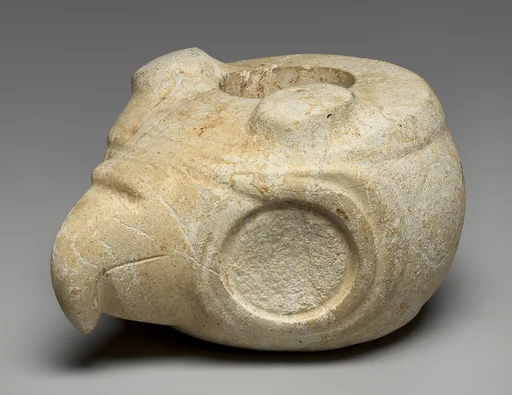
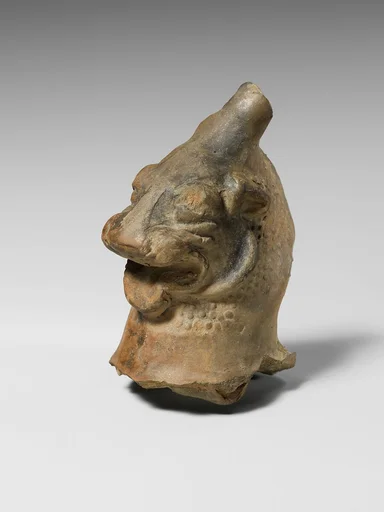
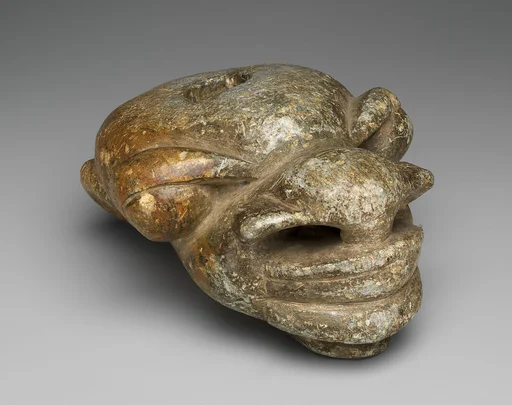
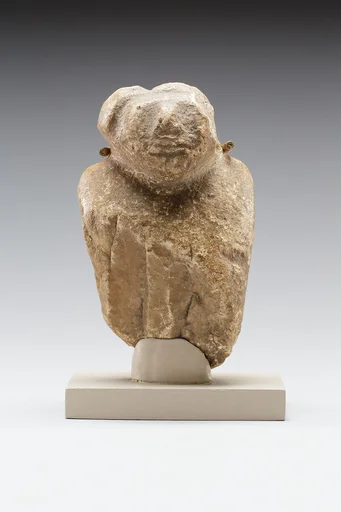
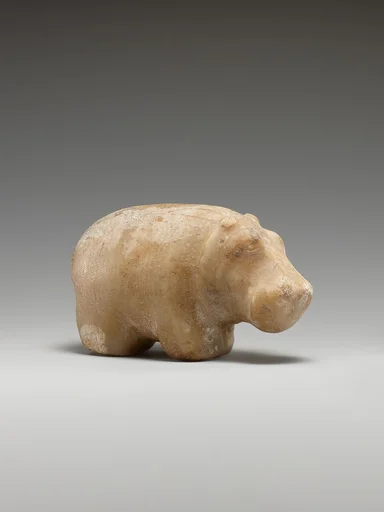
Head of a Hippopotamus
Unknown
ca. 1390–1352 B.C. · Travertine (Egyptian alabaster) with traces of gesso and red pigment · Egyptian Art
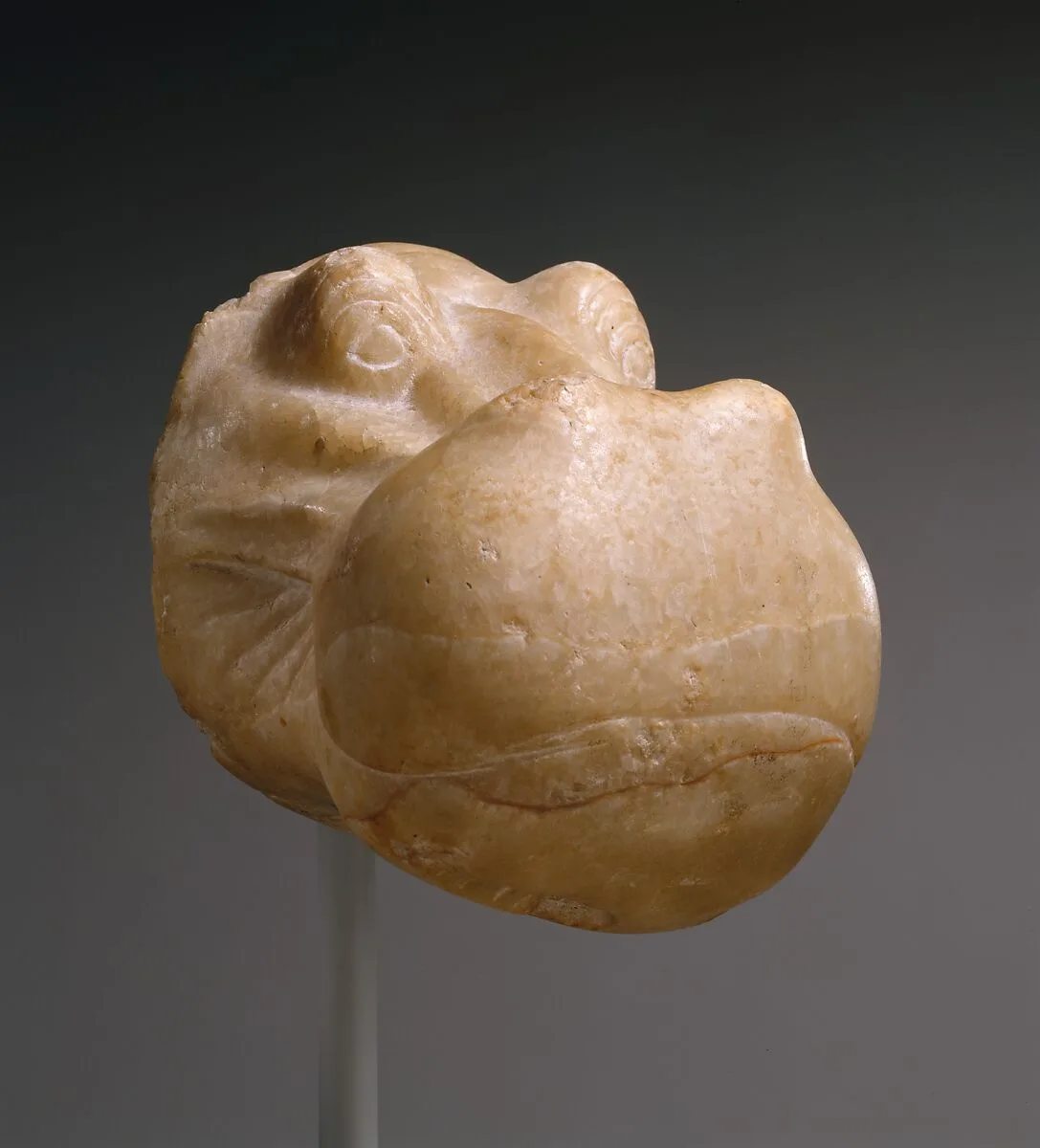
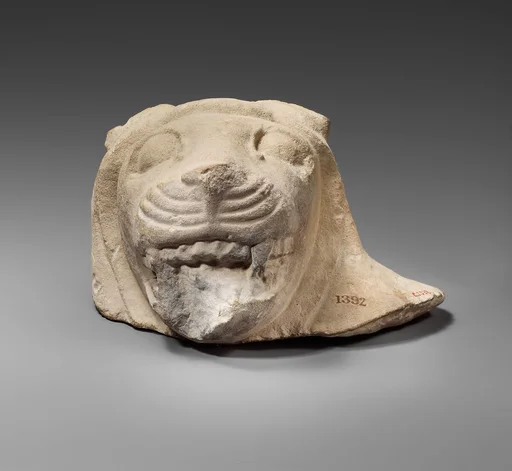
This extraordinarily lifelike animal head was once part of a hippopotamus statue about three feet in length. Comparisons with other sculptures from the period indicate that it was created during the reign of Amenhotep III. The seated statues that the king dedicated to the goddess Sakhmet are well known; their feline heads display hollow sinewed cheeks and knobby facial bones similar to those on the hippo. This head may have come from Amenhotep's mortuary temple on the west bank of the Nile opposite modern Luxor. This temple was mostly dismantled in ancient times, but the site is marked by two colossal statues of the king known as the colossi of Memnon. Excavators have found another, even larger, hippo statue, also of Egyptian alabaster, at the site. Together with hundreds of other sculptures—many of them representing deities in animal form—the hippos would have served in rituals procuring godlike status for the king. On the underside of the animal's jaw is an ancient drill hole. It may have been made for a metal support (the head is heavy) or for the insertion of the hook of a harpoon during a ritual hippopotamus hunt. Traces of red paint are preserved in furrows at the sides of the mouth.
- Artist
- Unknown
- Date
- ca. 1390–1352 B.C.
- Medium
- Travertine (Egyptian alabaster) with traces of gesso and red pigment
- Department
- Egyptian Art
- Credit line
- Purchase, Harris Brisbane Dick Fund, Lila Acheson Wallace Gift, Gift of Henry Walters, by exchange, Ludlow Bull Fund, Beatrice Cooper Gift, and funds from various donors, 1997