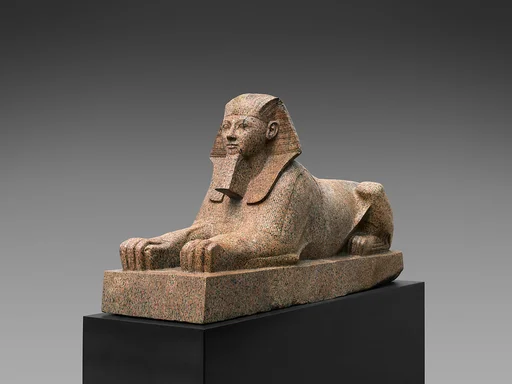
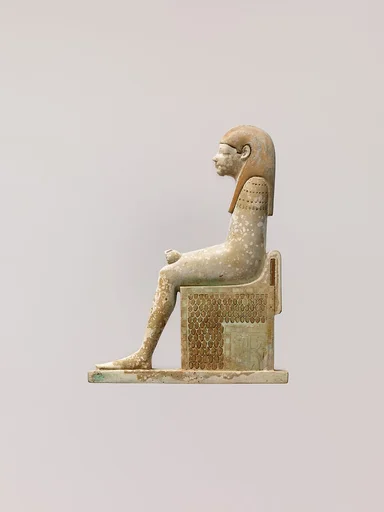
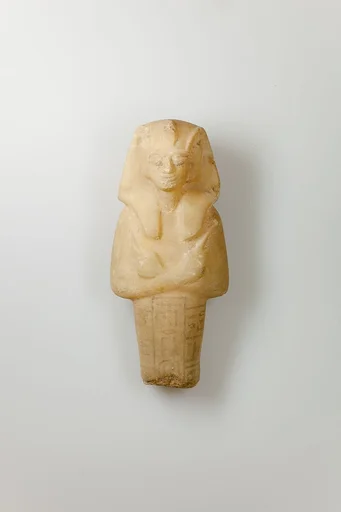
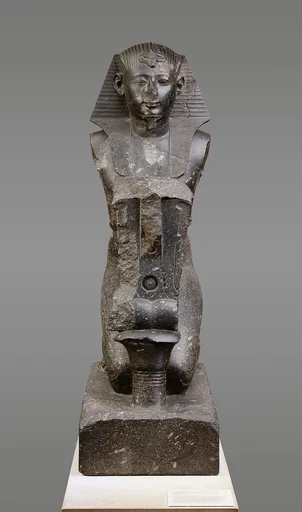
Sphinx of Hatshepsut
Unknown
ca. 1479–1458 B.C. · Limestone, plaster · Egyptian Art
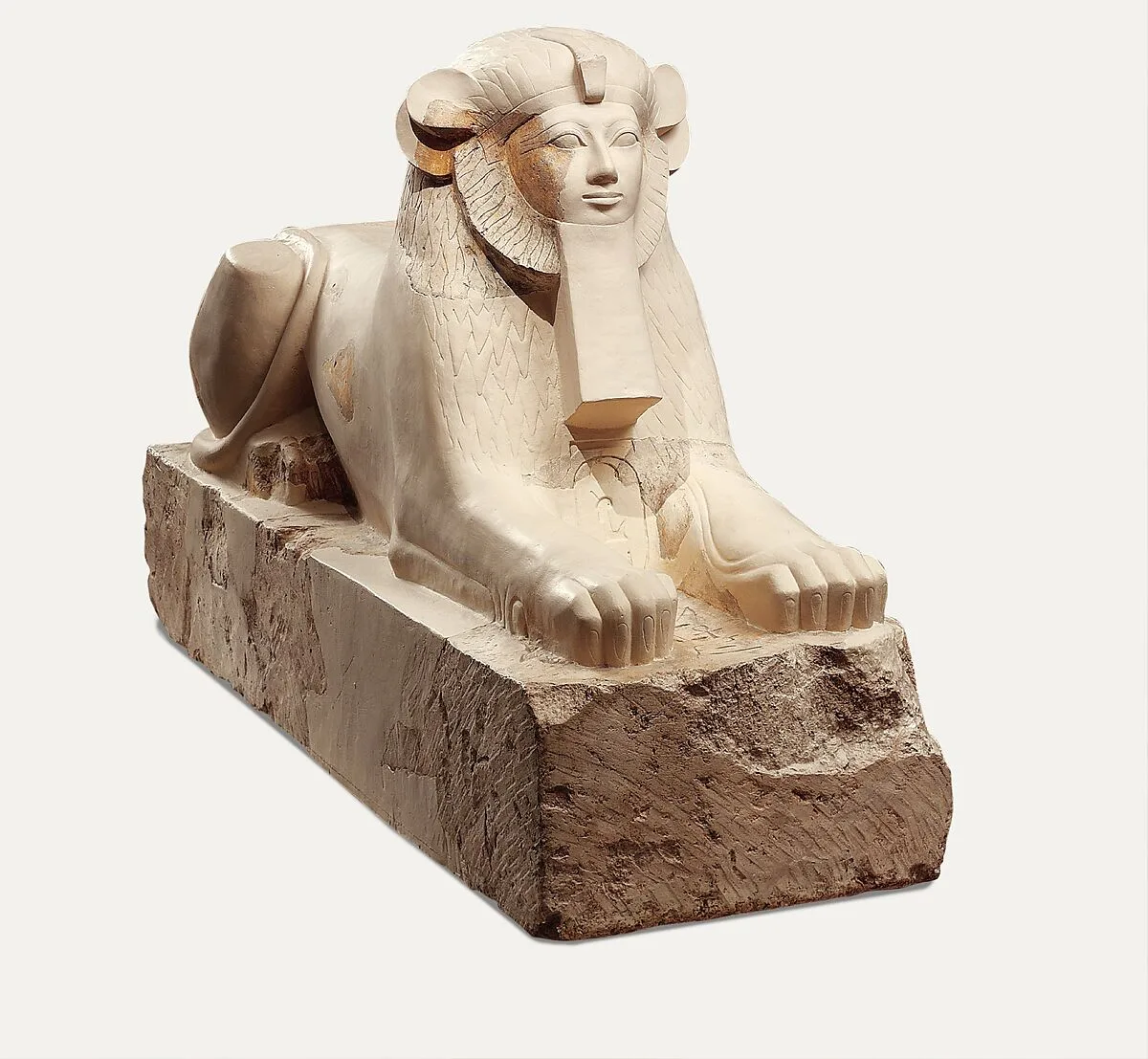
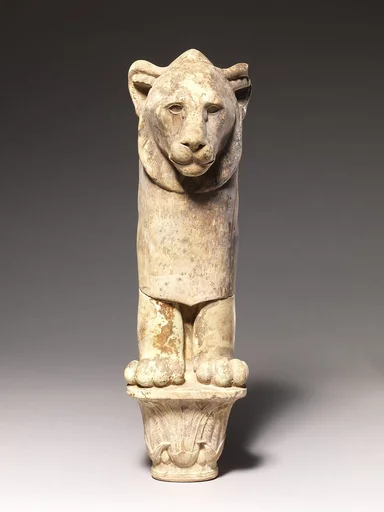
The reconstructed sections of this sphinx have been cast from an almost identical, but more complete companion piece now in Cairo. The two small limestone sphinxes may have been on either side of the entrance to the upper terrace of Hatshepsut’s mortuary temple at Deir el-Bahri. The head of this sphinx differs markedly from Hatshepsut’s large sphinxes in which the human head wears the royal nemes-headcloth (see 31.3.166 and 31.3.167). Instead, this example was fashioned according to a type of sphinx bet known from the Middle Kingdom during the reign of Amenemhat III (ca. 1859-1813 B.C.). In this sphinx, the only human element is the face which is surrounded by a lion's mane. Remains of pigment show that the face was painted yellow, the color used for women in Egyptian Art.
- Artist
- Unknown
- Date
- ca. 1479–1458 B.C.
- Medium
- Limestone, plaster
- Department
- Egyptian Art
- Credit line
- Rogers Fund, 1931