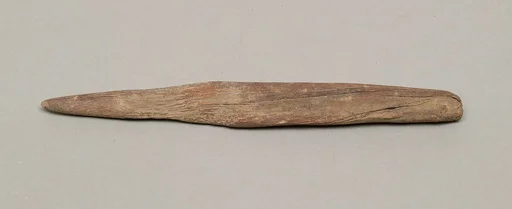
Model of the foreleg of a horned animal, perhaps from a foundation deposit
Unknown
ca. 1400–1295 B.C. · Wood; remains of black pigment · Egyptian Art
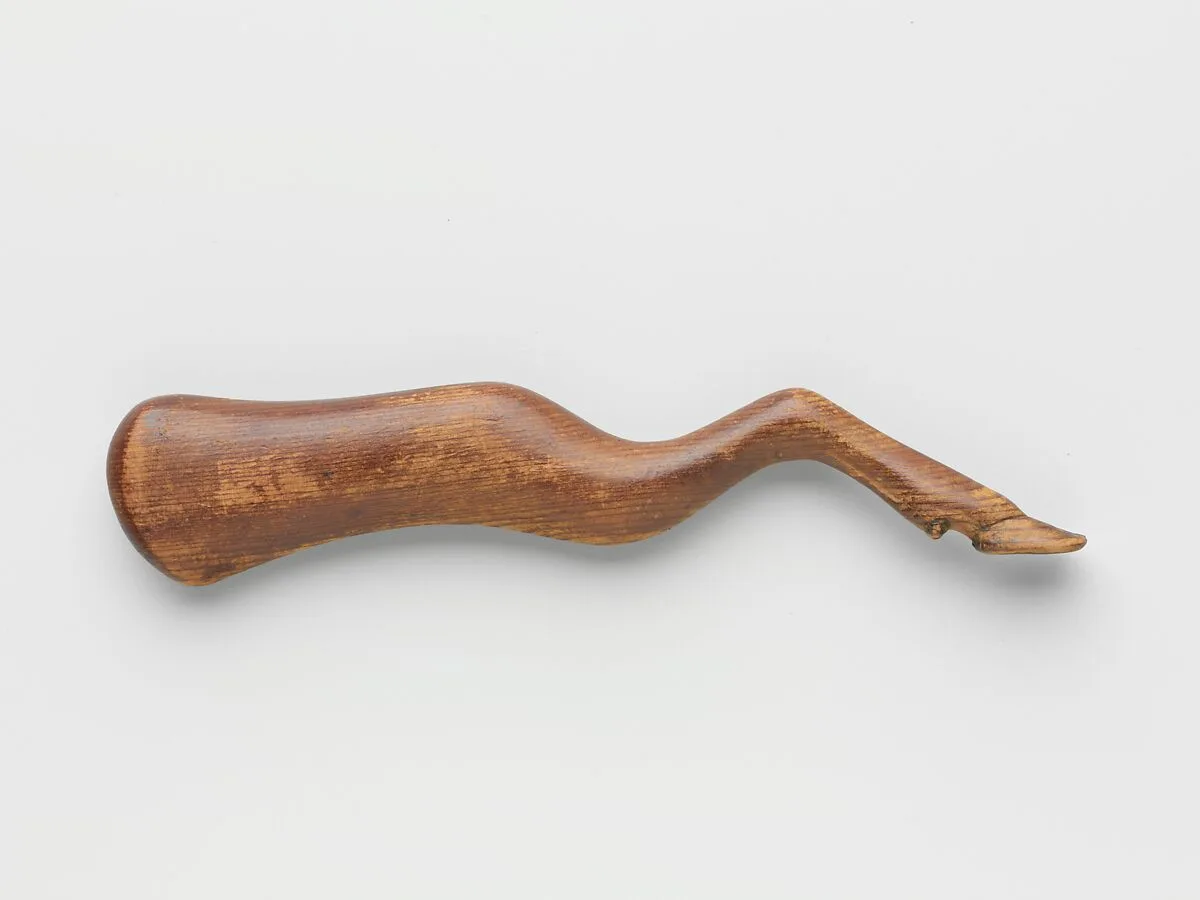
The smoothed edges on this foreleg of an ox indicate that it is not a fragment from an animal figure, but a complete three-dimensional object in its own right. In fact, this master-piece of wood carving is a miniature representation of a khepesh, the most important meat offering that ancient Egyptians presented to the gods and the deceased. The khepesh played a role in the foundation ceremonies of temples during which real joints of meat and ritual objects were placed in pits at significant points around the perimeter of the sacred building. From at least Dyansty 19, however, small khepesh models became part of foundation deposits. The elongated shape and delicate rendering of this khepesh suggest a date in the second half of Dynasty 18, when the art of animal representation was at its peak. This piece may be an earlier use of a model khepesh, or it served some other purpose.
- Artist
- Unknown
- Date
- ca. 1400–1295 B.C.
- Medium
- Wood; remains of black pigment
- Department
- Egyptian Art
- Credit line
- Purchase, Lila Acheson Wallace Gift, 2006