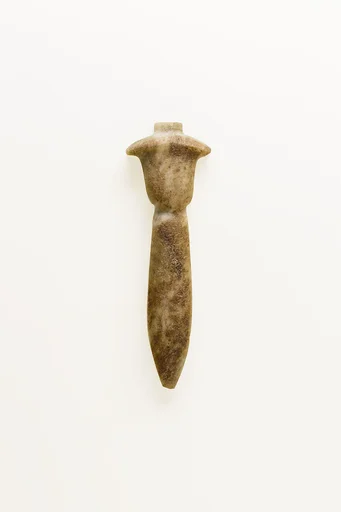
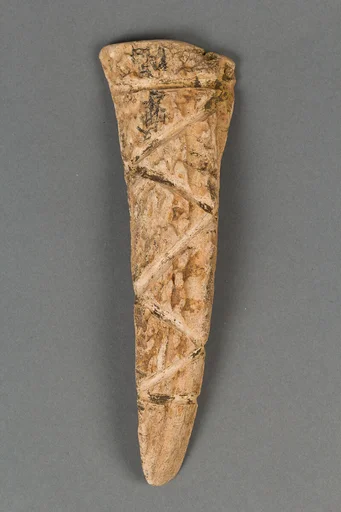
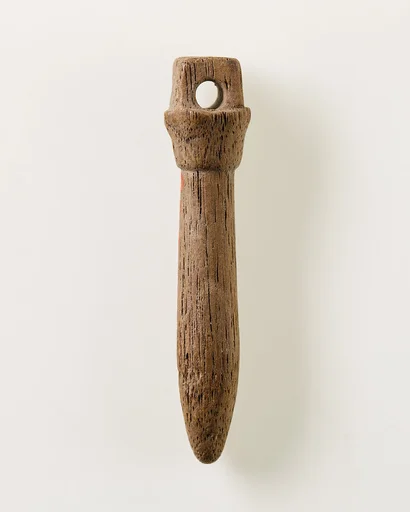
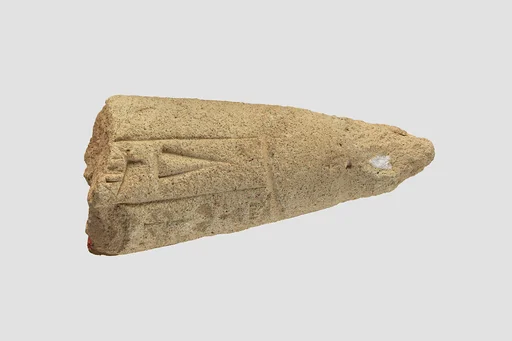
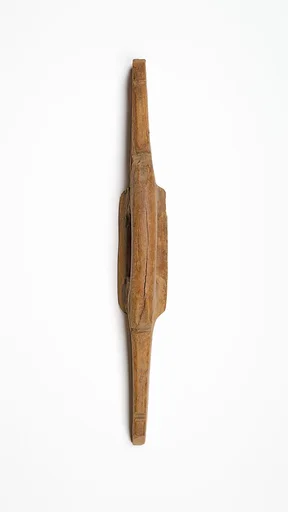
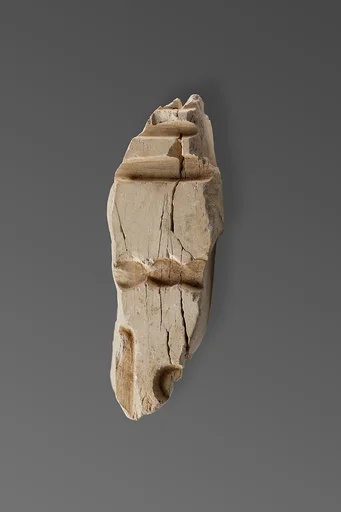
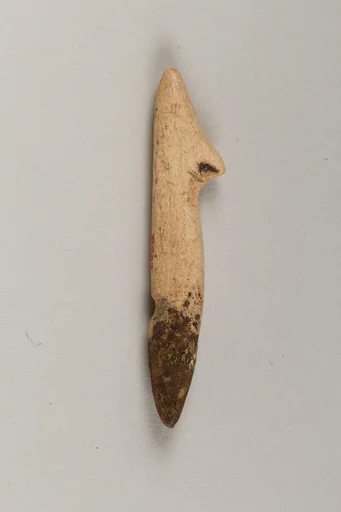
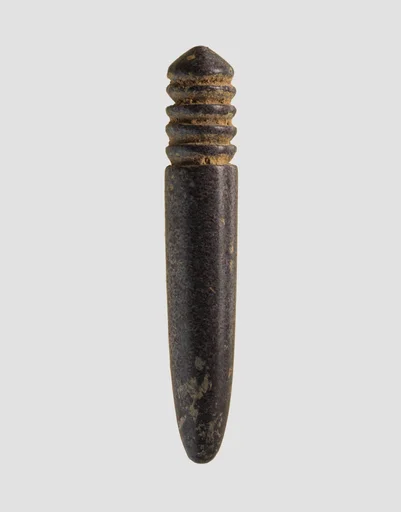
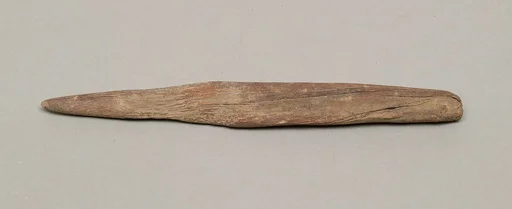
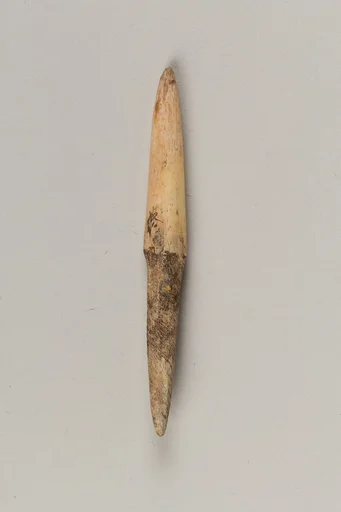
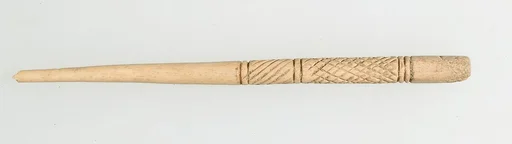
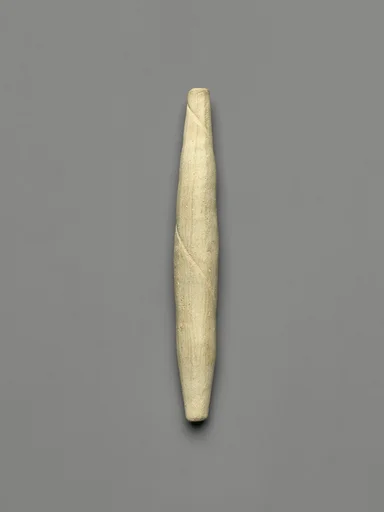
Tag amulet in the form of a tusk
Unknown
ca. 3900–3650 B.C. · Ivory, paste · Egyptian Art
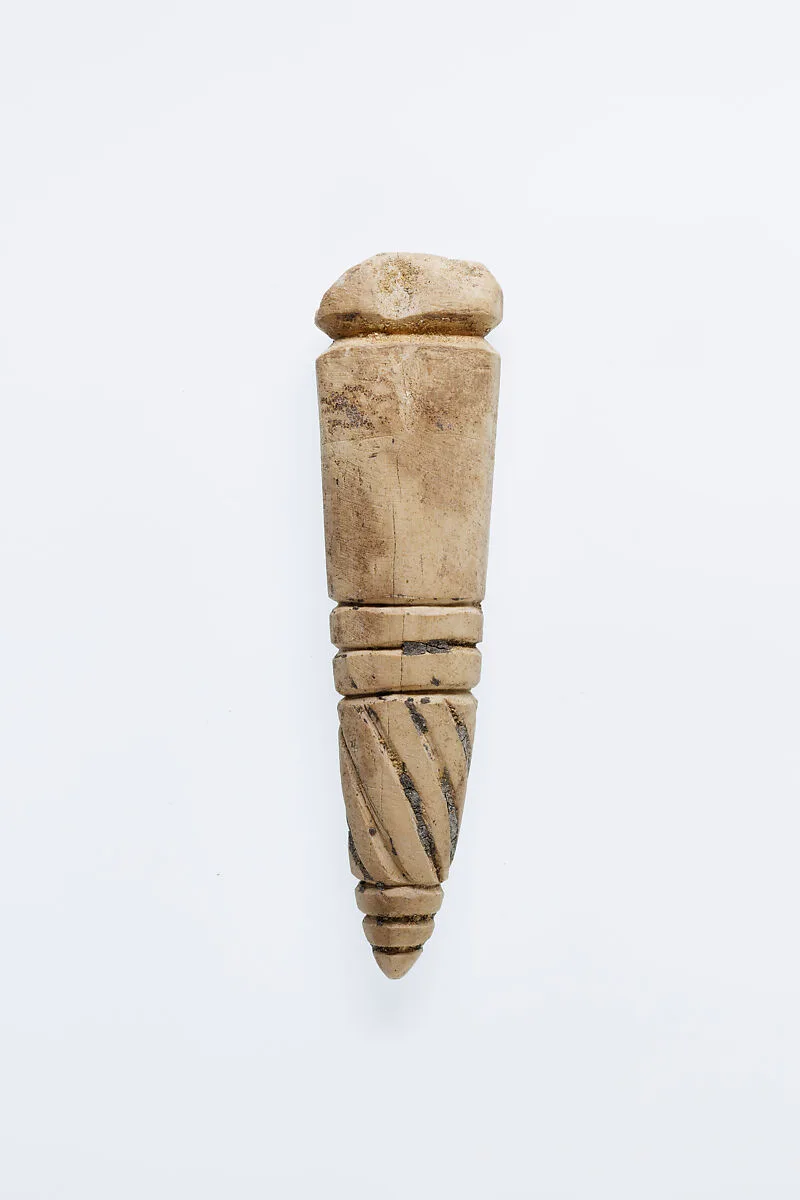
During the Predynastic Period combs, figurines, and many amulets and bracelets were made from ivory. Ivory comes from two sources: the tusks and upper incisors of hippos and the tusks of elephants. Hippos were common inhabitants of the Nile River, and it would have been possible to harvest ivory from carcasses encountered along its banks. Representations on pottery vessels, however, show that the risky activity of hunting hippos occurred as early as 3800 B.C. Worn by an individual who had killed the animal, ivory from a hippo would have been a source of pride and would have bestowed on its wearer an identity associated with power. Objects made from elephant ivory are much rarer, probably because the elephant, a high-desert dweller, was harder to find than the hippo, although just as dangerous. Tusks from elephants who had died naturally would have been a major source of ivory, so hunting them was probably not often necessary. Around 3600 B.C. inhabitants of Hierakonpolis killed an elephant; the animal's elaborate burial reveals the importance of such a kill. Discovered in the grave of a child, this amulet was found along wtih vessels, baskets, clay and carnelian beads, three small copper tools, and fragments of a clay figurine (see 09.182.2–.8). The quantity and variety of these objects indicate that this child was born into a wealthy, powerful family.
- Artist
- Unknown
- Date
- ca. 3900–3650 B.C.
- Medium
- Ivory, paste
- Department
- Egyptian Art
- Credit line
- Gift of The Egypt Exploration Fund, 1909