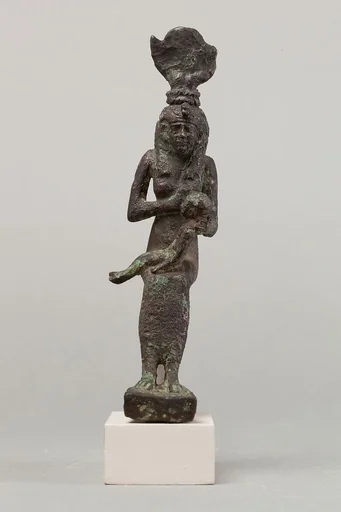
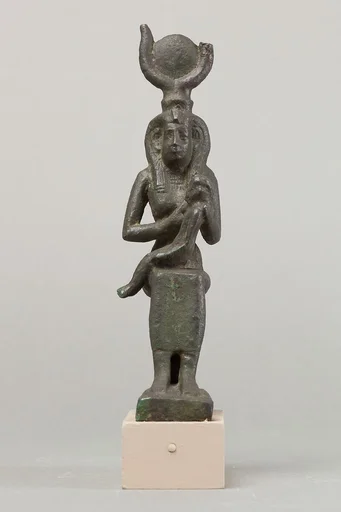
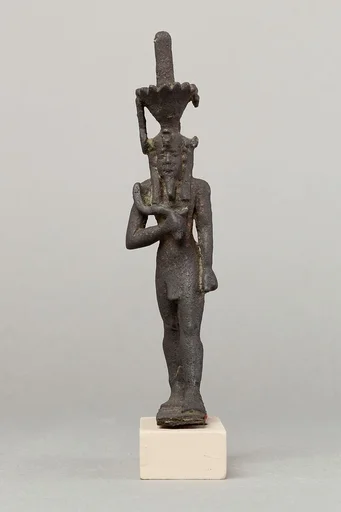
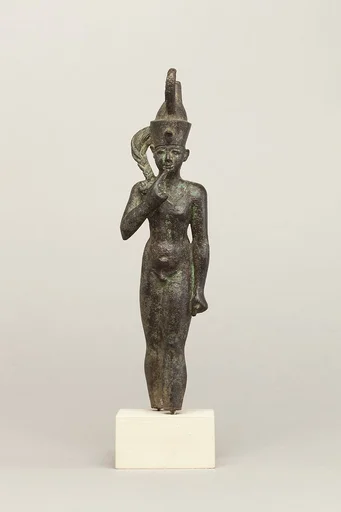
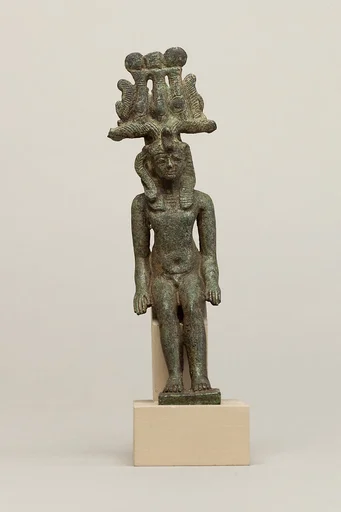
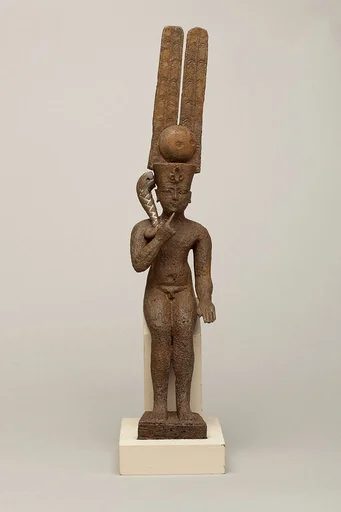
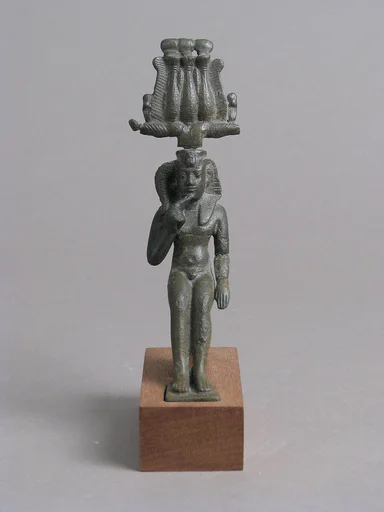
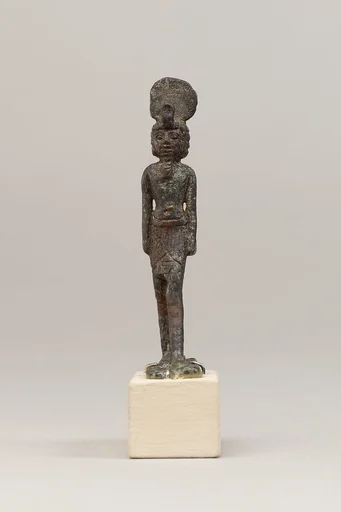
Isis and Horus
Unknown
664–30 B.C. · Cupreous metal, precious metal inlay · Egyptian Art
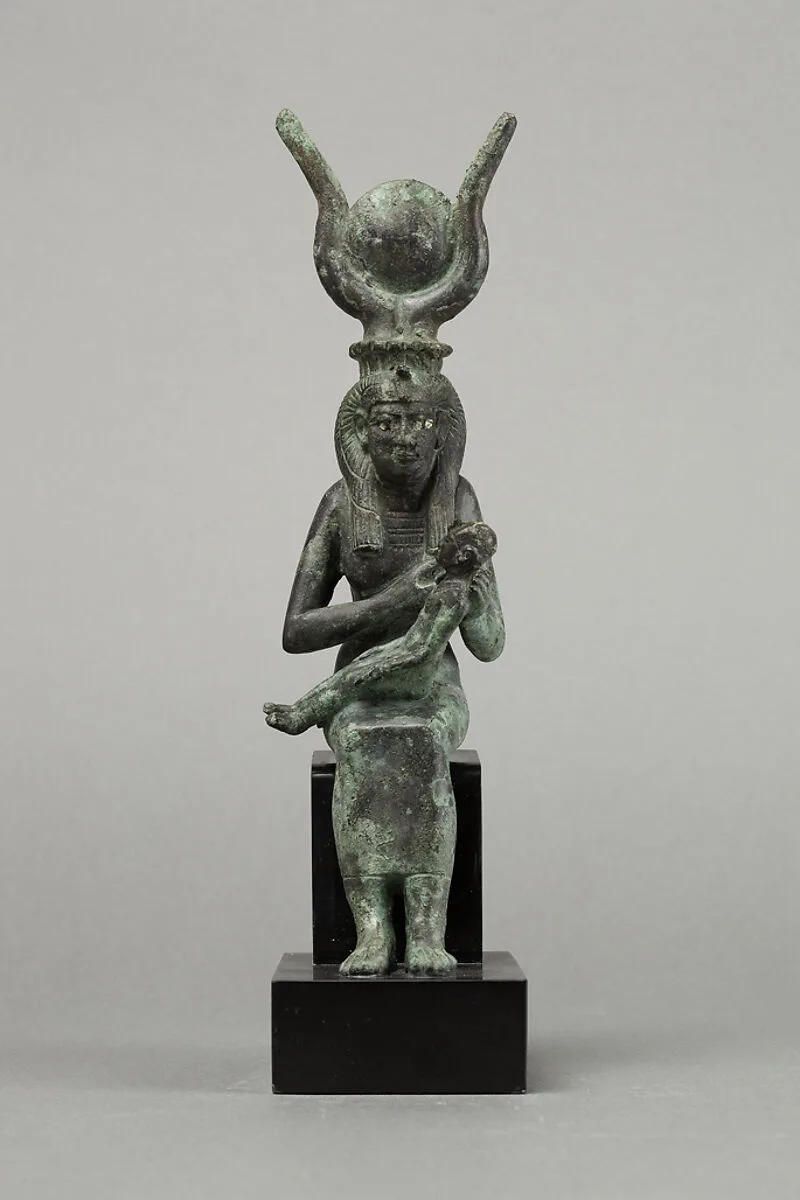
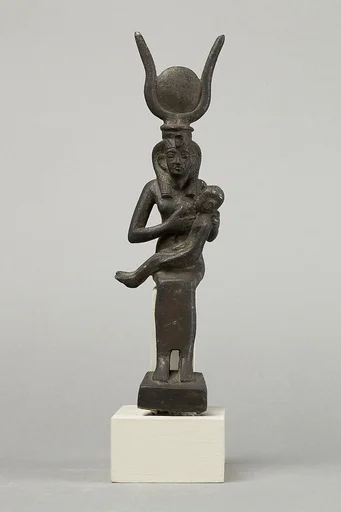
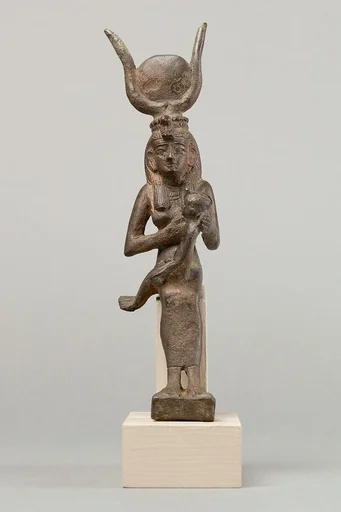
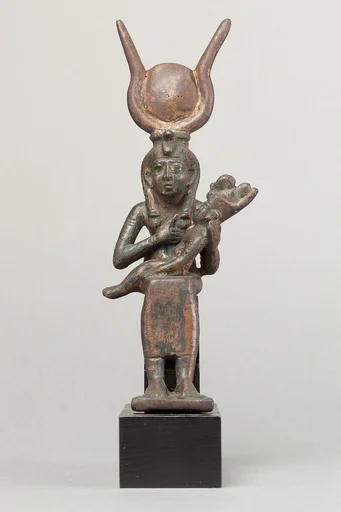
Isis’ name is first attested in the fifth dynasty in the Pyramid texts. She was the wife of Osiris and the mother of Horus, and thus was symbolically mother to the pharaoh. In the Late Period, the popularity of this important goddess dramatically increased. She is nearly always depicted in anthropomorphic form, standing or seated on a throne. This statuette shows the goddess in her most beloved pose, nursing her son Horus (known also as the lactans pose). Other goddesses sometimes nurse Horus or other child gods, but Isis is preeminent among them in this role. She wears the horned crown that by the Late Period she had adopted from the goddess Hathor, as well as the vulture headdress that emphasized the role of goddesses as royal mothers. Horus, meanwhile, wears an amulet on his chest, a common feature for child gods. The large number of Isis statuettes in this particular pose demonstrate some of the qualities for which Isis was most valued in the first millennium BC: her role as a life-giver and protector. These types of statuettes were very common, dedicated not just to Isis cults, but seemingly to many temples and shrines, usually in association with Osiris and the child god Horus.
- Artist
- Unknown
- Date
- 664–30 B.C.
- Medium
- Cupreous metal, precious metal inlay
- Department
- Egyptian Art
- Credit line
- Gift of David Dows, 1945