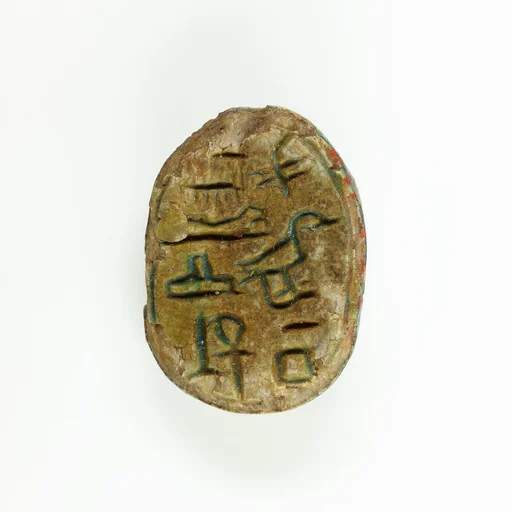
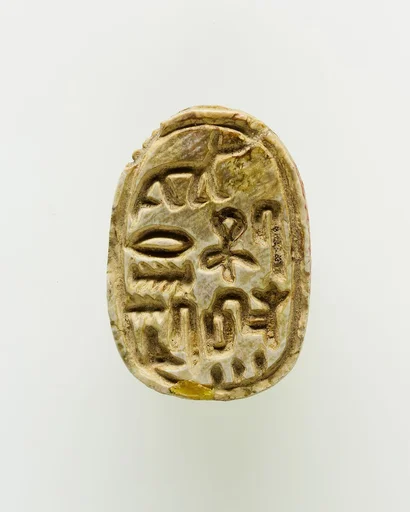
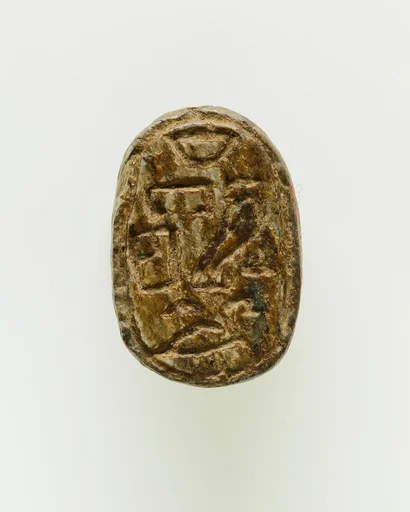
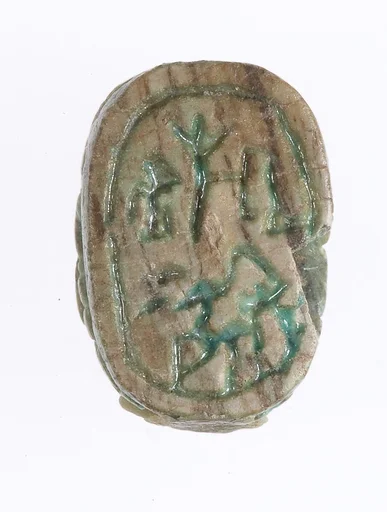
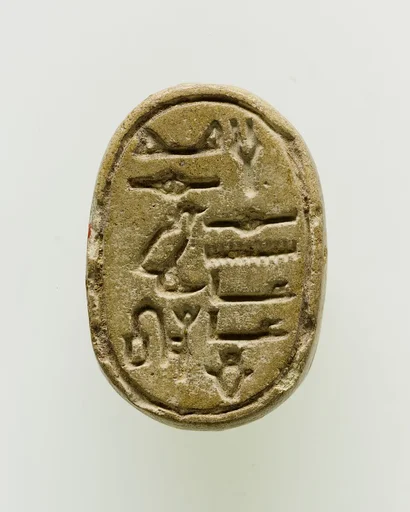
Scarab with Inscription Referring to Osiris
Unknown
1295–1070 B.C. · Light greenish stone · Egyptian Art
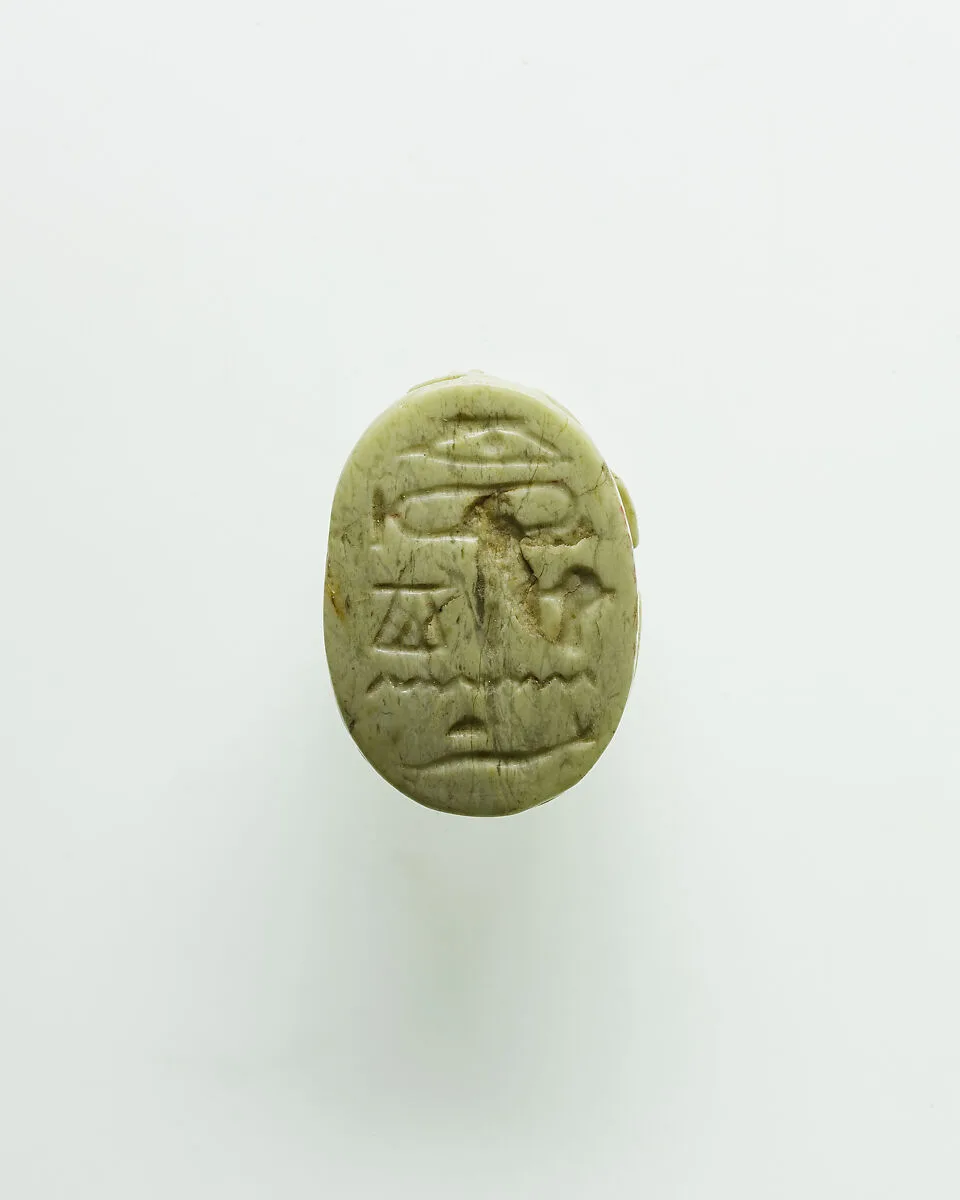
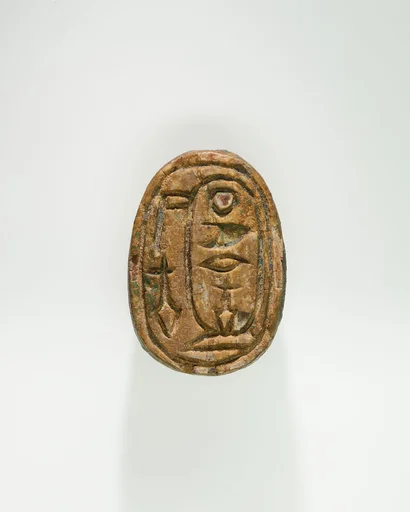
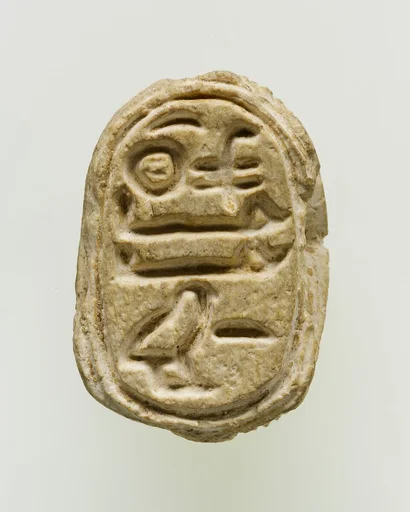
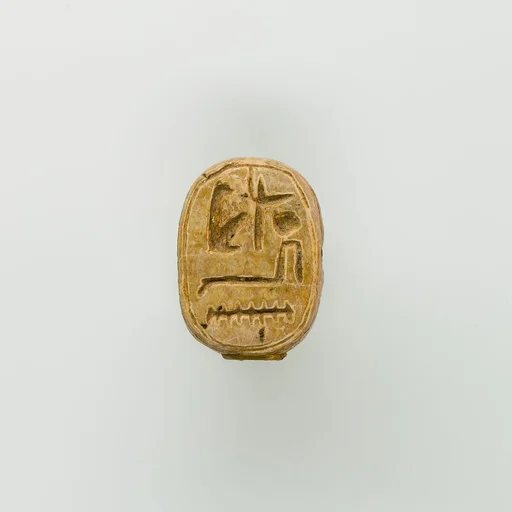
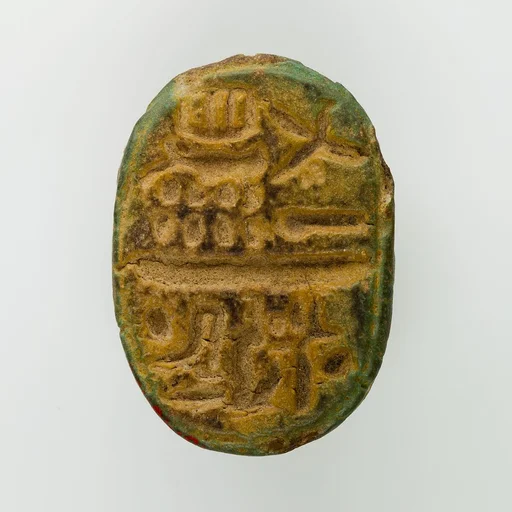
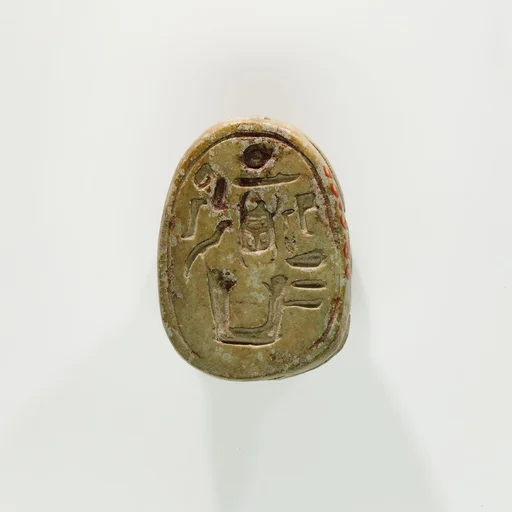
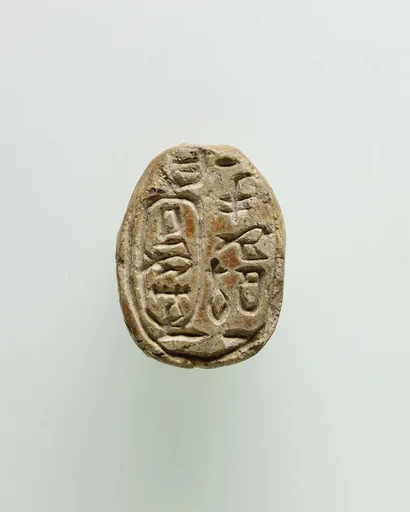
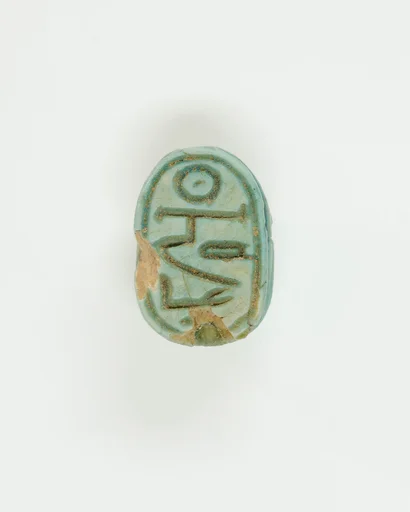
This scarab from Lisht is inscribed with a variation on a religious epithet that is commonly associated with deities, such as the falcon god Horus, or with the king, as living manifestation of Horus. The inscription in hieroglyphs mentions him guarding the throne of his father, the god Osiris. Given the limited surface on scarab bases, seal carvers were often very creative in using as few hieroglyphs and signs as possible in order to convey their message. The god Osiris is here alluded to by the sign of a royal cartouche that does not contain hieroglyphs that would normally encircle the name of a king. An empty cartouche can represent the name Wenennefer (meaning: he who is in everlastingly good condition), which most commonly invokes Osiris. This amulet thus calls upon protection by Osiris’ son. Scarabs bearing similar inscriptions date to the Third Intermediate Period (ca. 1295–664 B.C.).
- Artist
- Unknown
- Date
- 1295–1070 B.C.
- Medium
- Light greenish stone
- Department
- Egyptian Art
- Credit line
- Rogers Fund and Edward S. Harkness Gift, 1922