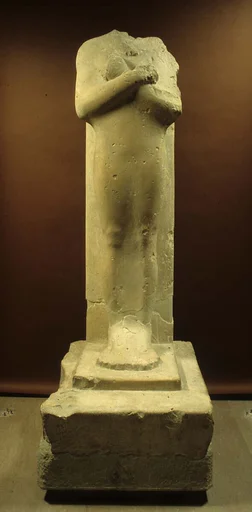
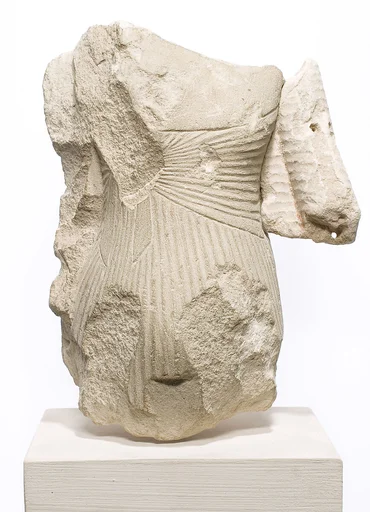
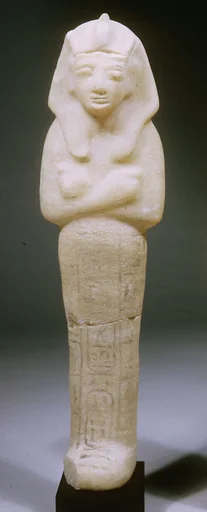
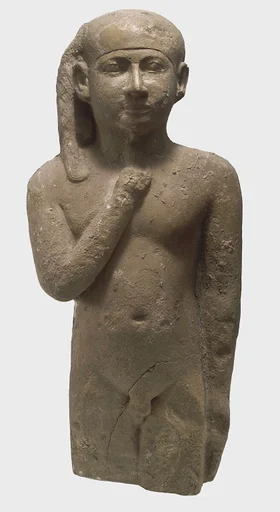
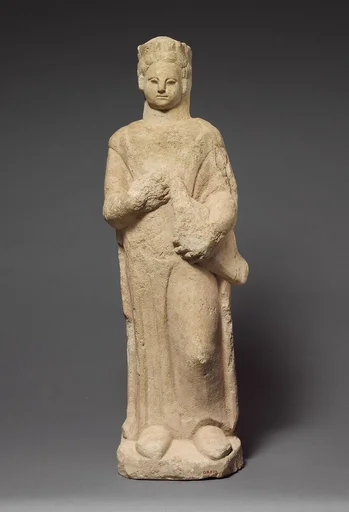
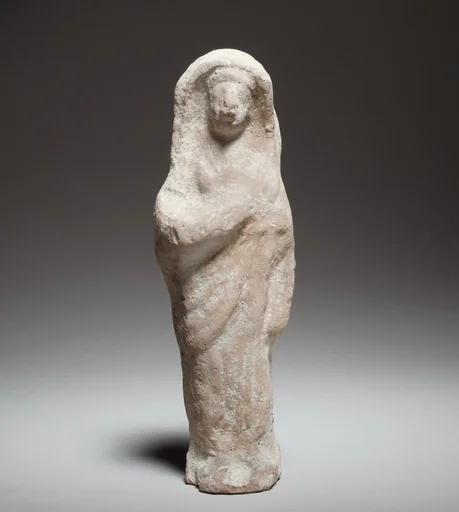
Osiride statue of Senwosret I
Unknown
ca. 1961–1917 B.C. · Limestone · Egyptian Art
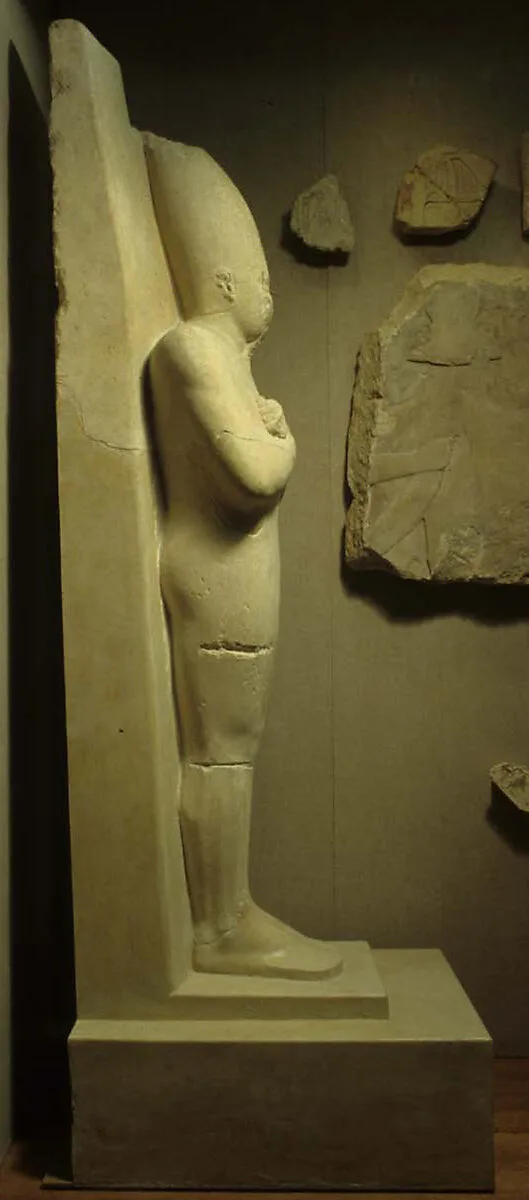
Along both sides of the causeway leading from the valley temple at the edge of the agricultural land to Senwosret I’s pyramid were niches with royal statues of the so called Osiride type. Each statue exhibits a tightly wrapped body with arms crossed over the chest and hands closed to fists. The statues along the southern causeway wall wore the tall white crown of Upper Egypt (like the one here); the ones along the northern wall, the red crown of Lower Egypt. The meaning of this type of representation is still being debated. The mummy form suggests connections with the god Osiris but also Ptah and others. Most probably, the wrapped body represents an inert phase of being preceding rejuvenation, showing the potential for movement (note the articulated knees) in a temporarily paralyzed body. The Osiride statues along the causeway would accordingly symbolize a transition from the place of embalming by the valley temple to the place of resurrection at the pyramid.
- Artist
- Unknown
- Date
- ca. 1961–1917 B.C.
- Medium
- Limestone
- Department
- Egyptian Art
- Credit line
- Rogers Fund, 1909