Baton
Unknown
19th century · Carved ivory · Musical Instruments
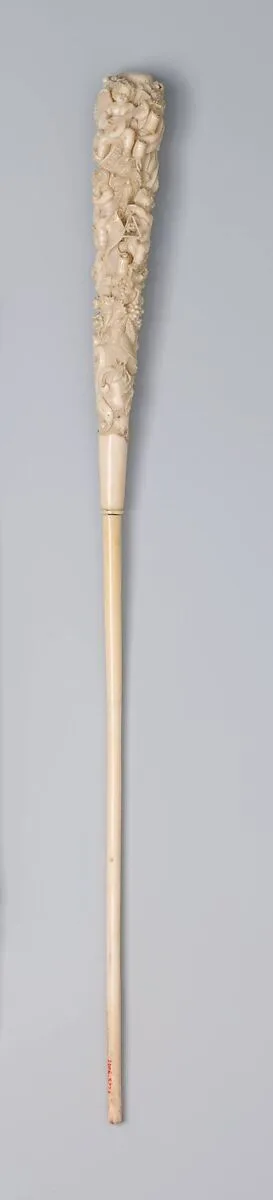
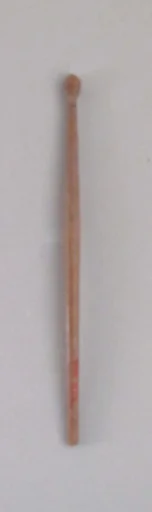
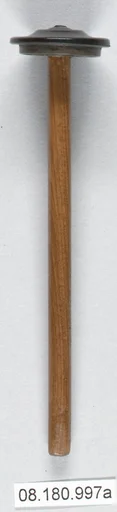
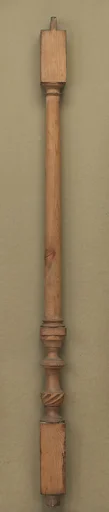
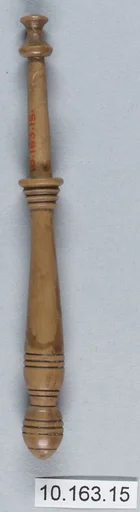
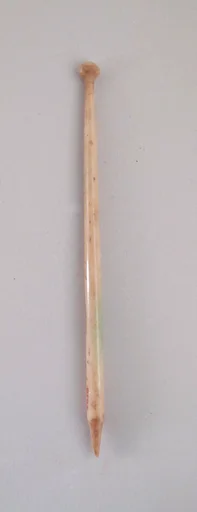
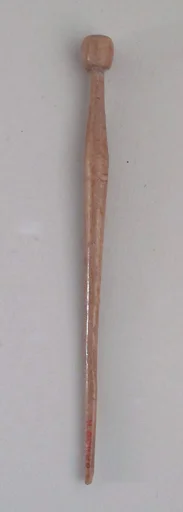
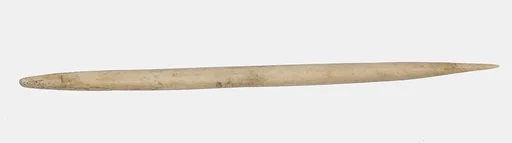
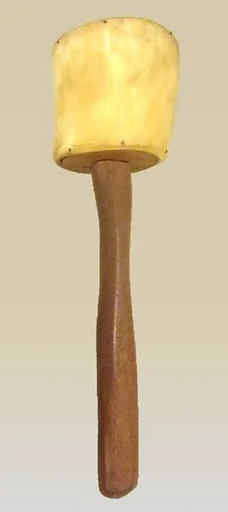
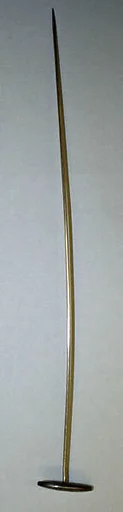
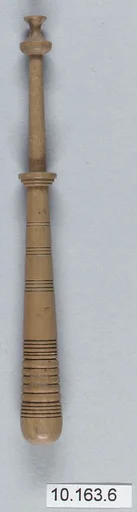
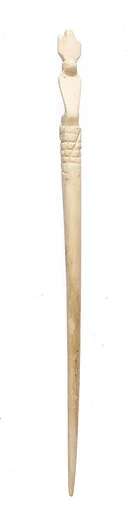
From 1820, as orchestras grew larger and compositions more complex, conducting batons came into general use for directing symphonies and operas. Modern conducting standards and techniques evolved with Hector Berlioz (1803-69) and Richard Wagner (1813-82), who emphasized not only beating time but also musical interpretation. By about 1880 batons tended to be thick staves, comparable to no. 1 and 3, and held below the middle. Then, batons grew more slender and lighter with a pointed tip, and a handle. Today they are shorter and thinner than no. 2 and 4. Beginning in the middle of the 19th century, patrons or performers occasionally paid homage to meritorious and admired conductors by presenting them with honorary batons. These, often elaborate and beautiful wands were not meant for regular use, but as gifts and for ceremonies. The four presentation batons on display are gifts of music director Gene Young and his wife, Linda Surridge, given to the Metropolitan Museum of Art in 2006. All four batons are works of art and among the most ornamental batons known to be made.
- Artist
- Unknown
- Date
- 19th century
- Medium
- Carved ivory
- Culture
- probably French
- Department
- Musical Instruments
- Credit line
- Gift of Gene Young and Linda Surridge, 2006