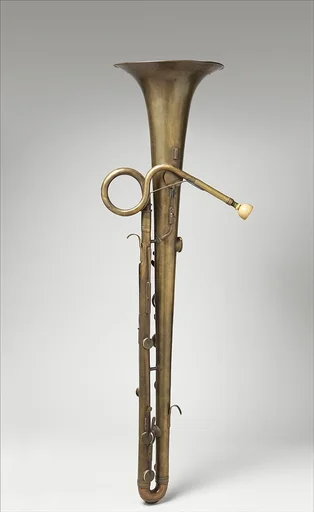
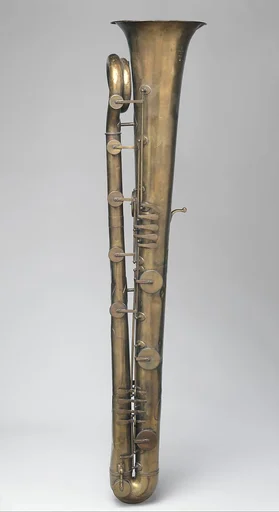
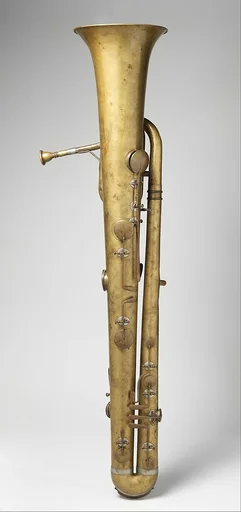
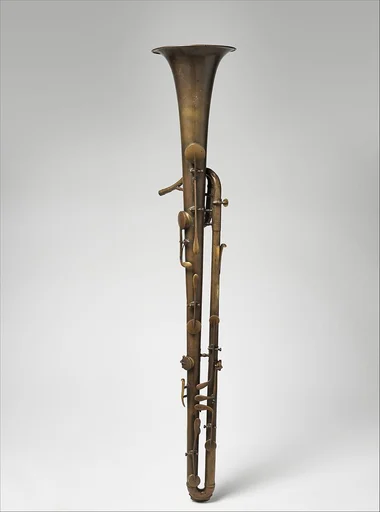
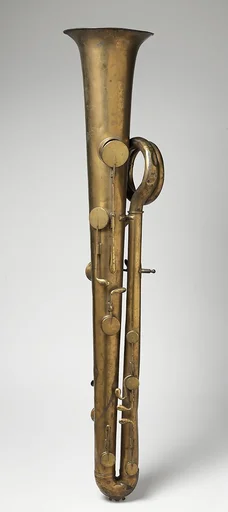
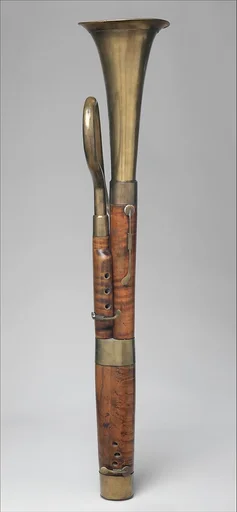
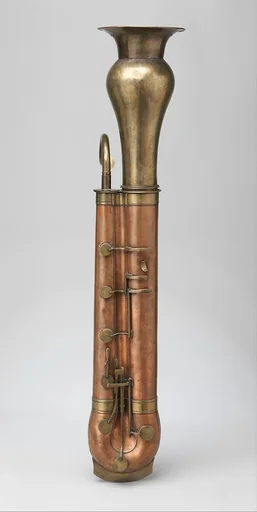
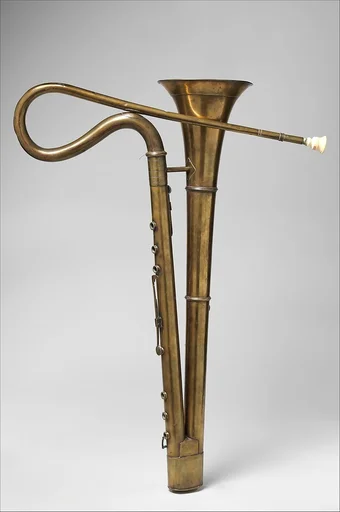
Tenor (Alto) Ophicleide in E-flat
Charles Joseph Sax
ca. 1845 · Brass · Musical Instruments
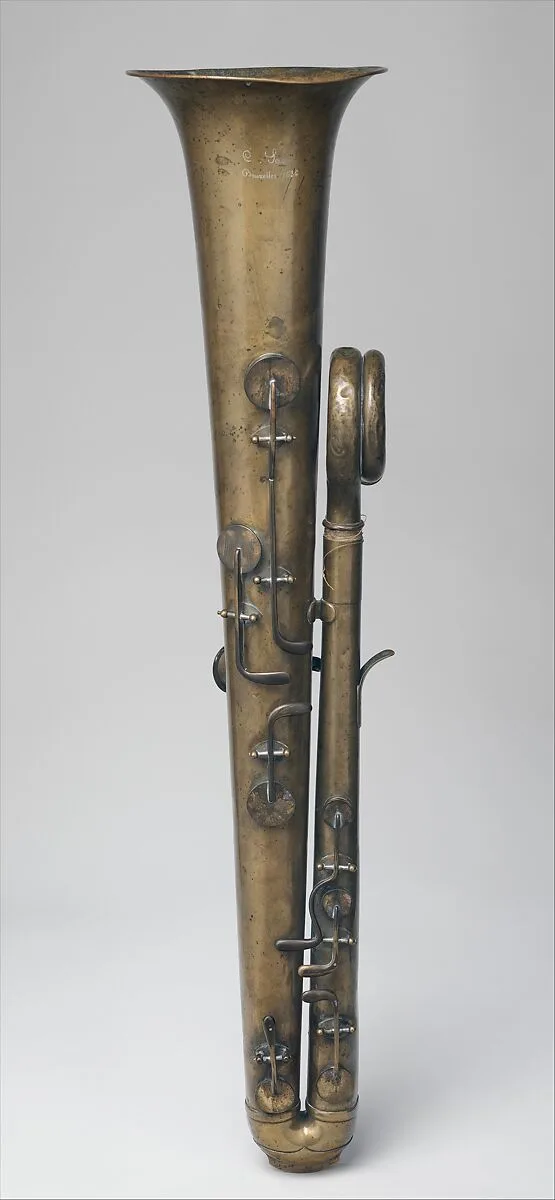
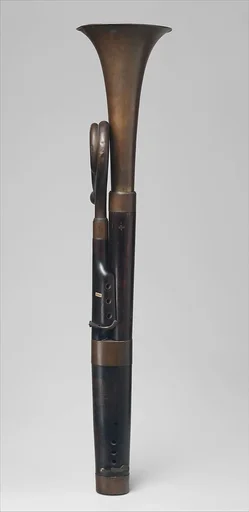
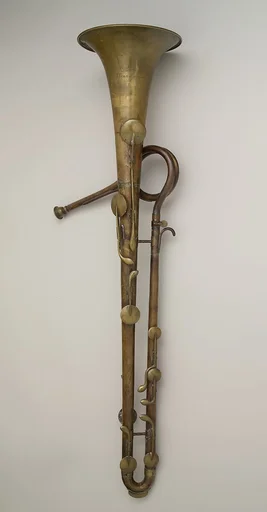
Alto ophicleide in E-flat with nine keys, body made of brass, detachable looped crook, no tuning slide, bell has rolled rim. Braces and bow guard are simple and unadorned. With associated small, cupped mouthpiece The ophicleide was a popular low brass instrument in bands and orchestras during the middle decades of the nineteenth century. Drawing its name from a Greek-derived portmanteau of "serpent" and "keys", the instrument was devised as an improvment on its predecessor, the serpent. Its key system allowed the toneholes of the ophicleide to be strategically placed to enable it to play better in tune. The ophicleide was superceeded by the tuba and other low brass instruments with valves in the latter part of the nineteenth century. Its distinctive, nasal tone quality differs significantly from that of the modern tuba and makes the ophicleide an important instrument in period performance orchestras.
- Artist
- Charles Joseph Sax
- Date
- ca. 1845
- Medium
- Brass
- Culture
- Belgian
- Department
- Musical Instruments
- Credit line
- The Crosby Brown Collection of Musical Instruments, 1889