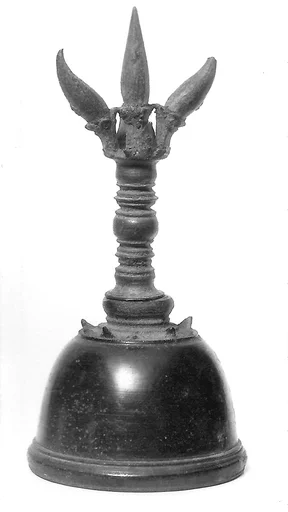
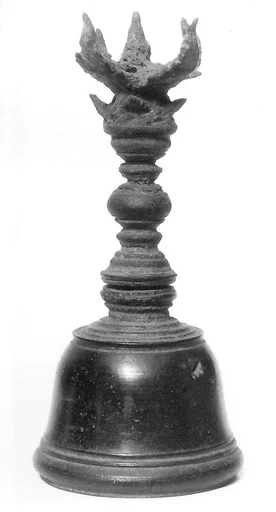
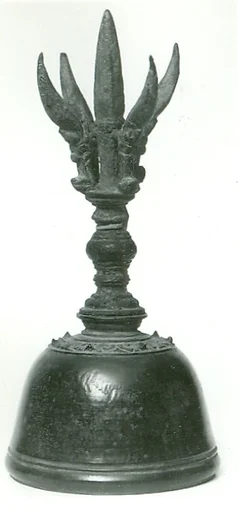
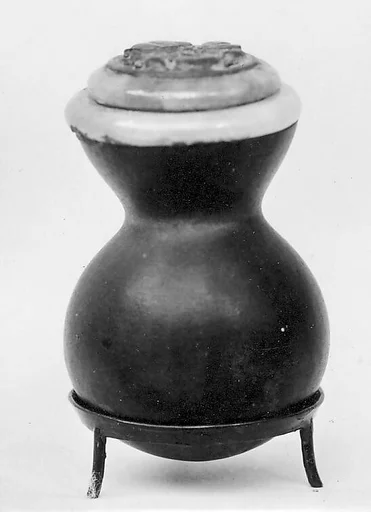
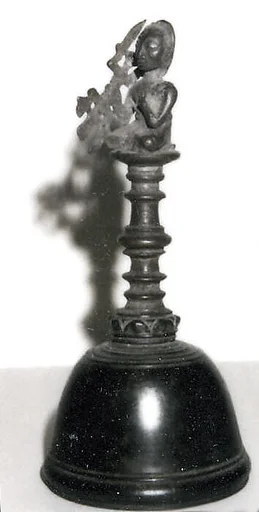
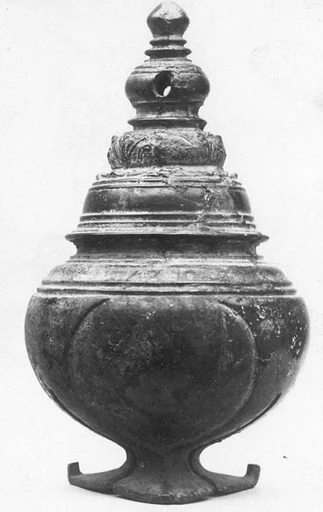
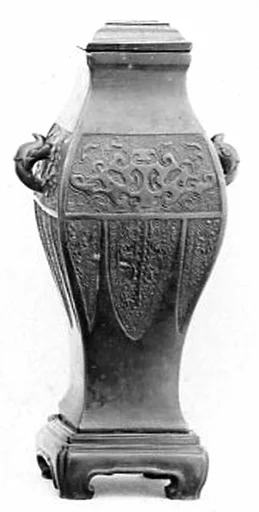
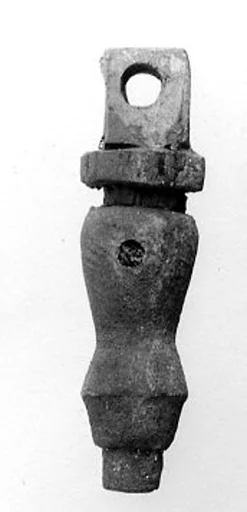
Gheṇṭa (prayer bell)
Unknown
11th century · Cast bronze · Musical Instruments
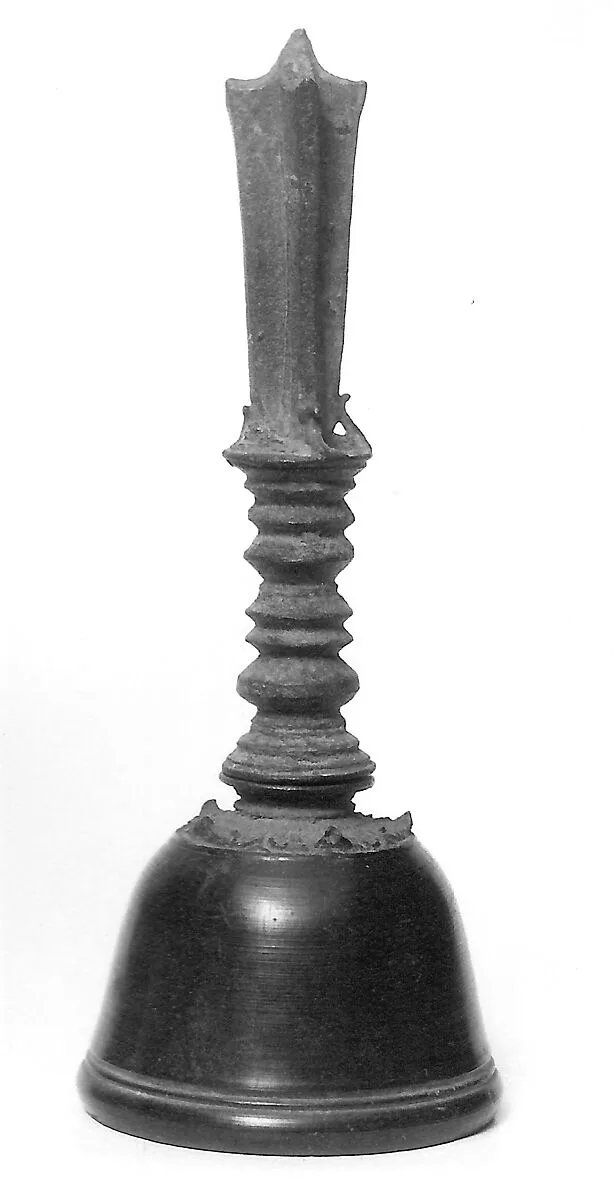
The bell (dril bu) is the most common musical instrument associated with Tantric Buddhist ritual. Held in the left hand, the dril bu (clapper bell) is always paired with a scepter (dorje), which is held in the right. The scepter symbolizes method, bliss, and male aspects while the bell represents wisdom, emptiness, and the female aspects. Both principles are necessary to achieve Enlightenment. The bell handle traditionally matches in decoration the scepter it is paired with - often with five spokes or points (five representing the five forms of mystical wisdom). These bells were produced in Java, Indonesia, during the eleventh century. Buddhism flourished in Indonesia at that time, before Islam became dominant in the thirteenth and fourteenth centuries
- Artist
- Unknown
- Date
- 11th century
- Medium
- Cast bronze
- Culture
- Javanese
- Department
- Musical Instruments
- Credit line
- Rogers Fund, 1930