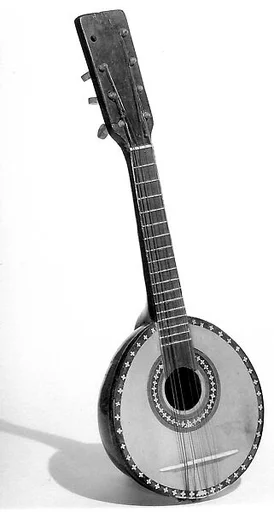
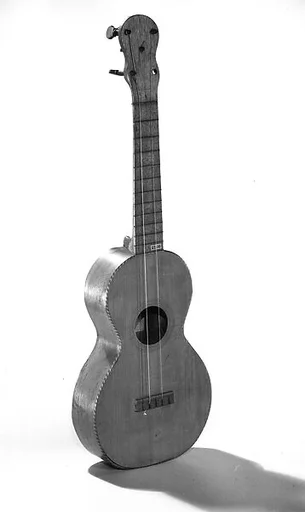
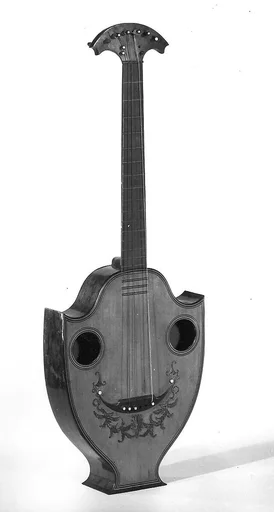
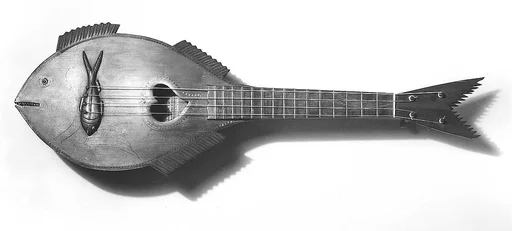
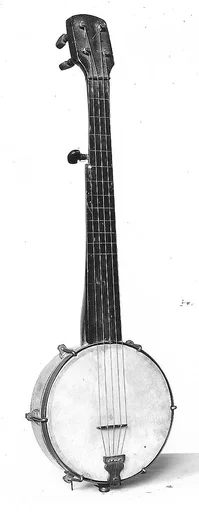
Banjo-form Mandolin called a "Bandonian"
William H. De Wick
ca. 1912 · wood, various materials · Musical Instruments
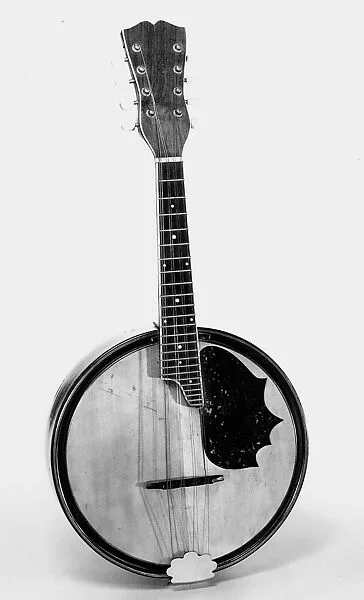
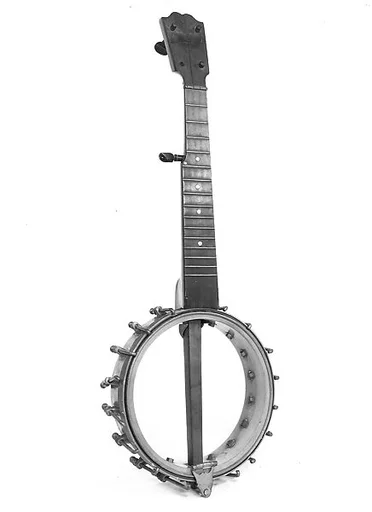
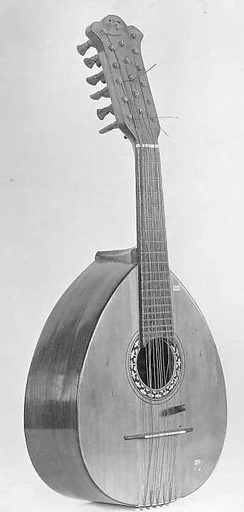
In 1912, Brooklyn music teacher and banjo maker William De Wick was assigned a patent for his Bandonian (patent number 1018651), a round-body variation of a mandolin. By the first decade of the 20th century the mandolin had become widely popular across America, primarily through the successful marketing efforts of the Gibson Mandolin-Guitar Company. At the same time, the decrease in popularity of the five-string banjo led to the introduction of other types of banjos, including the four-string tenor banjo, the banjo uke, and the banjo mandolin, which combined an eight-string mandolin neck with a banjo rim and skin membrane. Although first patented in 1882, the banjo mandolin became popular in the early 1900s because it enabled mandolin players to produce banjo-like sounds without changing their playing technique. De Wick's Bandonian is a variant of the banjo mandolin, with a wood soundboard substituting for the stretched-skin banjo head. (Peter Szego, 2020)
- Artist
- William H. De Wick
- Date
- ca. 1912
- Medium
- wood, various materials
- Culture
- American
- Department
- Musical Instruments
- Credit line
- Gift of Mr. and Mrs. Harry C. Wolfson, 1978