Upright Harp Piano
F. Beale & Co.
1843 · Mahogany, paint, gilding, cast iron, paint, silk, ivory, ebony, glaze · Musical Instruments
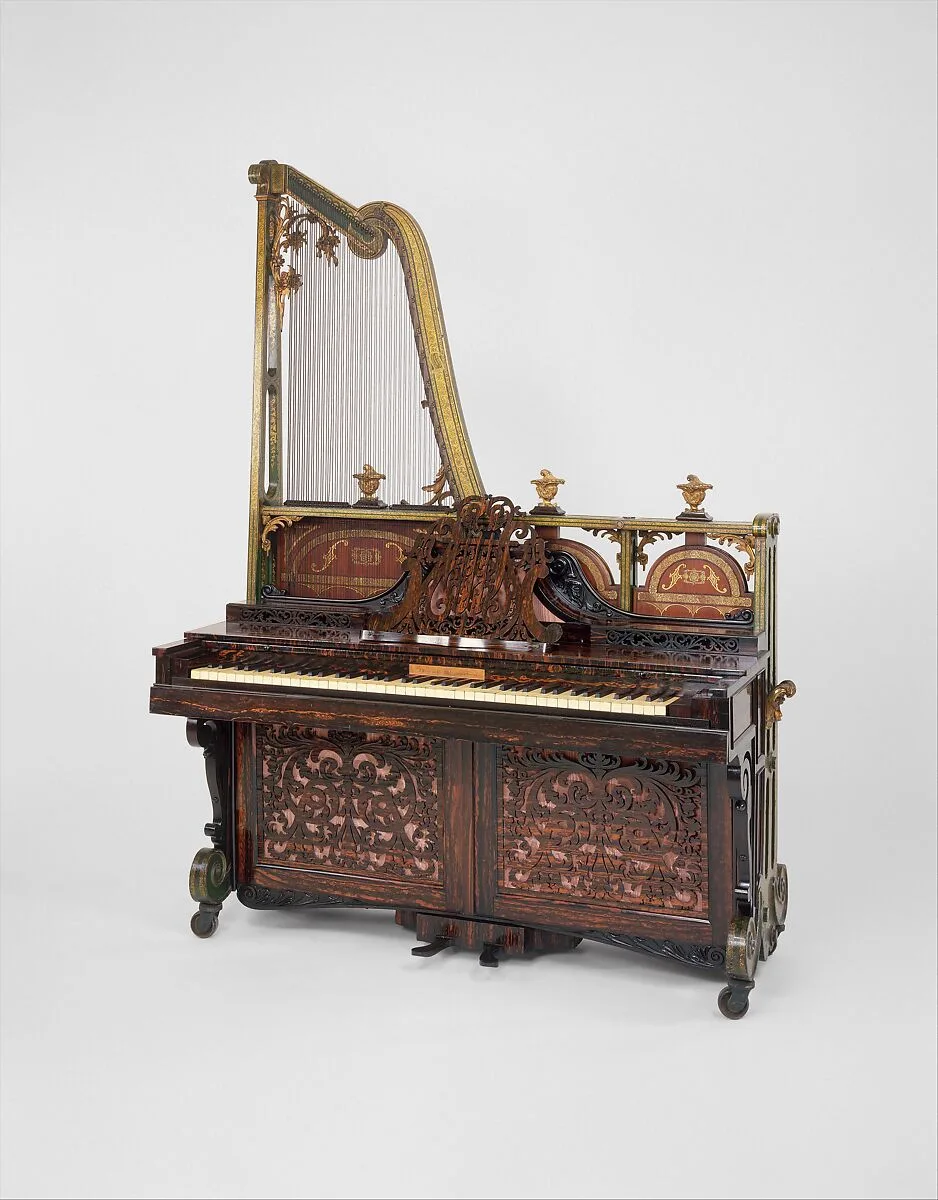
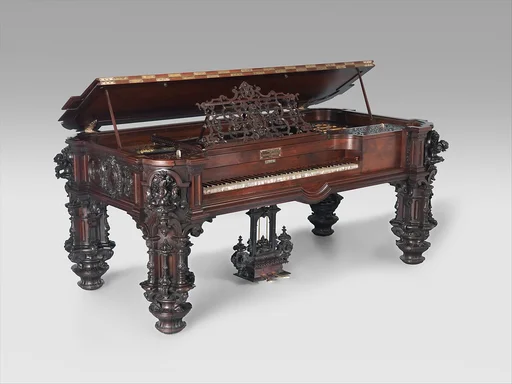
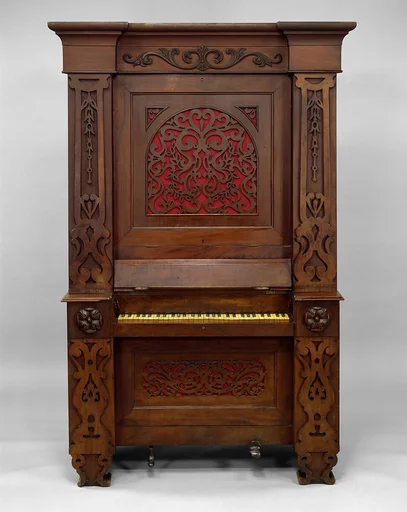
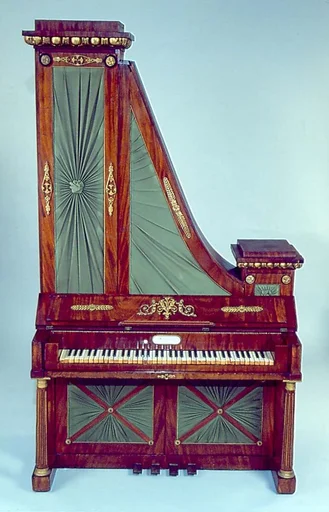
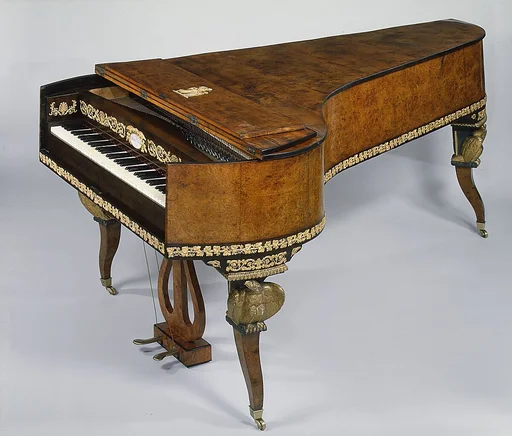
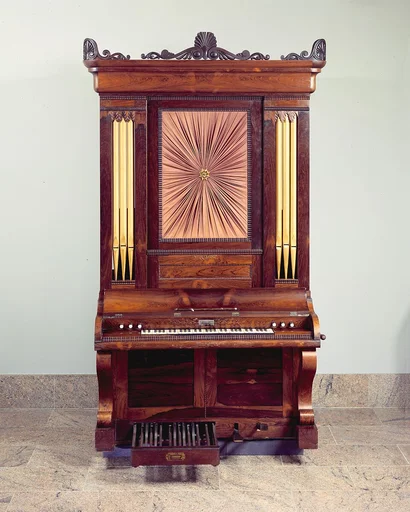
The short-lived Euphonicon (from Greek, "sweet-toned") was patented by John Stewart in 1841 and manufactured under his supervision. Hand-painted designs and gilded brackets soften the industrial aspect of the solid iron frame. The Macassar ebony case encloses 3 soundboxes that replace a normal sound board. Decorated on all sides, the Euphonicon can be free-standing. Delicate scrollwork and carving belie its great weight. Similar harp-pianos (so called because of the exposed strings) were popular in America around 1860. Technical description: Base of mahogany painted green and decorated with gilt bands; gilt decoration on exposed areas of sound chamber; gilt metal brackets and finials; painted and gilt iron brackets below keyboard integral with vertical frame; rolls on casters; patented tuning mechanism employing screws; fretwork music rack, base front panels, and sound chamber rear panels; ivory naturals, ebony accidentals, compass CC-a4 (82 keys), 2 pedals, left operates una corda, right lifts dampers, the top 23 notes lack dampers and vibrate freely and ring sympathetically when the instrument is played. Tape-check upright action with trackers, crank dampers with stickers and trackers; instead of soundboard, bridges cross three hollow chambers located behind the strings and extending halfway up the vertical frame; double strung throughout, bottom 18 strings would
- Artist
- F. Beale & Co.
- Date
- 1843
- Medium
- Mahogany, paint, gilding, cast iron, paint, silk, ivory, ebony, glaze
- Culture
- British
- Department
- Musical Instruments
- Credit line
- Gift of Mrs. Greenfield Sluder, 1944