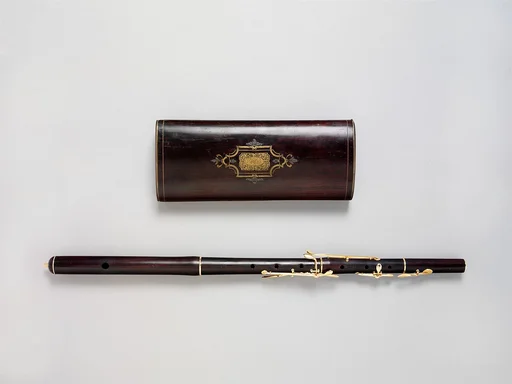
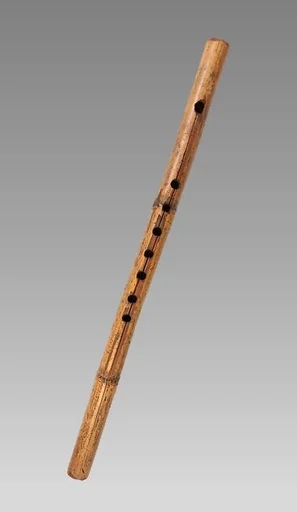
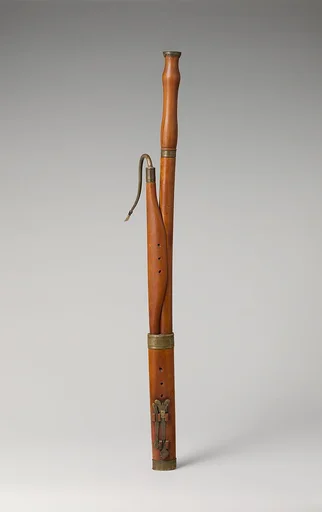
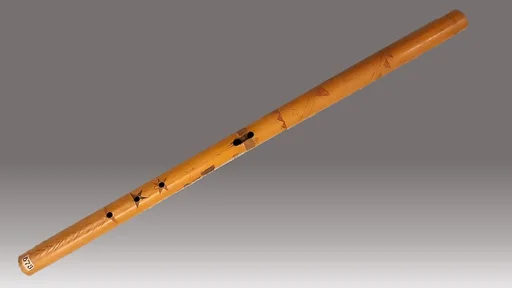
Transverse Flute in D-flat
Unknown
1760–90 · Hard-paste porcelain, gold-plated brass · Musical Instruments
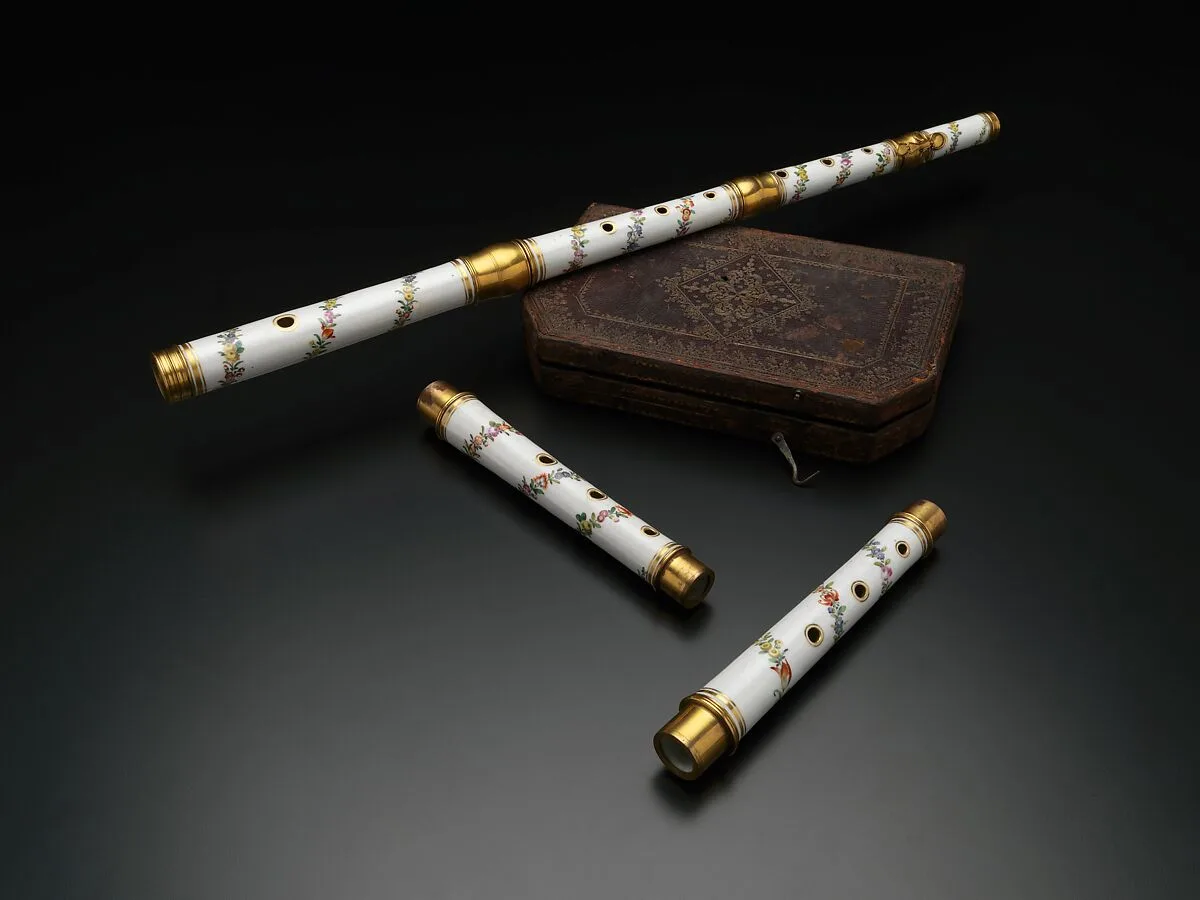
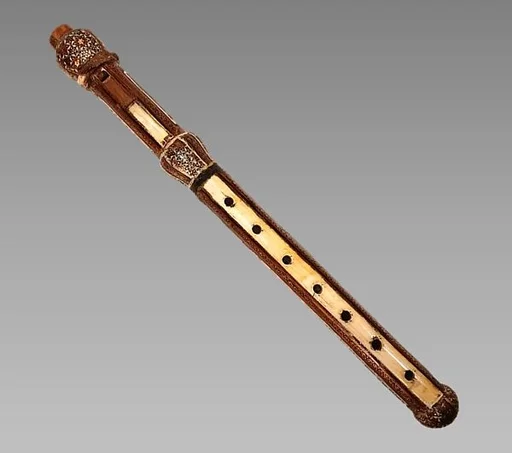
Johan Friedrich Böttger's rediscovery of hard-paste porcelain in 1708 was the basis of a new luxury industry. Makers explored all kinds of applications in the new medium. Porcelain musical instruments posed enormous problems since during drying and firing there occurred substantial shrinkage. In the kiln, wet porcelain matter shrinks by a third of its volume so large molds had to be made to guarantee the precise final dimensions of bore, finger- and embouchure hole. Wooden flutes are easily fine-tuned and voiced by drilling; porcelain, however, makes later manipulations problematic. Porcelain flutes and carillons were rare, but ocarinas like one from Dresden in the Museum's collection were more common. After the porcelain sections of this flute, including its decoration, had been fired, a goldsmith completed the metal work, making joints, sockets, cap and key. Porcelain flutes were known only in the circles of high nobility. Another example of a porcelain flute is found in the British Royal Collection.
- Artist
- Unknown
- Date
- 1760–90
- Medium
- Hard-paste porcelain, gold-plated brass
- Culture
- German
- Department
- Musical Instruments
- Credit line
- Gift of R. Thornton Wilson, in memory of Florence Ellsworth Wilson, 1943