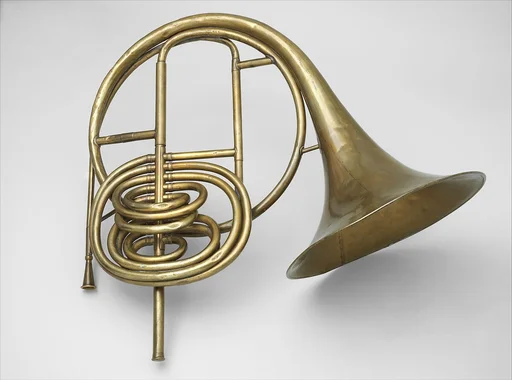
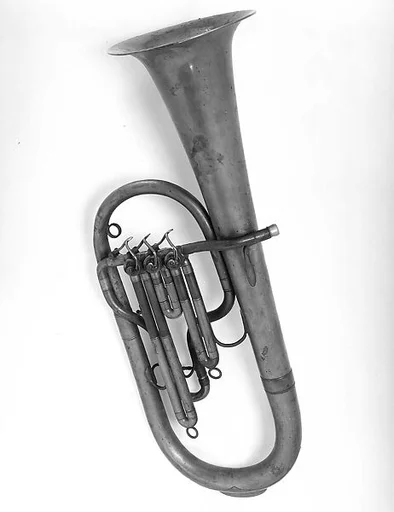
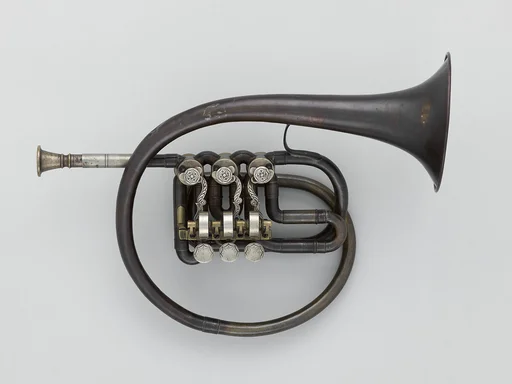
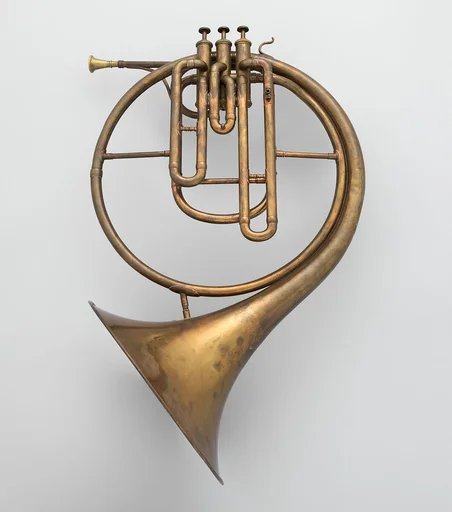
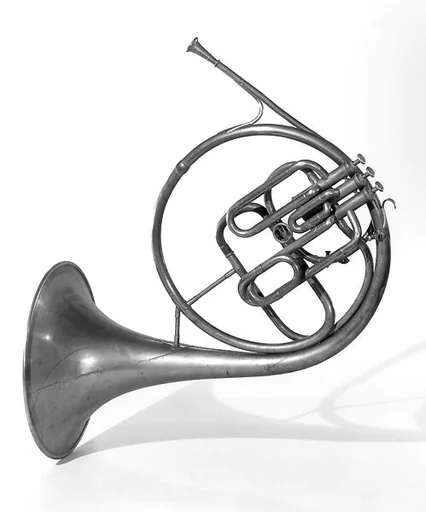
Cor d'orchestre
Pierre Piatet
1845–50 · Brass · Musical Instruments
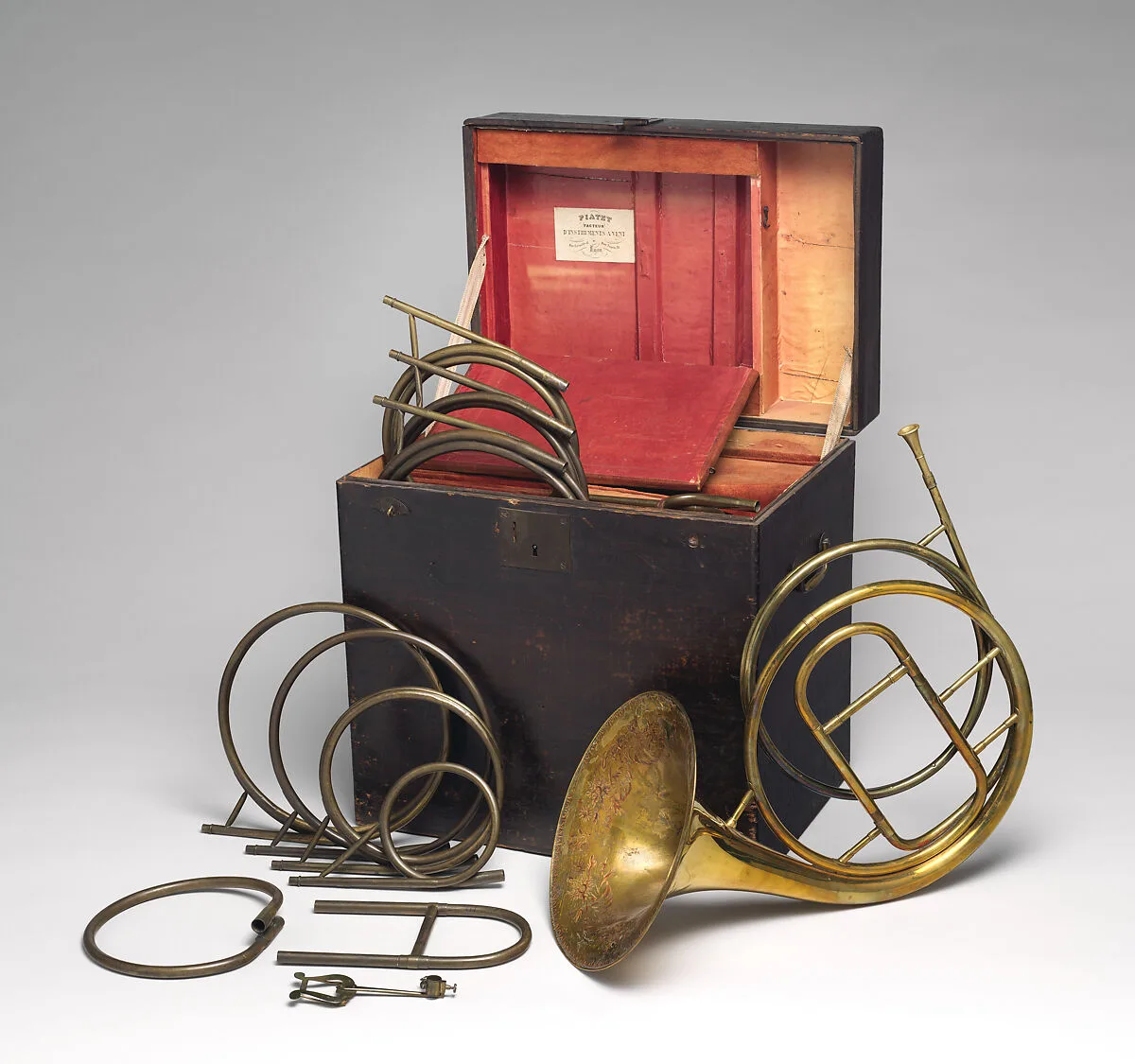
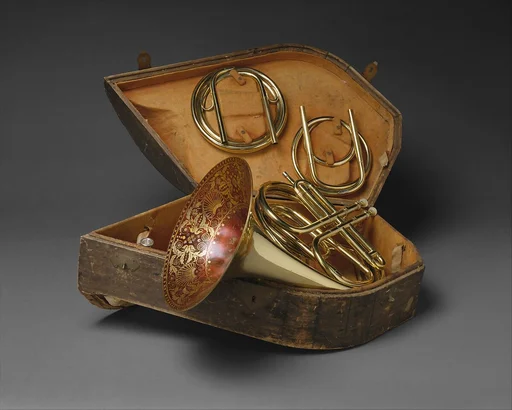
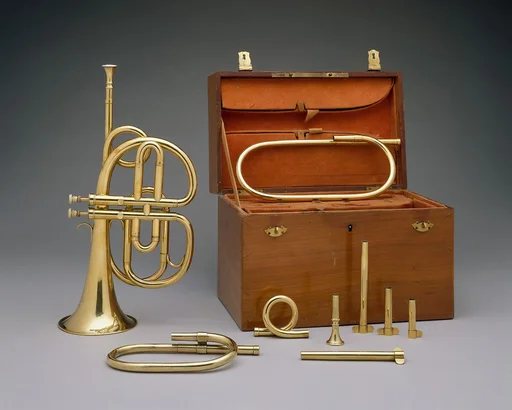
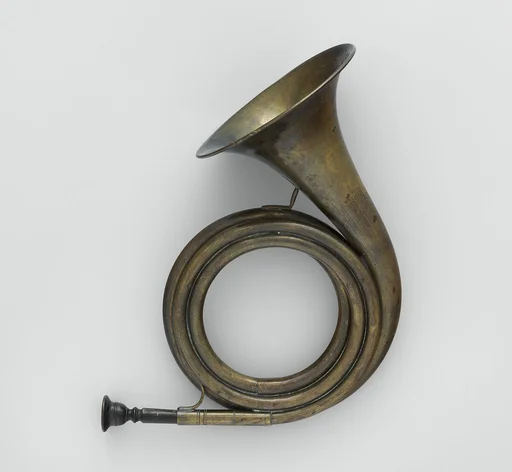
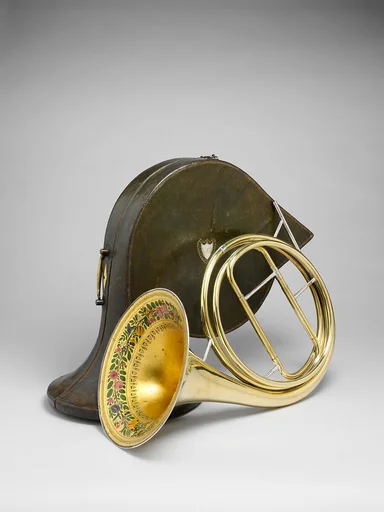
This type of natural horn was used in Classical and early Romantic orchestras. It is often referred to as the "hand horn" because by placing their hand in the horn’s bell and closing it off to varying degrees, players could alter the notes of the harmonic series to produce a chromatic scale. The 10 detachable crooks (from B-flat basso to B-flat alto) typically supplied with cors d'orchestre allowed the horn to cover the wide range of keys encountered in orchestral repertoire. Changing the sounding length through the use of crooks gave each key its own tonal characteristics. The longer crooks produce a darker, "stuffier" tone, while short crooks sounded bright and trumpet-like. The horn responds best when played with crooks in the middle of its range, thus E-flat, E and F became the most frequently used keys for horn compositions. These subtle timbral differences are lost on the modern horn, which has dispensed with crooks. Bradley Strauchen-Scherer
- Artist
- Pierre Piatet
- Date
- 1845–50
- Medium
- Brass
- Culture
- French
- Department
- Musical Instruments
- Credit line
- Purchase, The Howard Bayne Fund Gift, 1977