Double Whistle
Unknown
7th–9th century · Pottery, paint · Musical Instruments
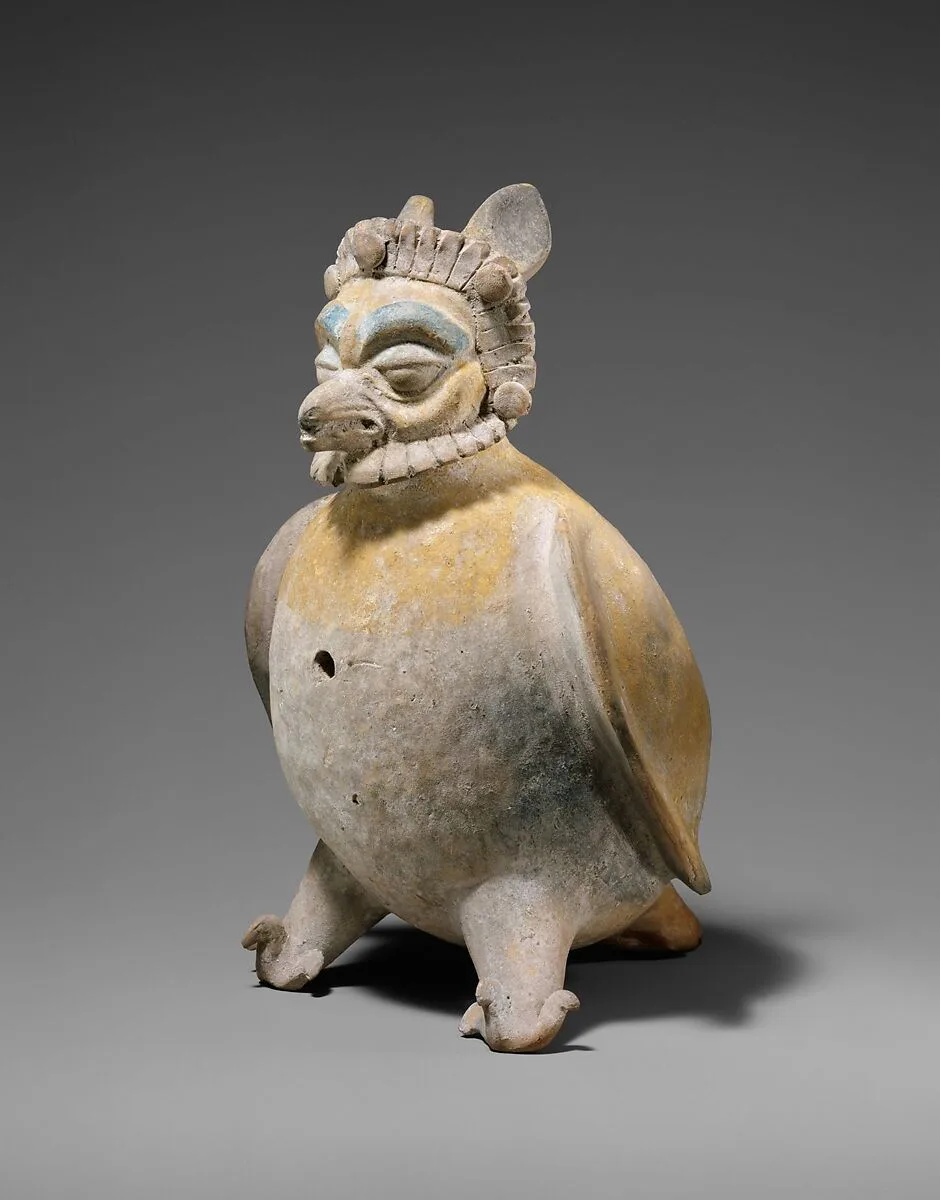
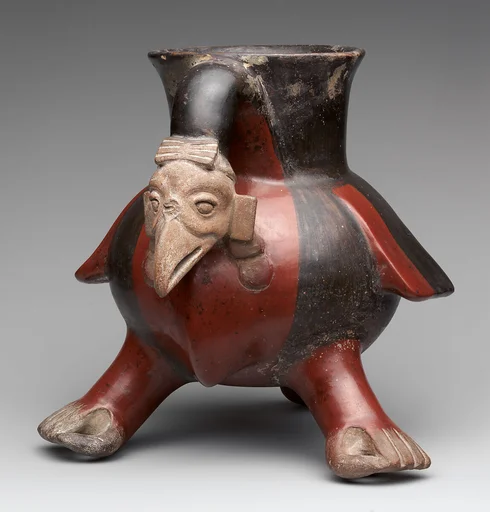
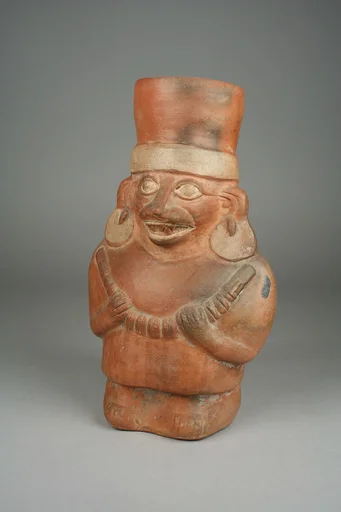
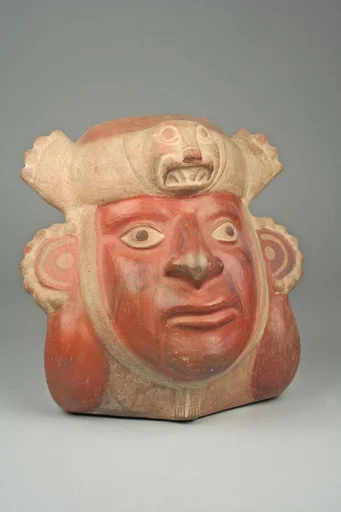
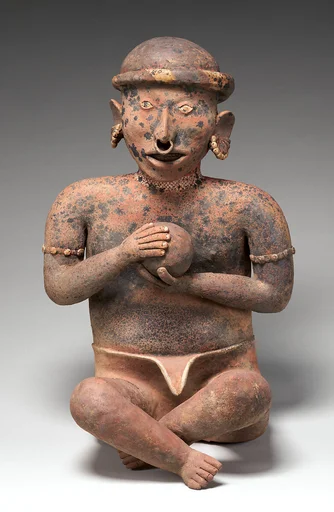
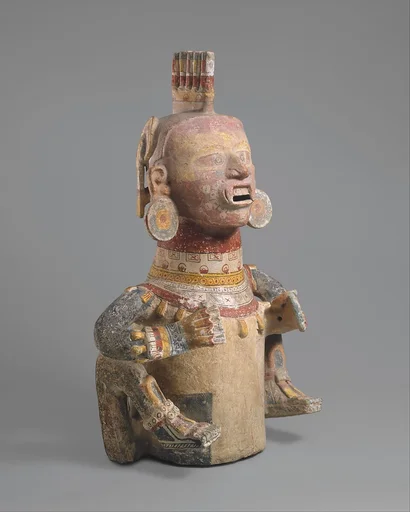
The production of anthropomorphic and zoomorphic ceramic figures in Central and South America originated about 6,500 years ago in the Andes region of Colombia, then spread along the west coast, from Ecuador to northern Chile and Argentina, and finally farther north into Central America. Rattles and whisltes, made in a variety of sizes and forms, sometimes imitated the sounds of the creature represented. This pottery whistle is in the form of a bird standing on two legs and a tail. It is a double whistle, with two internal and separate sounding chambers. The lower chamber, located in the body of the bird, is sounded through a mouthpiece located in the tail. This chamber has a single finger hole on the front of the bird's belly allowing for two pitches to be produced. A second, smaller, chamber is found in the head of the bird and is activated through a mouthpiece protruding from behind the ears. (J. Kenneth Moore, 2000)
- Artist
- Unknown
- Date
- 7th–9th century
- Medium
- Pottery, paint
- Culture
- Mayan
- Department
- Musical Instruments
- Credit line
- Purchase, Gift of Elizabeth M. Riley, by exchange, 2000