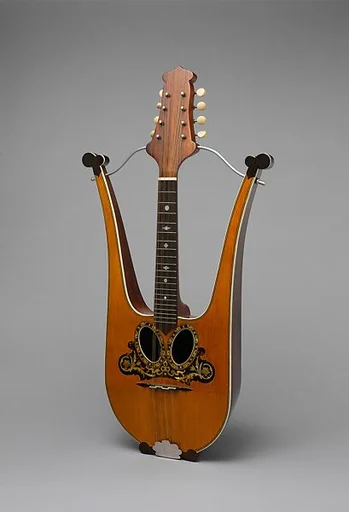
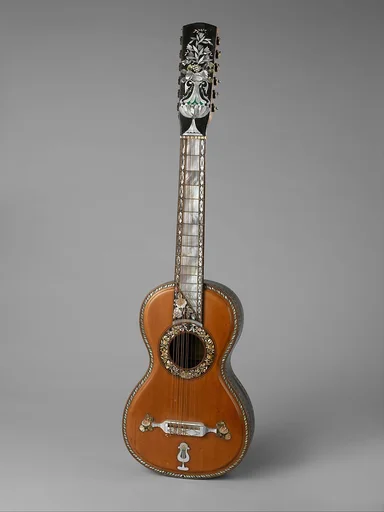
Lyre Guitar
Joseph Pons
ca. 1805 · Mahogany, spruce, ebony, brass, nickel-silver, gilding · Musical Instruments
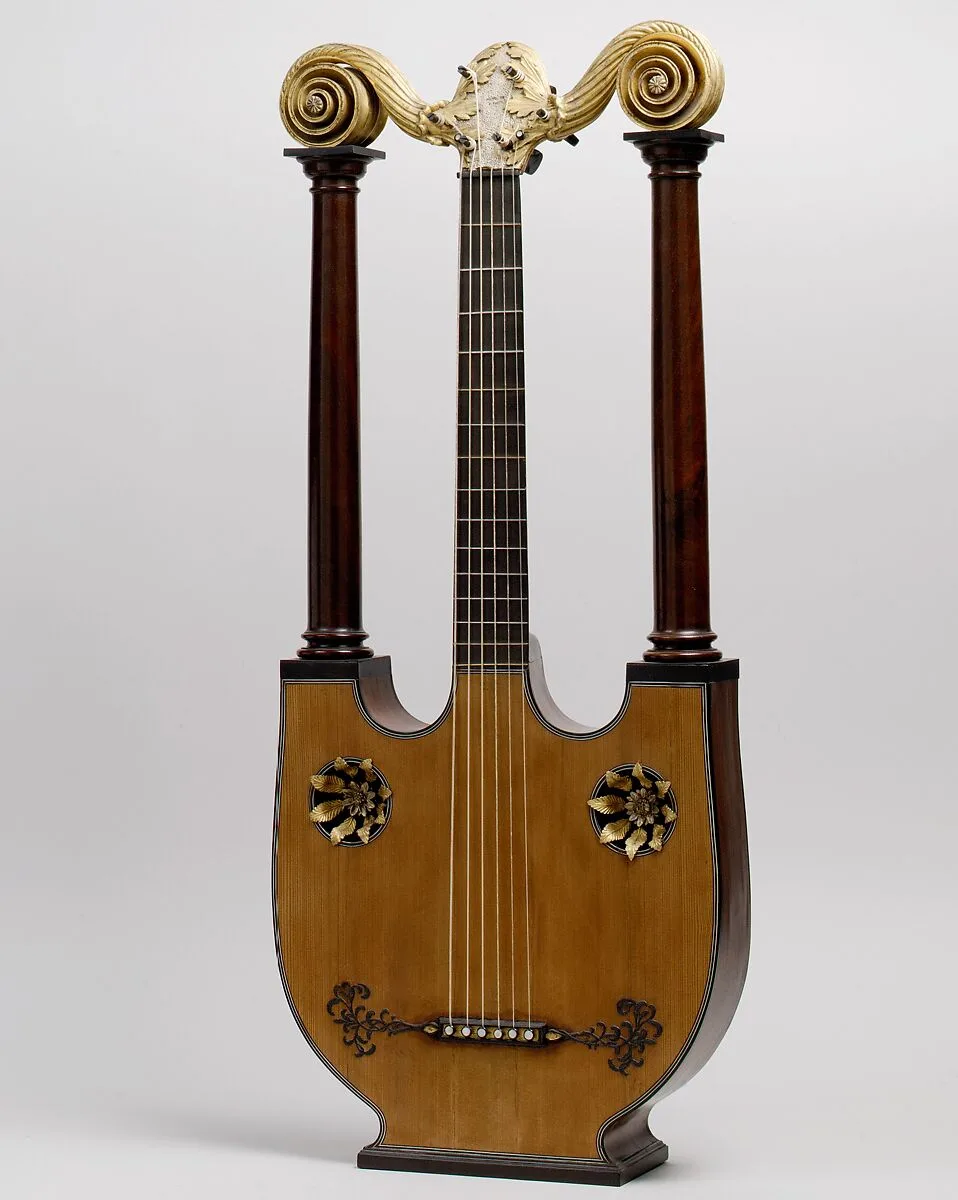
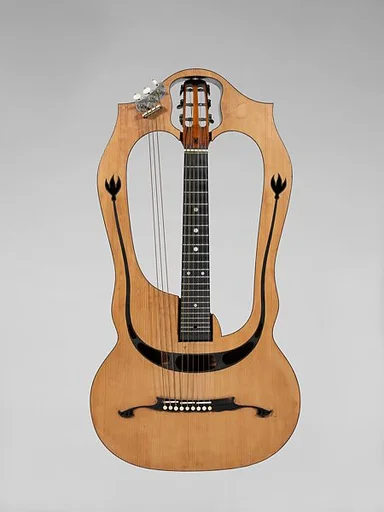
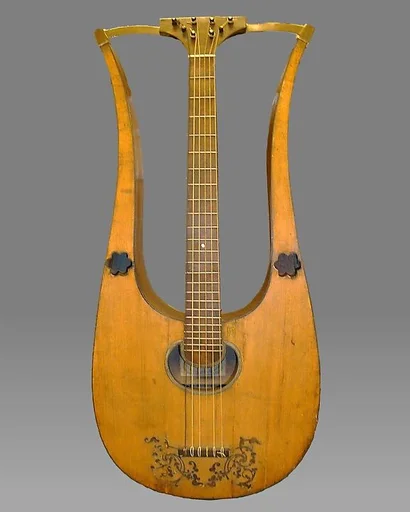
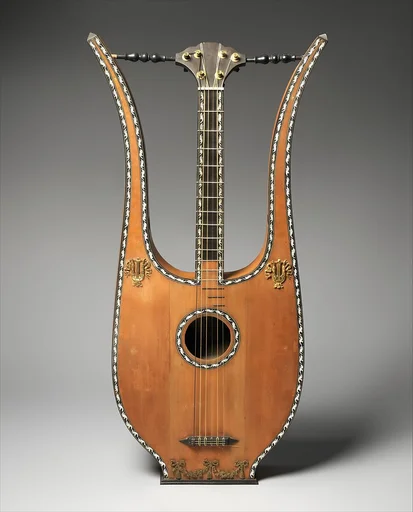
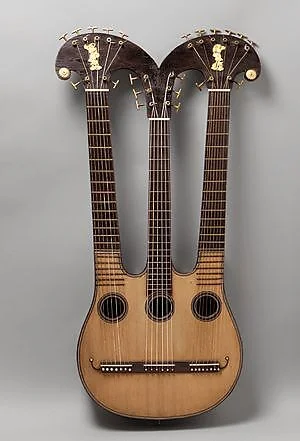
This form of the guitar was created about 1785. The columnar arms supporting the yoke are veneered in mahogany. The guitar has six single courses of strings. A printed label inside the instrument reads: “Pons / fils / luthier, / Rue du Grand Hurleur / No. 5 / A Paris, an 13.” The phrase “an 13” refers to the thirteenth year (1804–1805) of the French Revolutionary Calendar. Renaissance paintings by Lorenzo Costa and Raffaellino Garbo show lyre-guitars held upright (possibly interpretations of incised strings in classical bas-reliefs), as they were properly held by the player. Essentially, the lyre-guitar was a modified version of the lyre of antiquity, but with a fingerboard and six strings. English lyre-guitars were sold from 1811 as the six-string "Apollo" lyre of Edward Light and the twelve-string "Imperyal Lyre" of Angelo Benedetto Ventura.
- Artist
- Joseph Pons
- Date
- ca. 1805
- Medium
- Mahogany, spruce, ebony, brass, nickel-silver, gilding
- Culture
- French
- Department
- Musical Instruments
- Credit line
- Purchase, Clara Mertens Bequest, in memory of André Mertens, 1998