Lute
Wendelin Tieffenbrucker
late 16th century · Yew, spruce, ebony, maple · Musical Instruments
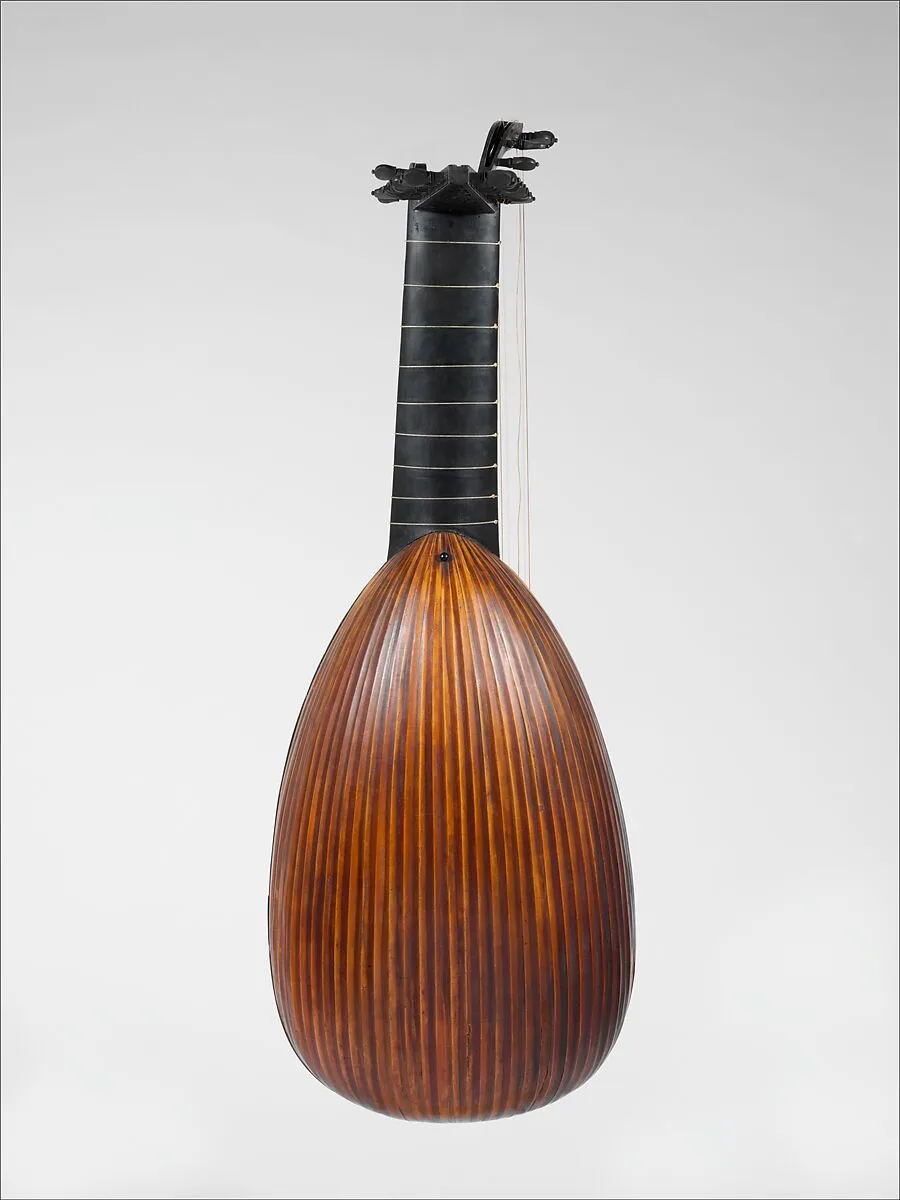
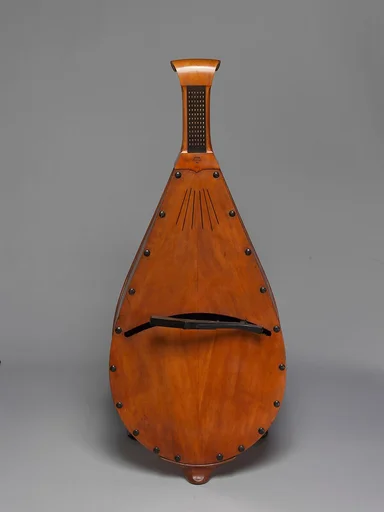
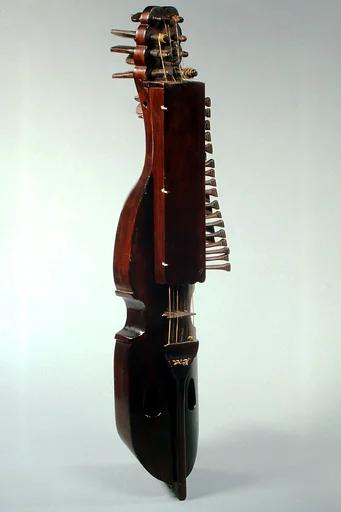
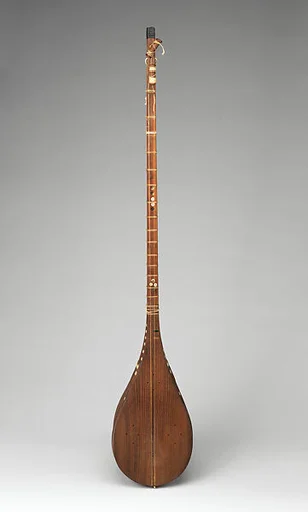
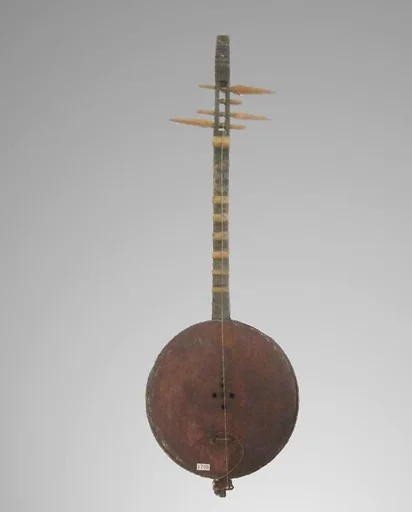
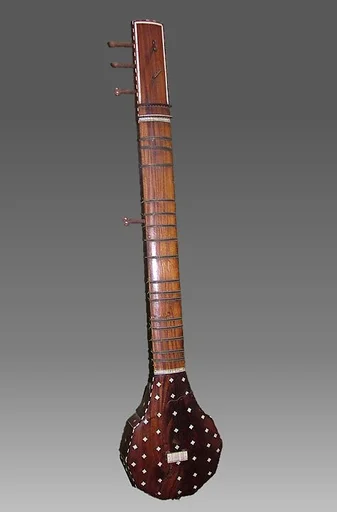
The arched back is formed of 37 ribs, the neck and pegbox--holding 4 bass strings and 20 fretted strings--are veneered with ebony. The fragile spruce top has been removed and is displayed to show repairs and alterations in the original ribbing; a modern replacement top maintains the form of the body. The Tieffenbrucker family was among the most important dynasties of the lute-making craft during the Italian Renaissance. The family migrated from the little town of Tieffenbruck in Bavaria to Venice at the beginning of the sixteenth century, and became the cornerstone of the lute-making industry there. This lute was built as a bass instrument, which originally had eight or ten courses (groups of strings meant to be played together) and was modified in the eighteenth century to thirteen courses. The back is made of thirty-seven bicolor yew ribs. The large number of ribs, as well as the wood choices, are distinctive innovations introduced by the Tieffenbruckers. (Jonathan Santa Maria Bouquet, 2009)
- Artist
- Wendelin Tieffenbrucker
- Date
- late 16th century
- Medium
- Yew, spruce, ebony, maple
- Culture
- Italian
- Department
- Musical Instruments
- Credit line
- Purchase, Gift of Mr. and Mrs. Robert P. Freedman, by exchange, 1989