Bass Viola da Gamba
Andreas Jais
early 18th century · Wood · Musical Instruments
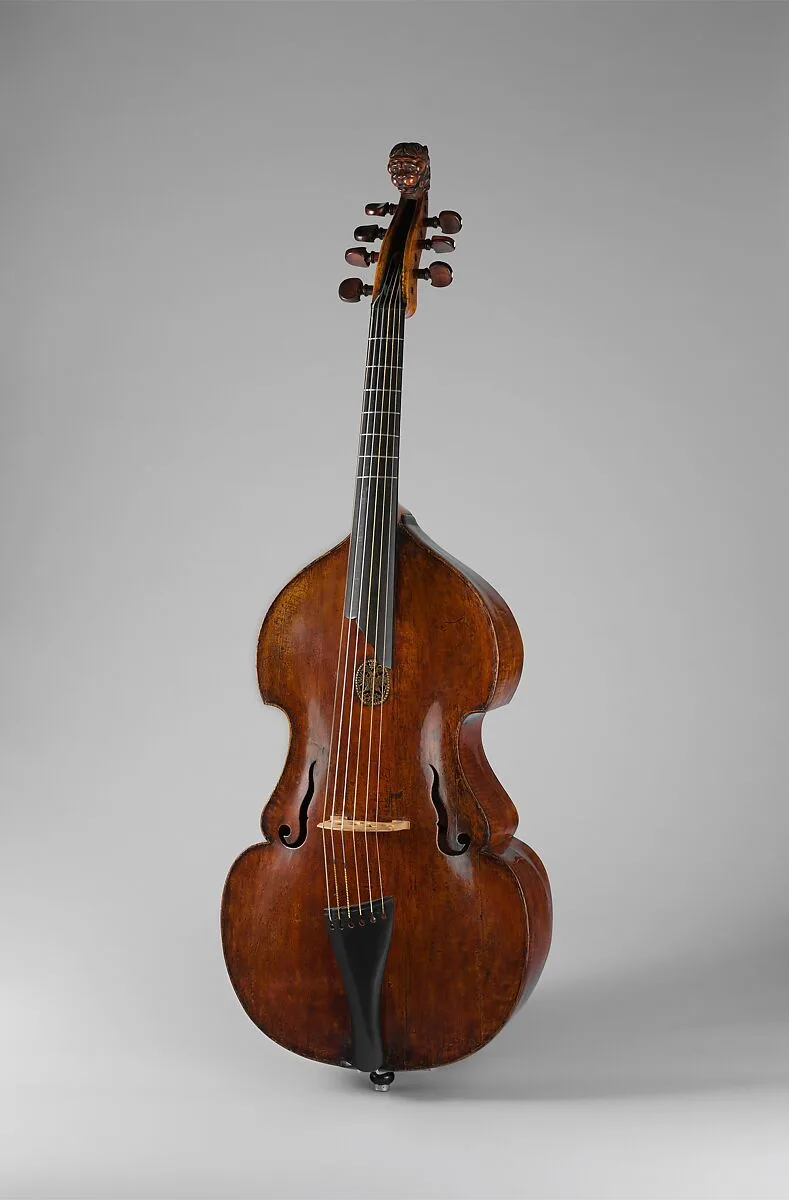
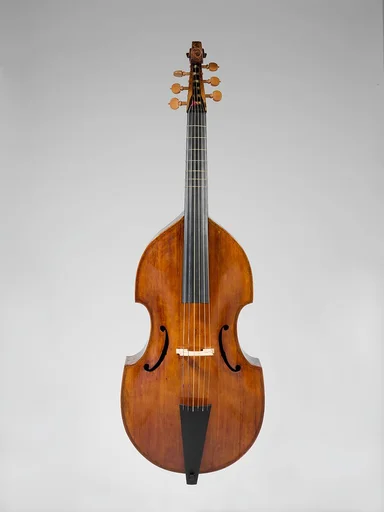
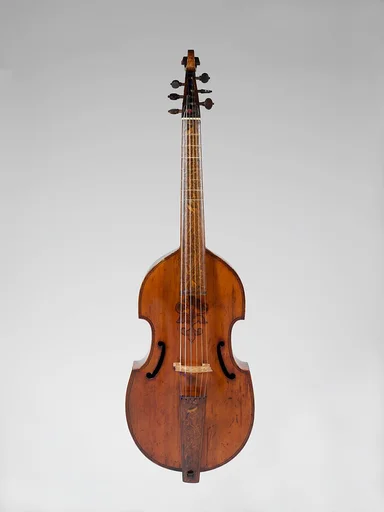
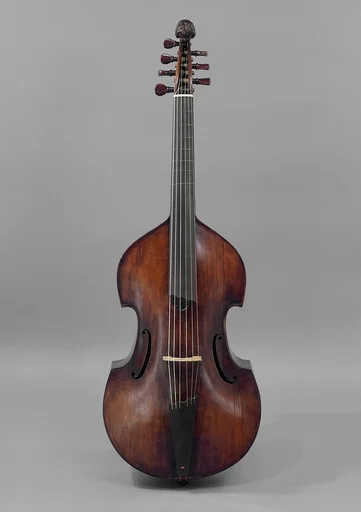
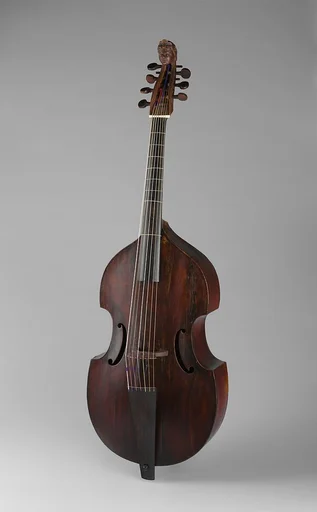
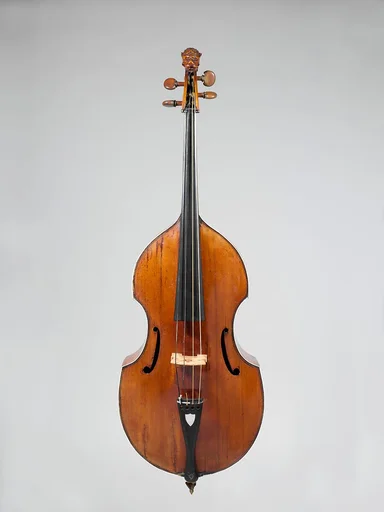
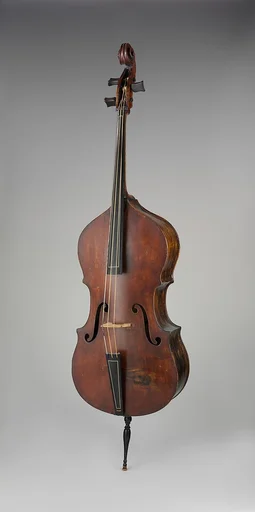
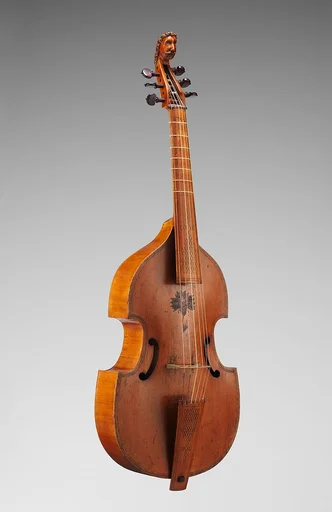
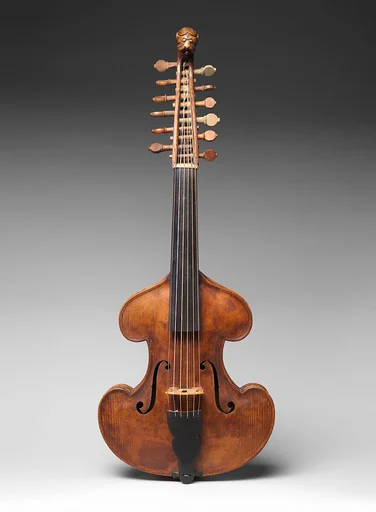
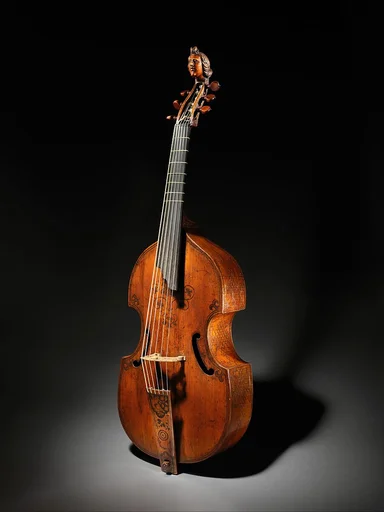
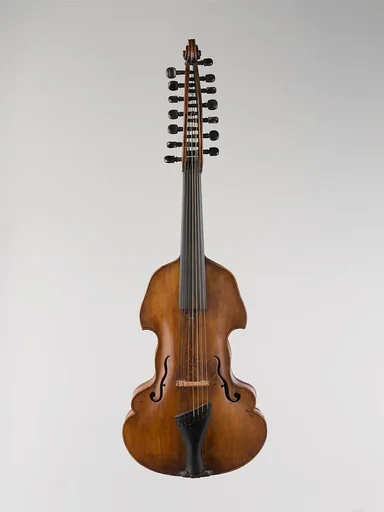
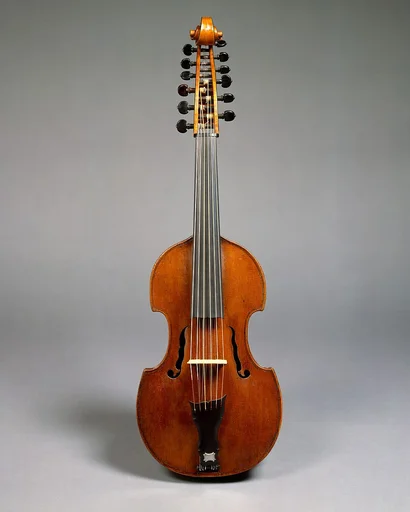
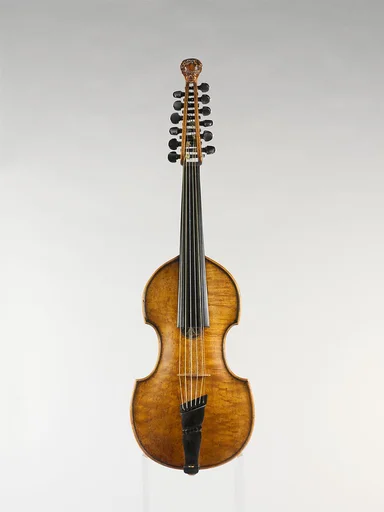
Viols, the most esteemed bowed instruments of the late Renaissance, were only gradually displaced by the violin family. Viols differ from violins chiefly in shape, in number of strings and tuning, and in having fretted necks. All viols are played in an upright position between the knees or on the legs ("gamba" means "leg"), and the bow is held palm upward. The sound is less brilliant and quieter than that of the violin family of instruments. Chamber music for a consort of four to six viols was composed during the Renaissance and Baroque eras, and solo works for the bass viol were being played until nearly the end of the eighteenth century. Andreas Jais was from a Tyrolean family of instrument builders active in Bolzano in the eighteenth century. Despite its unoriginal narrow neck and fingerboard (replacements from a conversion to the cello), this instrument maintains its original oblong and curvilinear shape, a feature typical of instruments from this region. Description: Seven strings tuned AA, D, G, c, e, a, d1; unusual lobed lower bouts; oval rosette inserted above flame-shaped soundholes contains a double-headed eagle and unidentified coat of arms; two-piece table of Alpine spruce with very fine grain widening toward the flanks; two-piece back and ribs of curly maple with irregular figure; reddish-brown varnish; neck and fittings are recent; grafted pegbox terminates in a lion's head; manuscript label possibly spurious. (L. Libin, 1992)
- Artist
- Andreas Jais
- Date
- early 18th century
- Medium
- Wood
- Culture
- Austrian
- Department
- Musical Instruments
- Credit line
- Gift of Janos Scholz, in memory of his son, Walter Rosen Scholz, and in honor of the Centennial of The Crosby Brown Collection of Musical Instruments, 1988