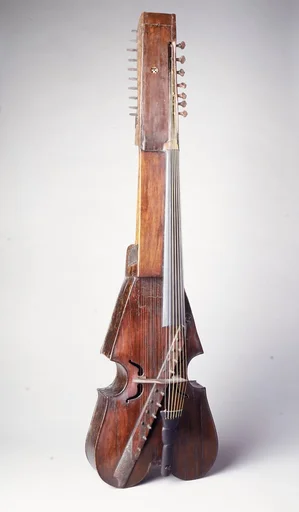
Sarangi
Unknown
ca. 1900 · Wood, ivory, parchment, metal · Musical Instruments
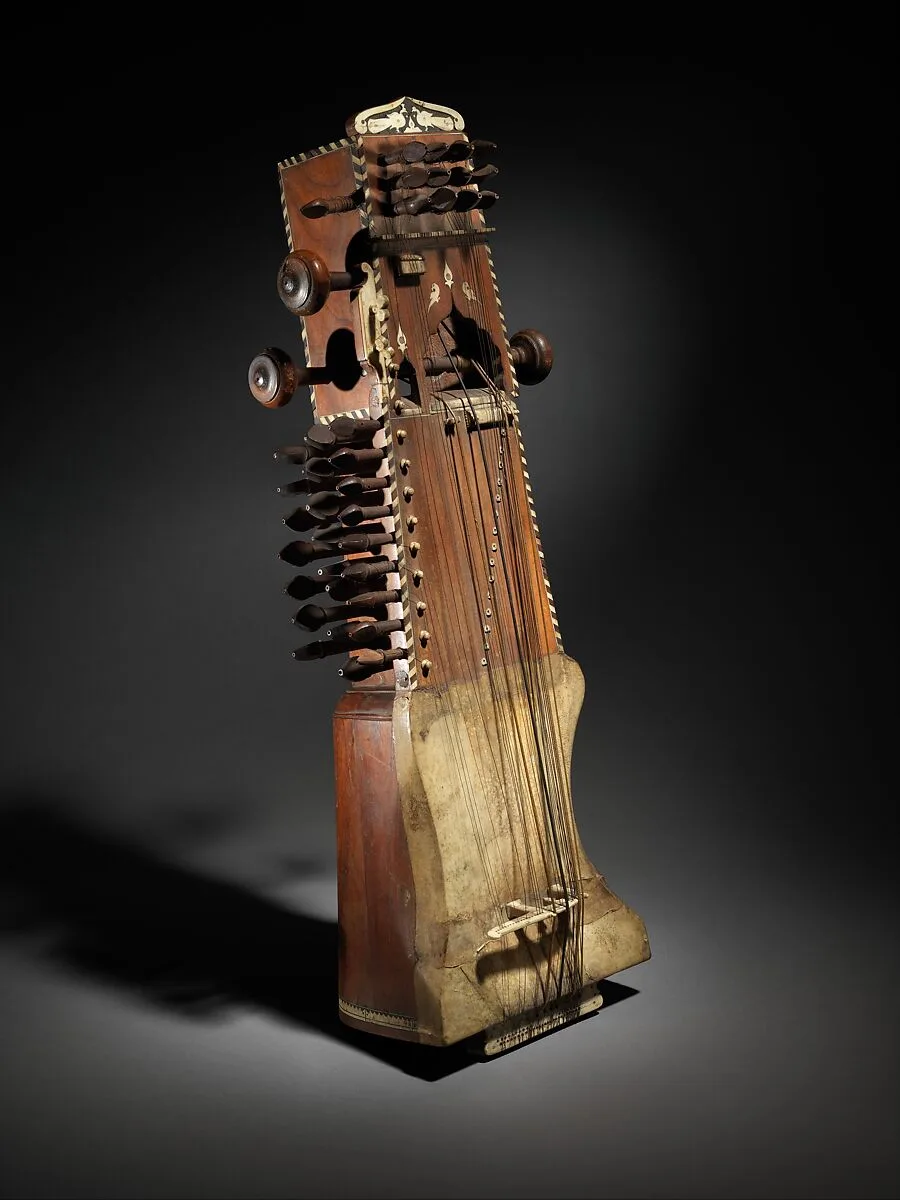
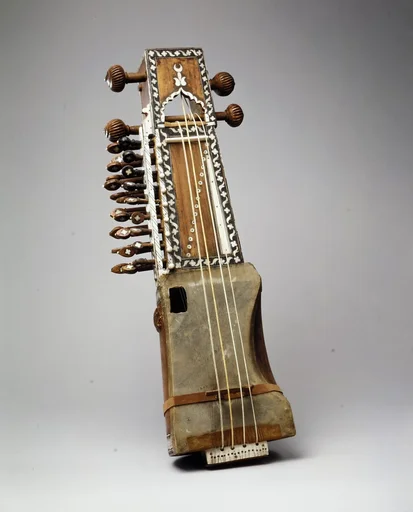
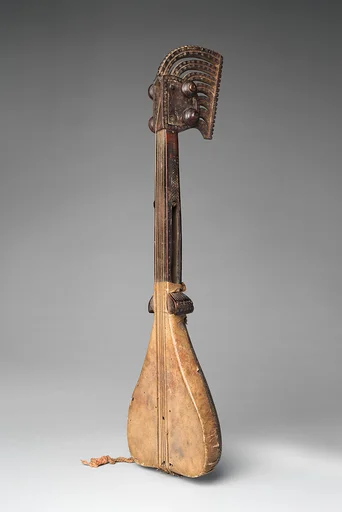
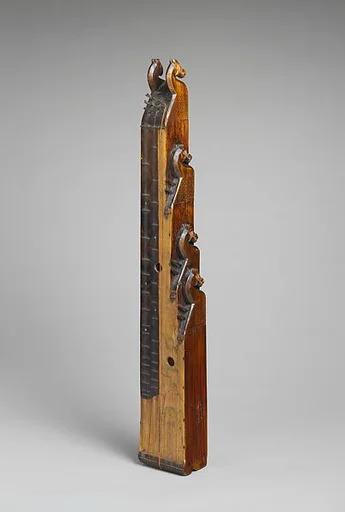
A beautiful full sound and a close proximity to the melodic flexibility of the human voice make the sarangi the most important bowed instrument of classical Hindustani music of northern India and Pakistan. A rigid horsehair bow (not shown) rhythmically sounds the gut melody strings that cross over an ivory elephant-shaped bridge (bara ghurac). Melody and virtuosic embellishment are produced by pulling the strings to the side with the fingernails. This playing technique combines with the instrument's short neck to make the sarangi a particularly difficult instrument to master. The number of metal sympathetic strings (tarabs) that pass through the bridge varies. Today thirty to forty of these strings attach to pegs (khunti), either at the side or by entering diagonally placed holes along the neck (chati). Decorative openings at the top, where melody strings enter the peg box (mattha), reflect Mughal architectural influences.
- Artist
- Unknown
- Date
- ca. 1900
- Medium
- Wood, ivory, parchment, metal
- Culture
- Indian
- Department
- Musical Instruments
- Credit line
- Gift of Mrs. Harold H. Krechmer, in memory of her husband, Harold H. Krechmer, 1982