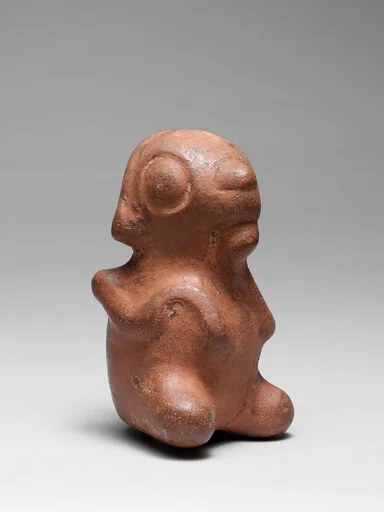
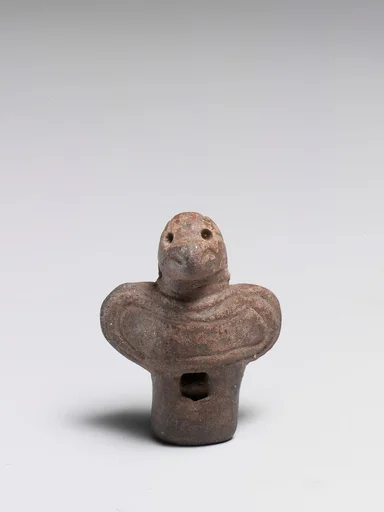
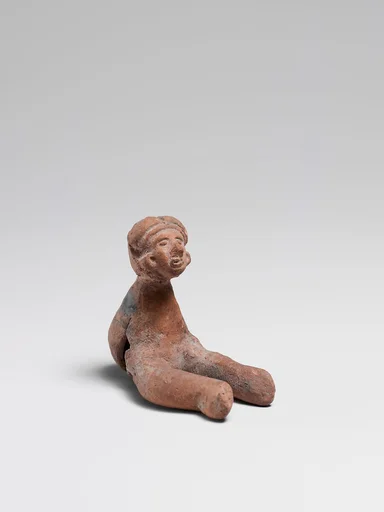
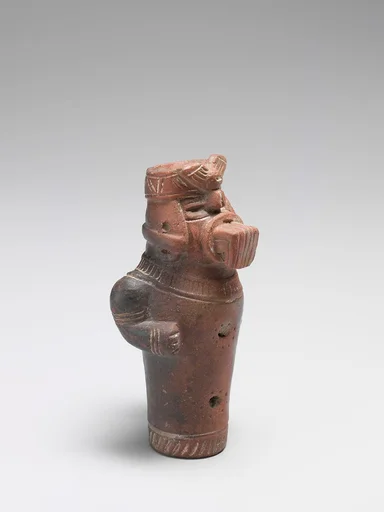
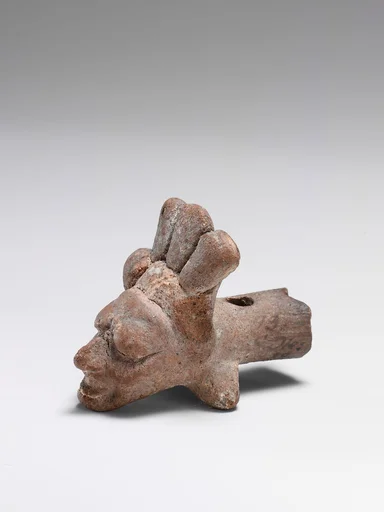
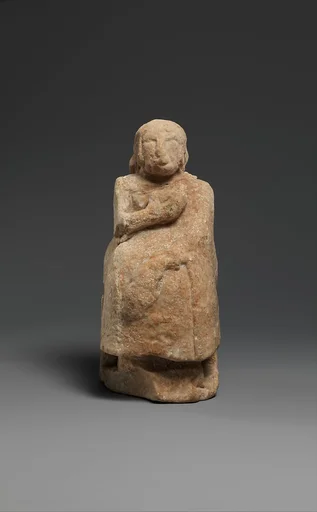
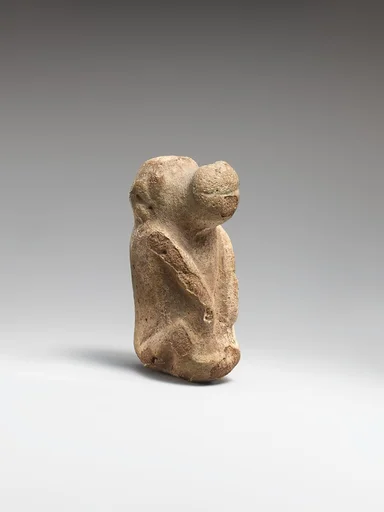
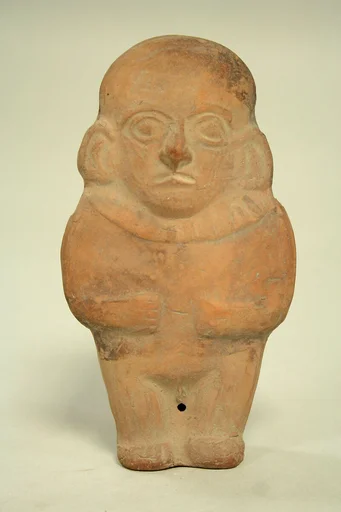
Double Pottery Whistle
Unknown
500 BCE–500 CE? · Clay · Musical Instruments
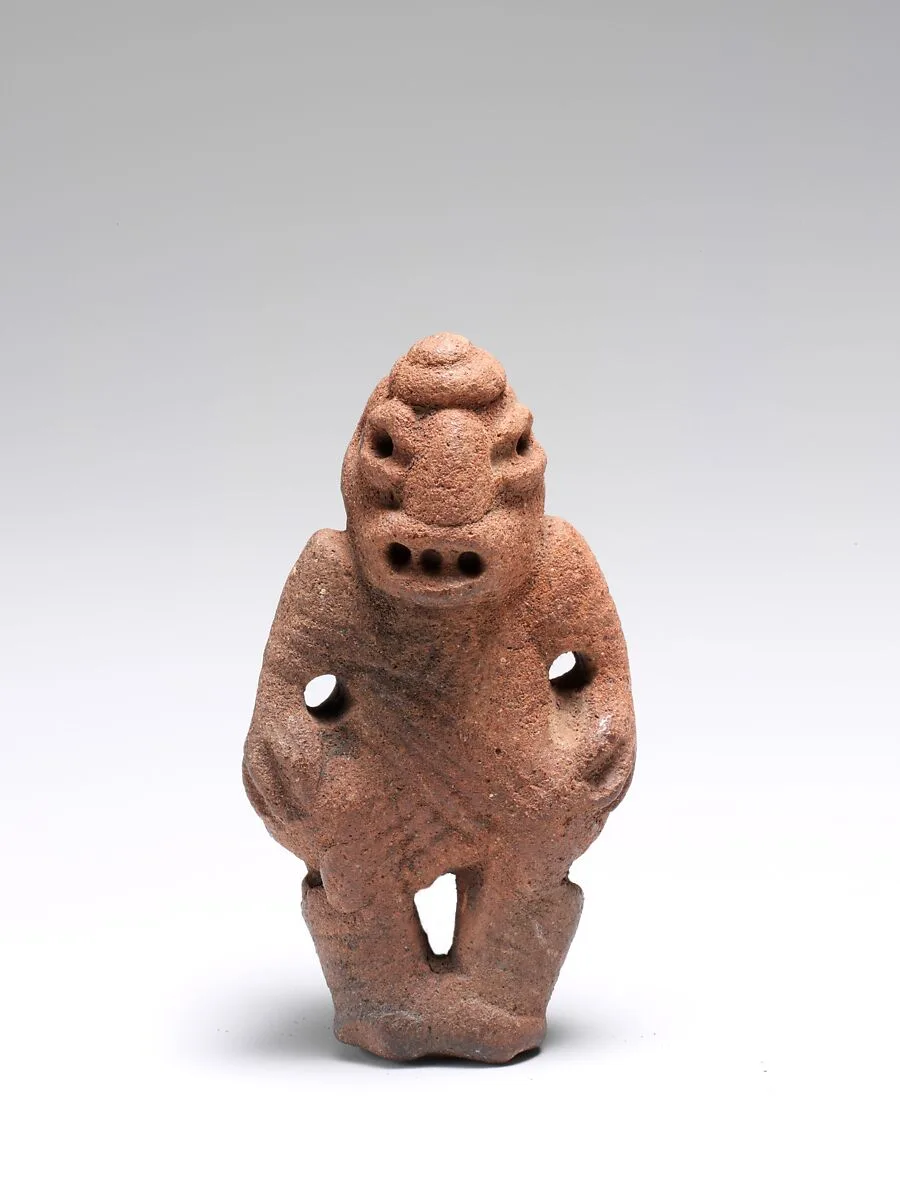
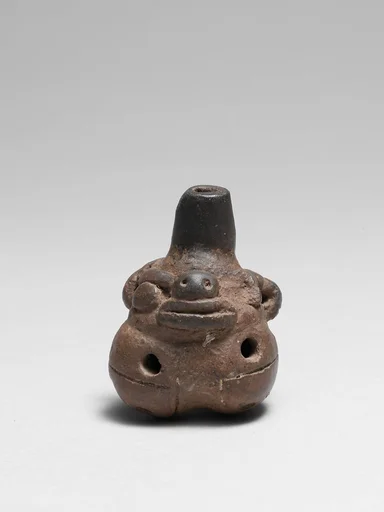
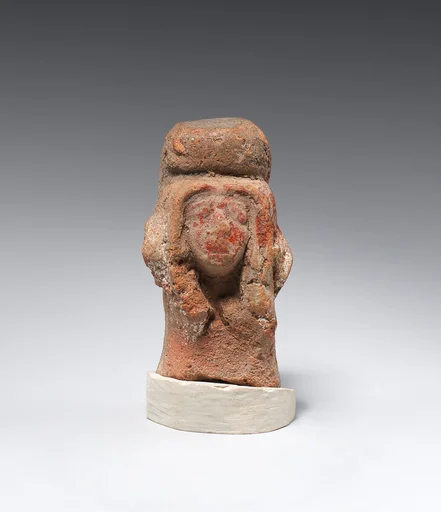
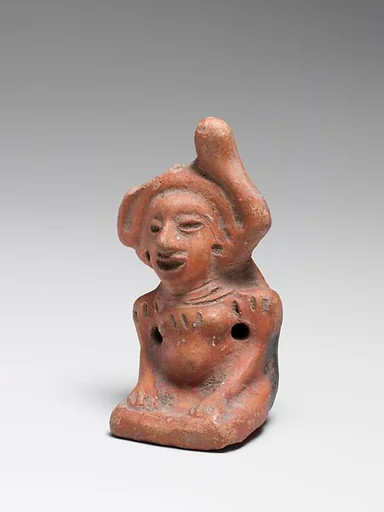
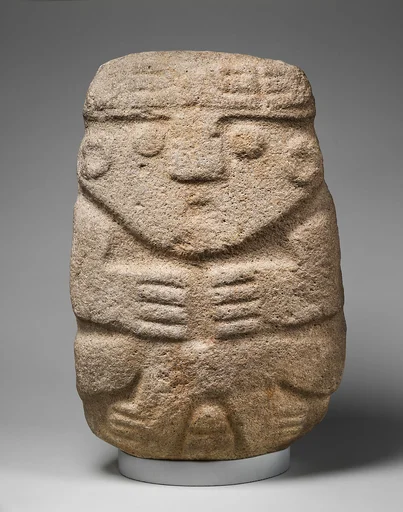
The production of anthropomorphic and zoomorphic ceramic figures in Central and South America originated about 6,500 years ago in the Andes region of Colombia, then spread along the west coast, from Ecuador to northern Chile and Argentina, and finally farther north into Central America. Rattles and whisltes, made in a variety of sizes and forms, sometimes imitated the sounds of the creature represented. Description: Standing humanoid figure of reddish brown clay, hands placed on enlarged hips, with hollow legs, joined at ankles, forming separate mouthpieces; mouths of whistles located on sides of thighs, at base of hollow spheroidal hips that form separate resonating chambers for whistles; punctate eyes and teeth, incisions delineating costume on figure's torso; pitches of whistles fairly close, producing a shrill effect.
- Artist
- Unknown
- Date
- 500 BCE–500 CE?
- Medium
- Clay
- Culture
- Costa Rican
- Department
- Musical Instruments
- Credit line
- The Crosby Brown Collection of Musical Instruments, 1889