Gyo
Unknown
19th century · wood · Musical Instruments
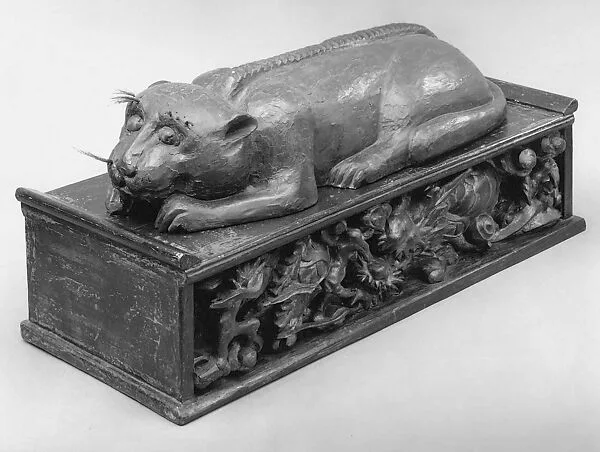
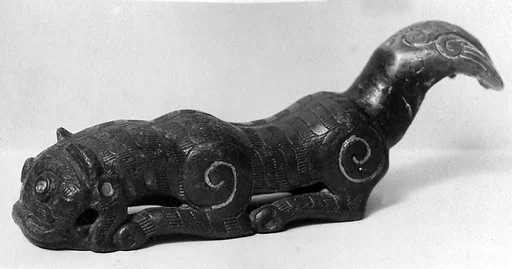
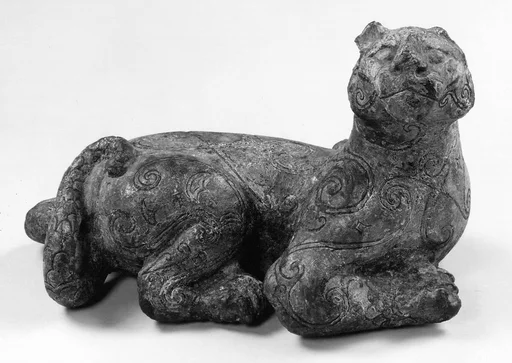
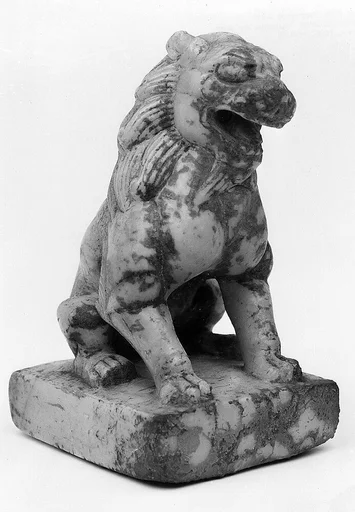
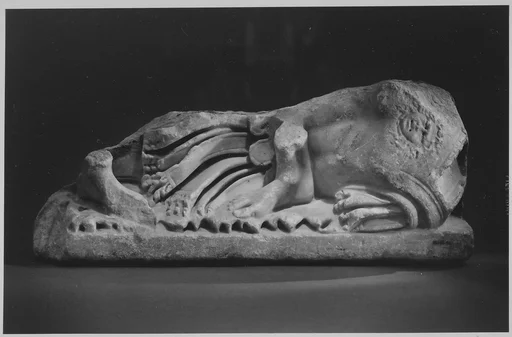
Using a whisk-like split bamboo rod the player strikes the tiger's head three times, then creates a "purring" effect by rubbing the rod across the smiling feline's notched back. This scraping motion marks the conclusion of a Confucian hymn. In Japan where this gyo was made Confucianism was rare but in China prior to the 1911 Revolution the yü, as it was called there, enjoyed a 3,000 year history. Koreans, who still maintain traditional ritual, call it o. In more traditional forms the tiger is painted white, a symbol of the western region and Autumn, and, in keeping with this symbolism, is placed in the west side of the ceremonial hall, a location that connotes Harvest, Sunset, and Death. The inscription on this tiger's forehead means "music."
- Artist
- Unknown
- Date
- 19th century
- Medium
- wood
- Culture
- Japanese
- Department
- Musical Instruments
- Credit line
- The Crosby Brown Collection of Musical Instruments, 1889