Symphonium
Charles Wheatstone
ca. 1835 · nickel silver, ivory, brass, mother-of-pearl · Musical Instruments
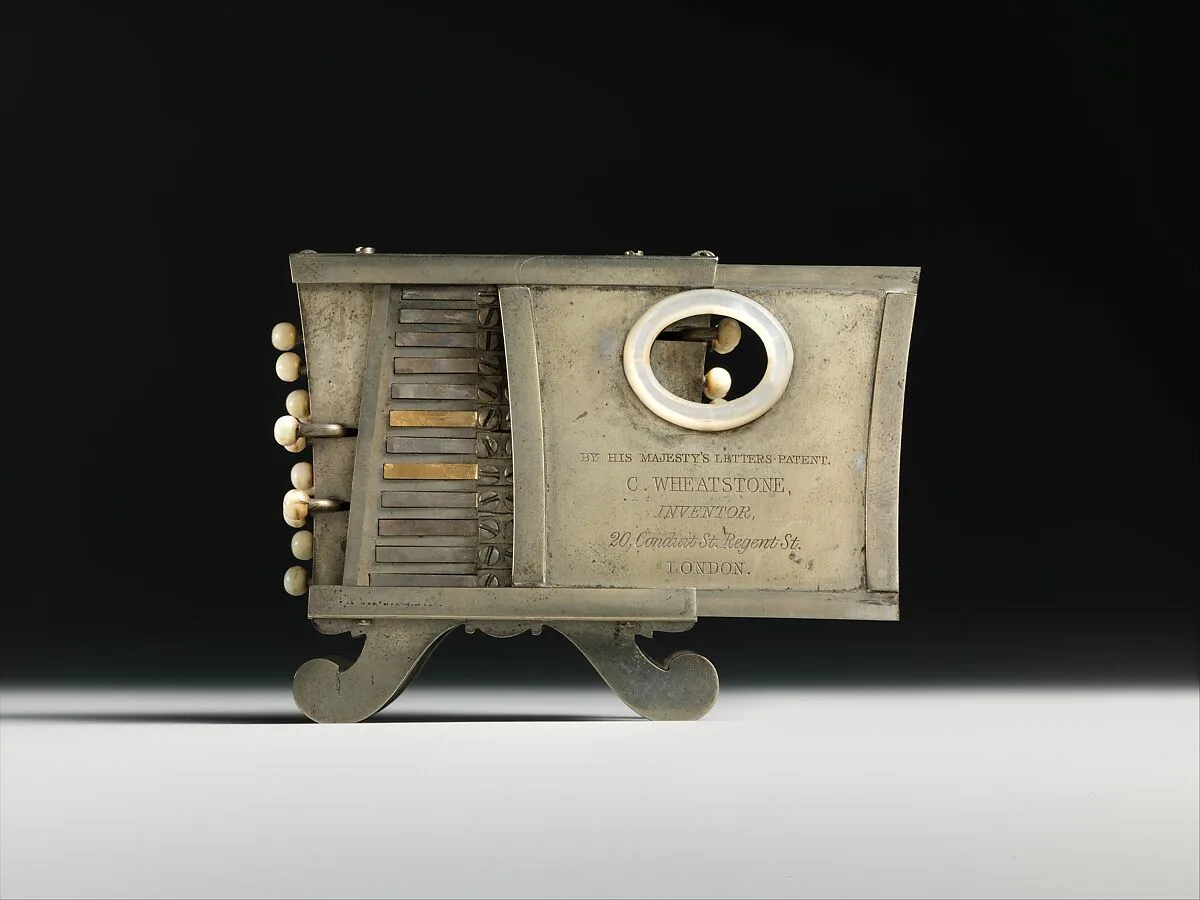
Invented in 1829 by the physicist Charles Wheatstone, the famous discoverer of the electric "Wheatstone bridge," the symphonium features two characteristics that he later used in his concertina: the same notes at pressure and suction, and alternative distribution of the diatonic tones to the right and left hand (C is for the right hand, D for the left, E for the right hand, etc.). The chromatic tones are the buttons of the outer row. The two groups of twelve buttons on each side produce a chromatic range from c1 to d3 (lacking d#1). The form of the instrument recalls a sheng without pipes.
- Artist
- Charles Wheatstone
- Date
- ca. 1835
- Medium
- nickel silver, ivory, brass, mother-of-pearl
- Culture
- British
- Department
- Musical Instruments
- Credit line
- The Crosby Brown Collection of Musical Instruments, 1889