Whistle
Unknown
19th century · Wood, grass, hide, tin, porcupine quill · Musical Instruments
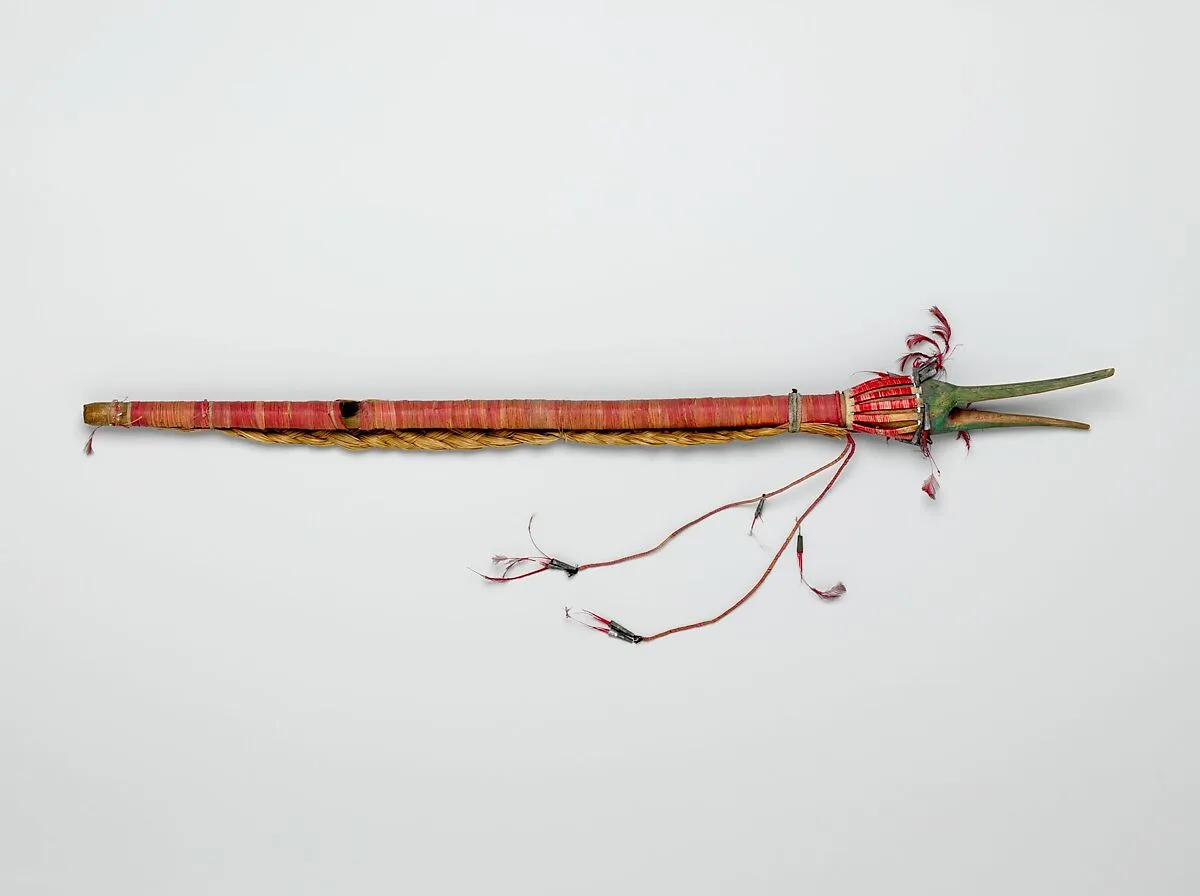
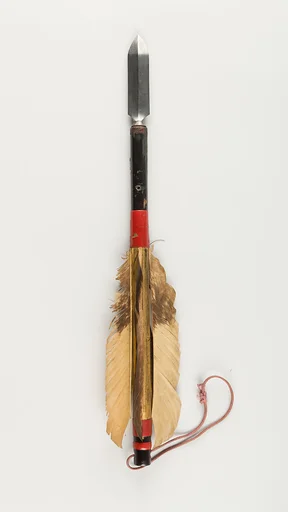
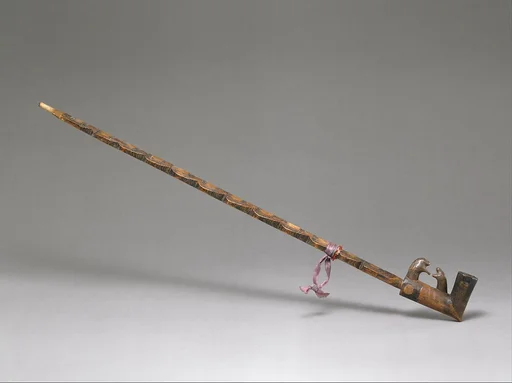
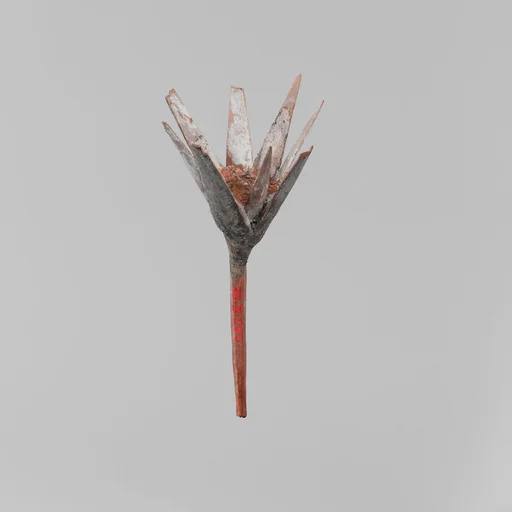
This whistle has no finger holes, creating a limited tonal range and making it ideal for signaling. Today, the whistle's use varies with each community, but in the past a leader used it to direct Grass Dance singers to resume or cease their songs. Some dancers held these symbolic crane-headed whistles as they flattened the grass during their dance. The sole opening in the shaft of the whistle is a duct window. Carved and hollowed from a single piece of wood and wrapped in red-dyed strips of reeds, this whistle features two braided lengths of sweetgrass lashed to its underside. Sweetgrass is considered sacred and used as a means of purification in many tribes. A collar of red-dyed, quilled spokeswith small rolled-metal cones and dyed down feathers surround the crane's beak. Two elongated tethers with feather adornment are attached at the collar's base.
- Artist
- Unknown
- Date
- 19th century
- Medium
- Wood, grass, hide, tin, porcupine quill
- Culture
- Native American (Sioux)
- Department
- Musical Instruments
- Credit line
- The Crosby Brown Collection of Musical Instruments, 1889