Densho
Unknown
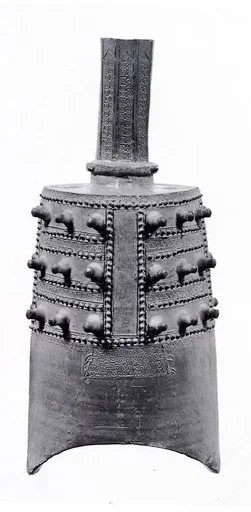
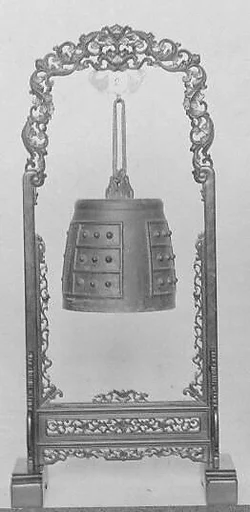
late 18th century · Leaded bronze with trace of antimony Material analyzed by Conservation Department, 20 August 1976. Tested by energy-dispersive x-ray fluorescence spectometry · Musical Instruments
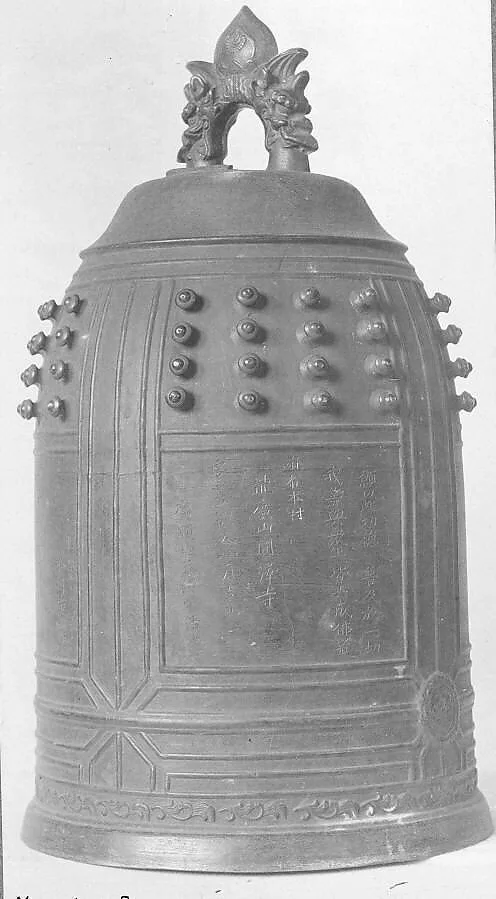
In Japanese ceremonies, suspended cast iron bells are used for signaling during the prayer and for calling Buddhists to worship. In China, similar bells were employed in ensembles, where they represented the yin, or "receptive" principle, and were sounded after the beat of a large drum (yang, or "creative" element). The densho incorporates many symbolic motifs found in the Far East. The suspension loop (ryuzo) is formed by two dragon heads and a flame; the upper third contains nipples (nyu), symbols of fertility; and the barren field below (ikenomachi) provides a place for poetry or iconography. The chrysanthemum, a symbol of longevity and happiness, forms the striking surface (shuza). The densho may occasionally be heard in the kabuki theatre's off-stage ensembles.
- Artist
- Unknown
- Date
- late 18th century
- Medium
- Leaded bronze with trace of antimony Material analyzed by Conservation Department, 20 August 1976. Tested by energy-dispersive x-ray fluorescence spectometry
- Culture
- Japanese
- Department
- Musical Instruments
- Credit line
- The Crosby Brown Collection of Musical Instruments, 1889