Cane Violin
Moritz Wilhelm Glaesel
19th century · Mahogany, spruce, ebony, metal · Musical Instruments
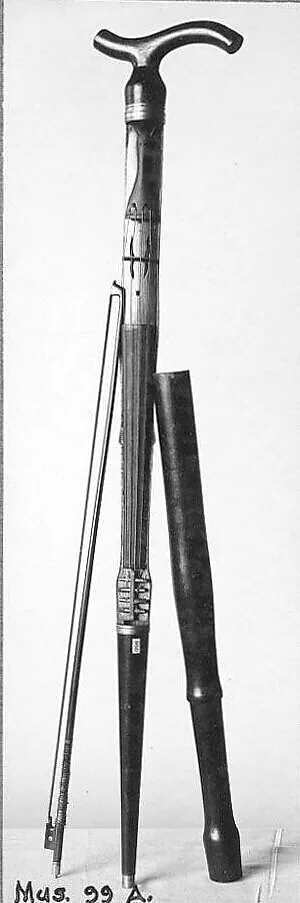
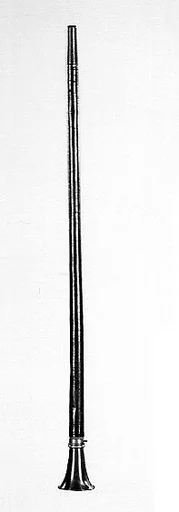
Walking-stick instruments of all varieties were popular in the eighteenth and nineteenth centuries. Novelty walking sticks, which might include umbrellas, flasks, guns, musical instruments, or other items were fashionable accessories for gentlemen of all ages. Flutes and violins were the most popular instrument walking sticks. This is a fairly typical example of a walking-stick violin hidden inside a mahogany body topped with an ornamental handle. The violin is hidden beneath a rounded cover that is held in place with metal bands. Once removed, the instrument along with an accompanying bow is revealed. The soundboard of the instrument is of spruce and the fingerboard is made from ebony. The strings of the violin are tuned by small iron pins that are tuned with a key. The instrument is similar to other surviving instruments with printed labels of Moritz Wilhelm Glaesel.
- Artist
- Moritz Wilhelm Glaesel
- Date
- 19th century
- Medium
- Mahogany, spruce, ebony, metal
- Culture
- German
- Department
- Musical Instruments
- Credit line
- The Crosby Brown Collection of Musical Instruments, 1889