Rebab
Unknown
late 19th century · Wood, parchment, metal · Musical Instruments
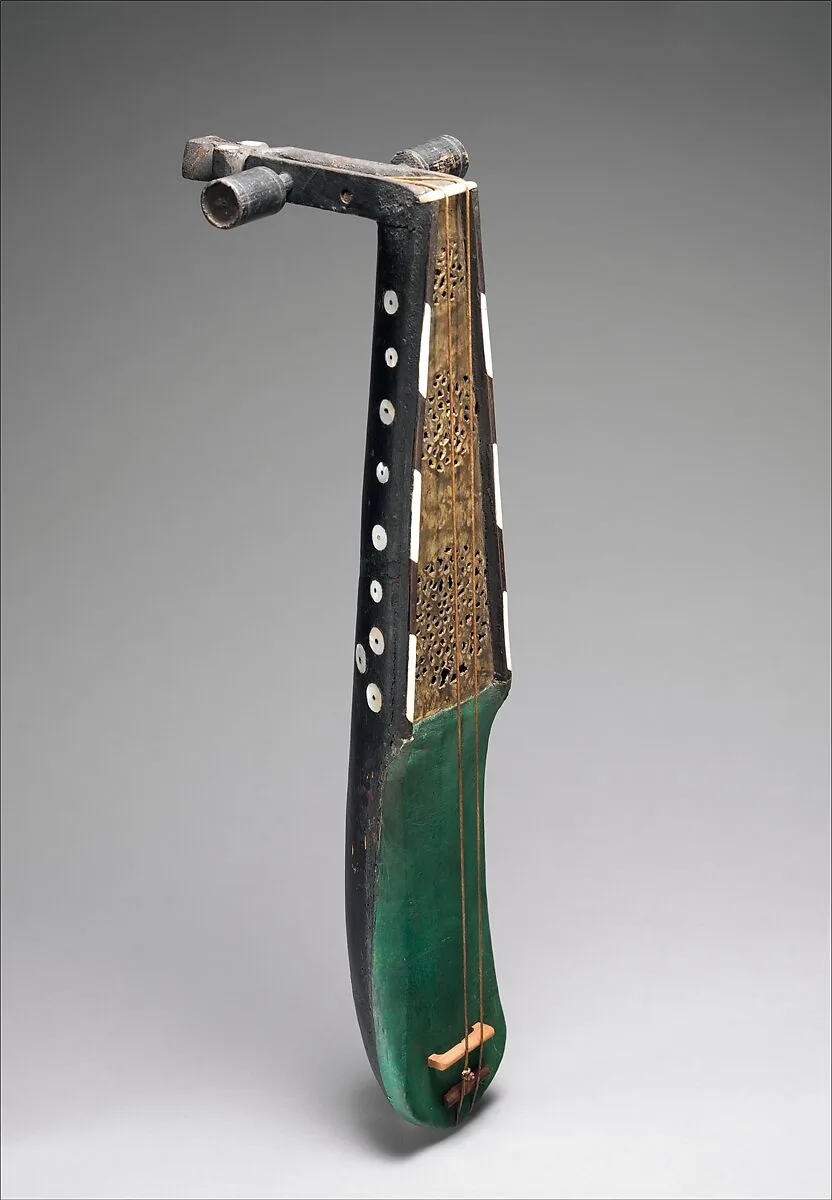
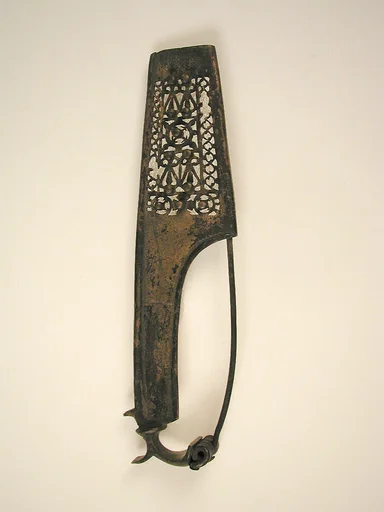
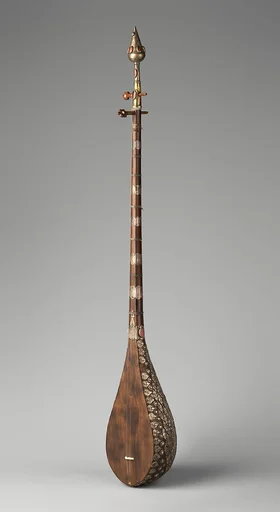
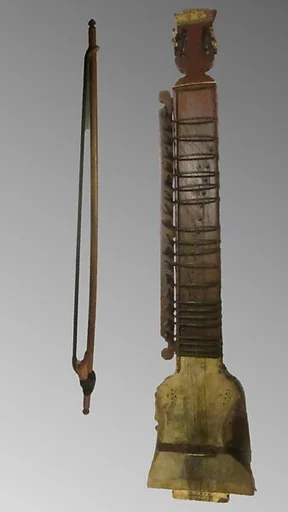
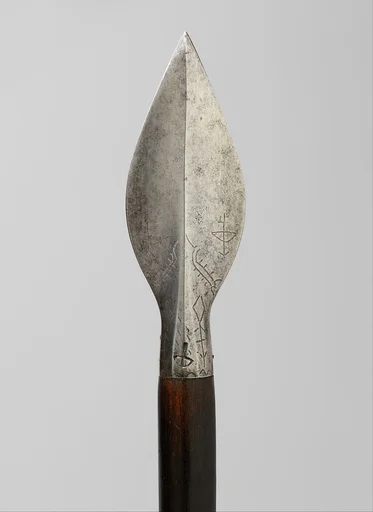
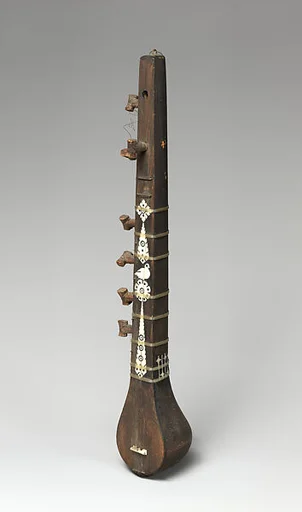
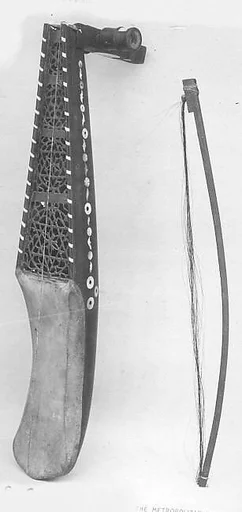
The term rebab refers to chordophones, particularly lutes and lyres, found in Islamic and Islamic-influenced lands. In North Africa, where this example is from, the rebab is most often a boat-shaped, two-string fiddle without frets. It is held across the player's body, with the pegbox against the left shoulder and the tailpiece on the right knee, and is played with a bow. The rebab is never played alone, and is used only to accompany singing. This instrument has been decorated with a delicate ivory inlay, in patterns reminiscent of other decorative objects of the same period from Algeria. The design on the back is reminiscent of a dolphine, symbol of good luck.
- Artist
- Unknown
- Date
- late 19th century
- Medium
- Wood, parchment, metal
- Culture
- Algerian or Moroccan
- Department
- Musical Instruments
- Credit line
- The Crosby Brown Collection of Musical Instruments, 1889