Ānandalaharī
Unknown
ca. 1885 · Wood, skin, string · Musical Instruments
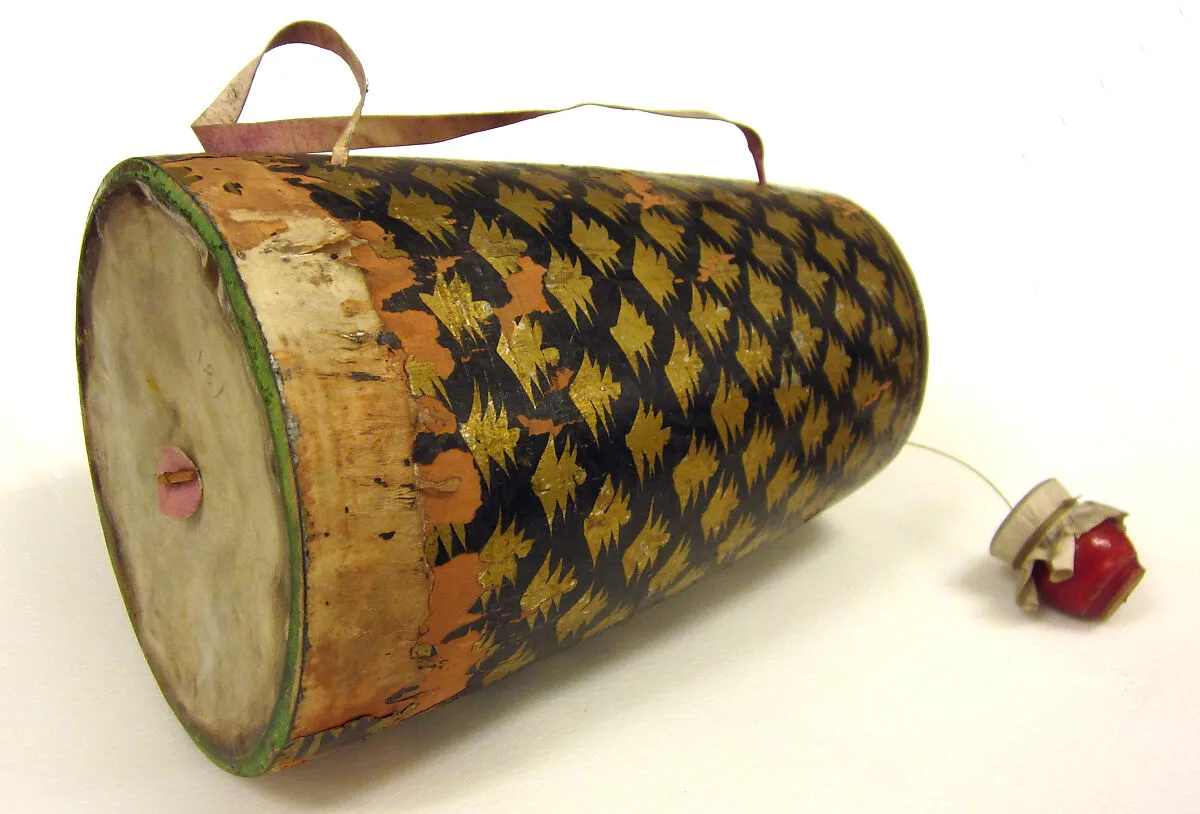
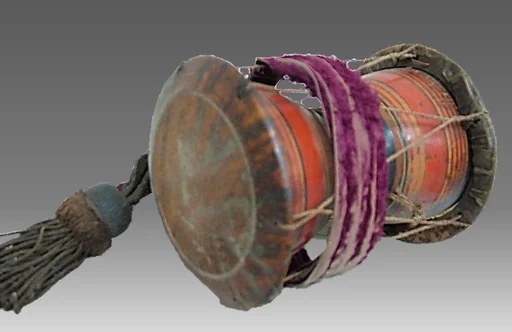
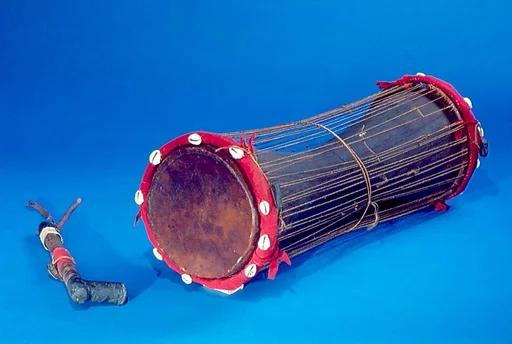
Although built like a drum, this is a chordophone (or stringed instrument). The body of the instrument (with the head pointing behind) is tucked under the player's left arm. A string that is attached in the center of the skin head passes through the wooden body and is longer than the shell. The player grasps a knob tied to the end of this string with their left hand. Sound is created by plucking the string with a small plectrum made of bone, plastic, or another material. The player can change the pitch by how much tension is appled to the knob (and thereby the string). Adept players can change the pitch quickly and achieve all manner of effects. The instrument can be used for rhythmic accompaniment or melodies. The instrument is typically used by religious singers of the Baul faith. It is one of a handful of similar types of stringed instruments used in the Indian subcontinent. Description: Wooden cylinder tube with skin glued to wider opening; skin with small central hole through which a twisted string is inserted and secured by a small round leather button; the string, longer than the cylinder, attaches to a red knob partially covered with hide; the cylinder painted with a leaf pattern in gold against a black field; cylinder with two holes to accomodate hide strap.
- Artist
- Unknown
- Date
- ca. 1885
- Medium
- Wood, skin, string
- Culture
- Indian (Bengal)
- Department
- Musical Instruments
- Credit line
- The Crosby Brown Collection of Musical Instruments, 1889