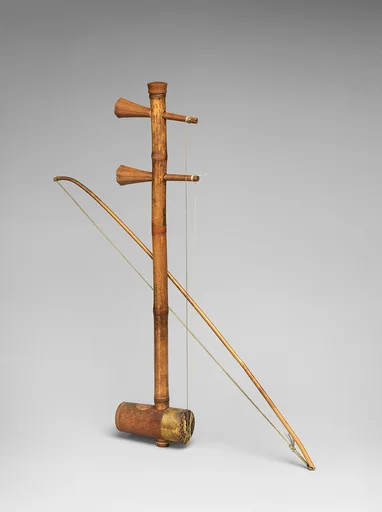
Huqin
Unknown
19th century · Wood, python skin, cane, ivory (?) · Musical Instruments
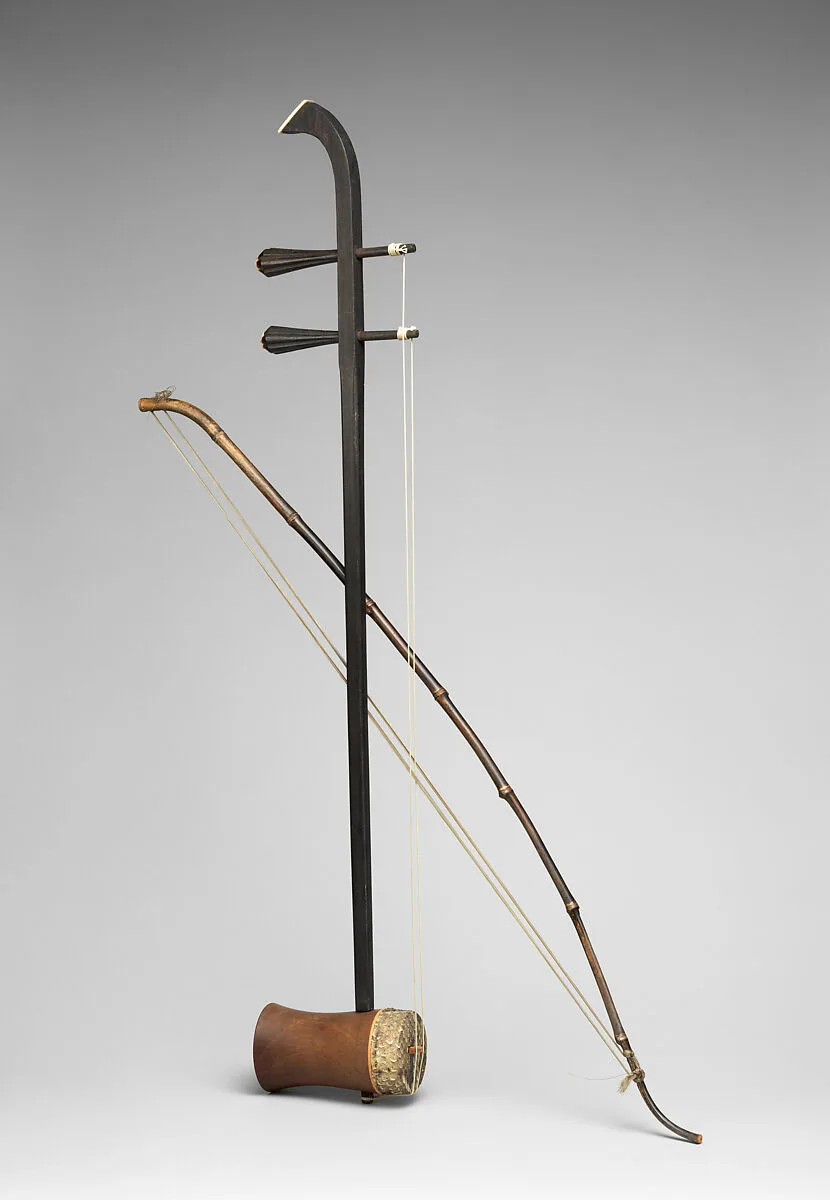
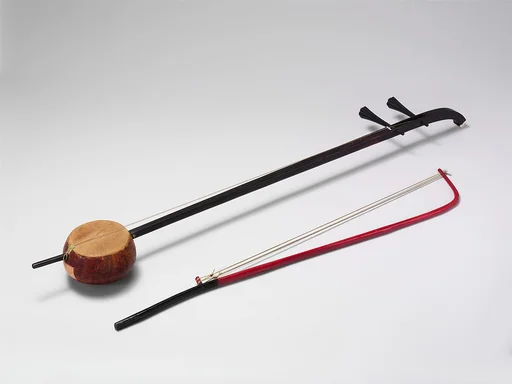
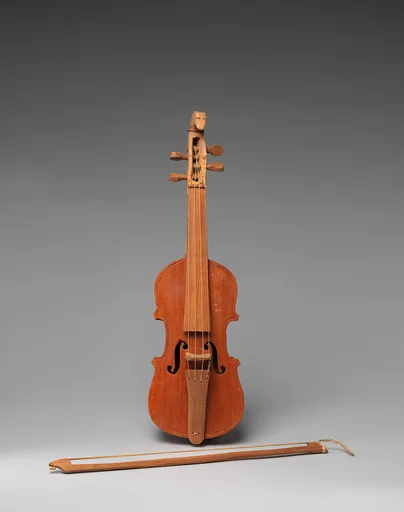
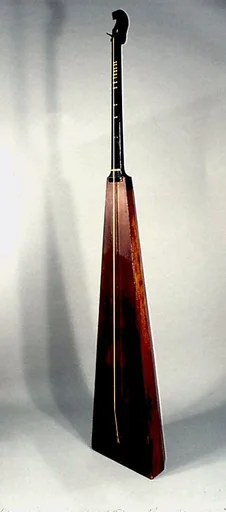
Two-stringed fiddles (huqin) were introduced into China by nomadic Mongols during the Yuan dynasty (1280-1368). (The presence of "hu" in the name of an instrument indicates that it was a foreign import.) Bow hairs passing between the huqin's strings may reflect the Mongol's need to secure the bow to his instrument while on horseback. Huqin are played vertically on the knee, fingered with the left hand and bowed with the right. In earlier times, there existed a greater variety of local fiddles, but today, as with the European family of violins, certain standard sizes prevail. Although this nineteenth-century example has an hourglass-shaped body, the erhu more typically has a round or hexagonal sound box and a snakeskin belly. It is heard in traditional ensembles, modern orchestras, and solo performances. In the opera, it either doubles the melody of a higher-pitched fiddle (jinghu) an octave lower or accompanies female roles. In southern China and Taiwan, it is known as the nanhu.
- Artist
- Unknown
- Date
- 19th century
- Medium
- Wood, python skin, cane, ivory (?)
- Culture
- Chinese
- Department
- Musical Instruments
- Credit line
- The Crosby Brown Collection of Musical Instruments, 1889