Untitled
Unknown
3rd century CE · Limestone · Asian Art
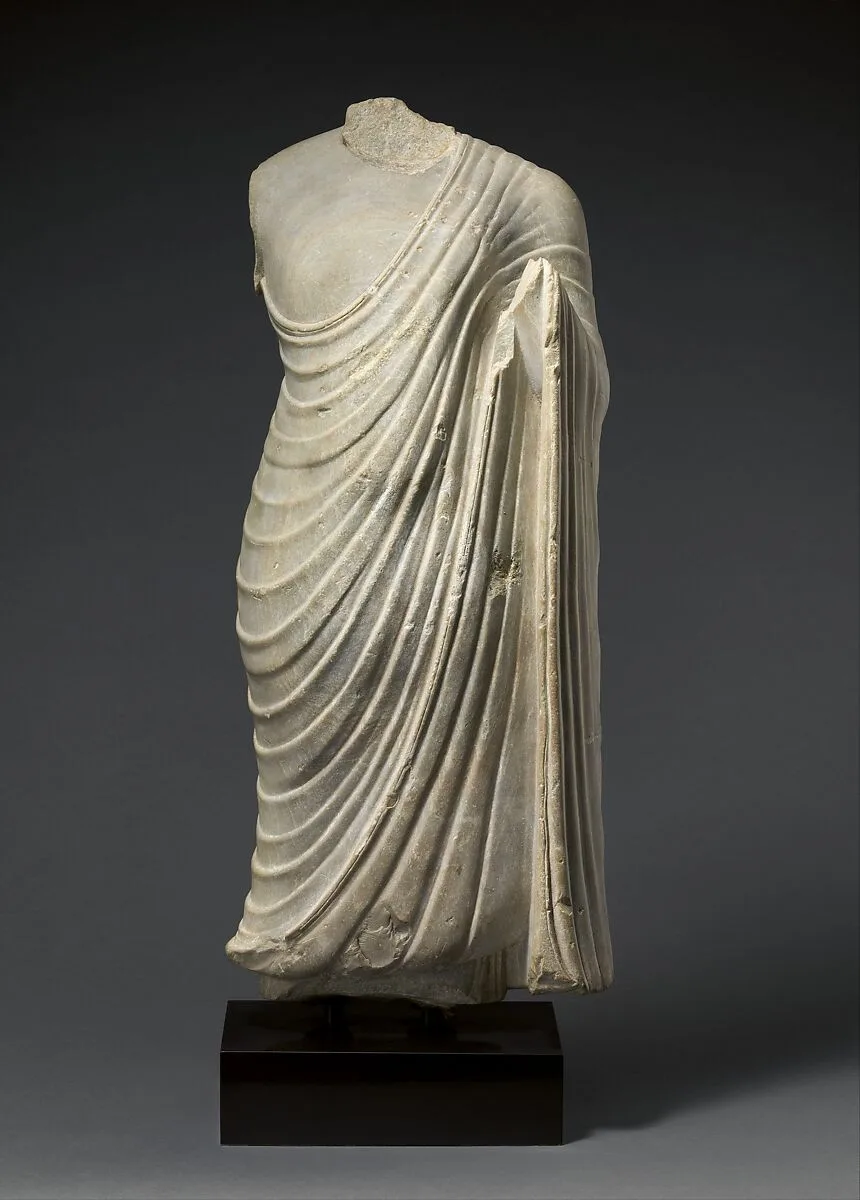
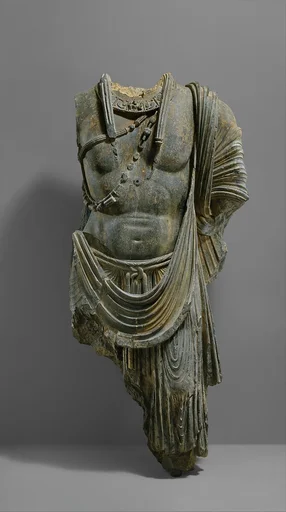
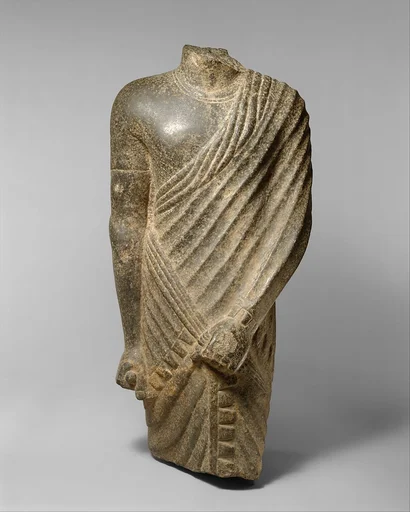
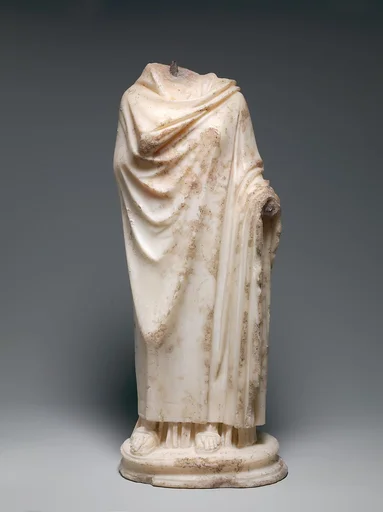
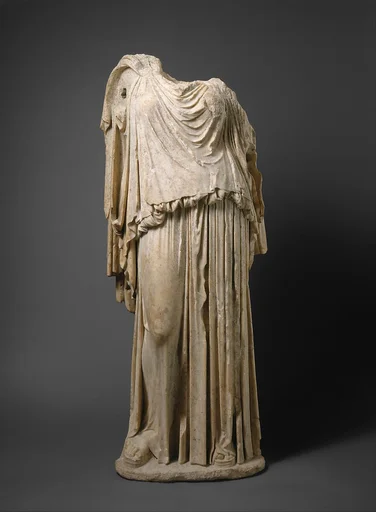
Figurative representations of the Buddha emerged in southern India as the preoccupation with serial narration in stupa panels shifted to the veneration of the icon. This coalesced in the third century CE under the energetic patronage of the Ikshvaku dynasty, as witnessed by this freestanding sculpture. Using the deeply fluted garment to dramatize the figure’s gesture while precisely mirroring how the robe envelopes the body, by being drawn taut against the leg and hip and across the torso to the opposite shoulder before cascading from the raised arm to the ankles. Although still positioned frontally, the icon’s fully sculpted backs confirm that it was intended to be viewed in the round. Most of these figures have been discovered in the semicircular brick shrines for which they were made, placed in the apse to allow circumambulation by devotees.
- Artist
- Unknown
- Date
- 3rd century CE
- Medium
- Limestone
- Culture
- South India (ancient Andhradesa, probably Nagarjunakonda)
- Department
- Asian Art
- Credit line
- Purchase, The Vincent Astor Foundation Gift, Brooke Russell Astor Bequest, The Miriam and Ira D. Wallach Foundation Fund; Fernando Family Trust Gift, in honor of Dr. Quintus and Mrs. Wimala Fernando; Vijay K. Anand, M.D., Nanda Anand, Maya Anand, and Rohit Anand, and The Estate of Mamdouha Bobst Gifts, 2016