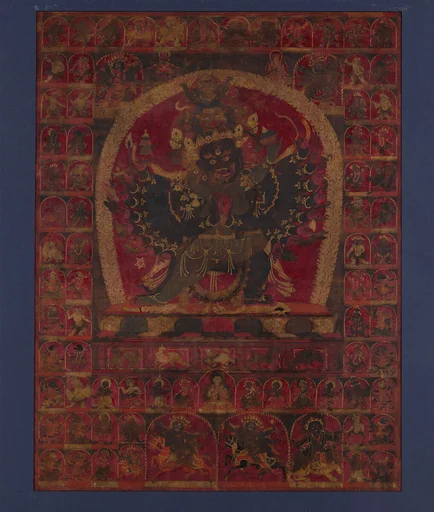
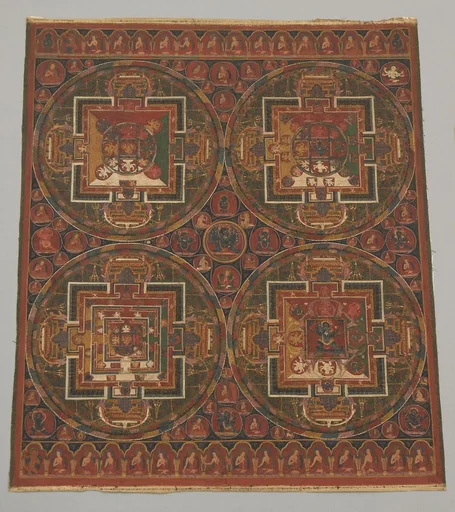
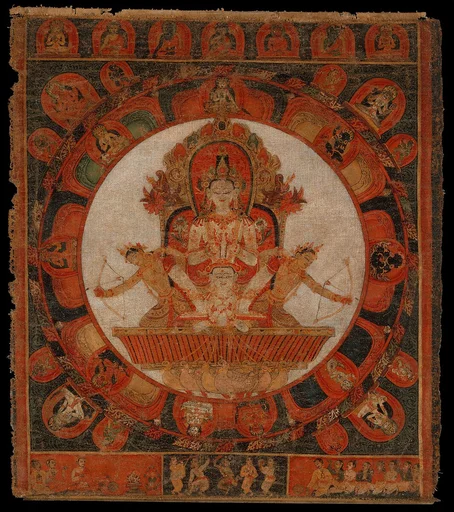
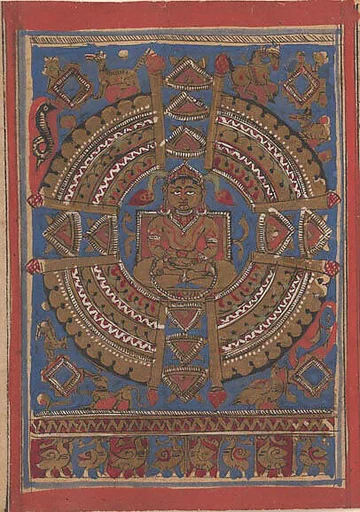
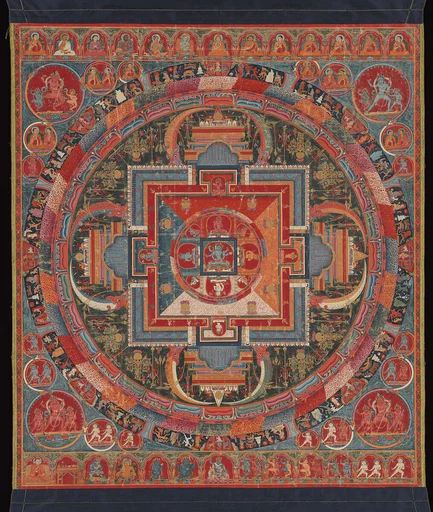
元 緙絲大威德金剛曼陀羅|Vajrabhairava mandala
Unknown
ca. 1330–32 · Silk tapestry (kesi) · Asian Art
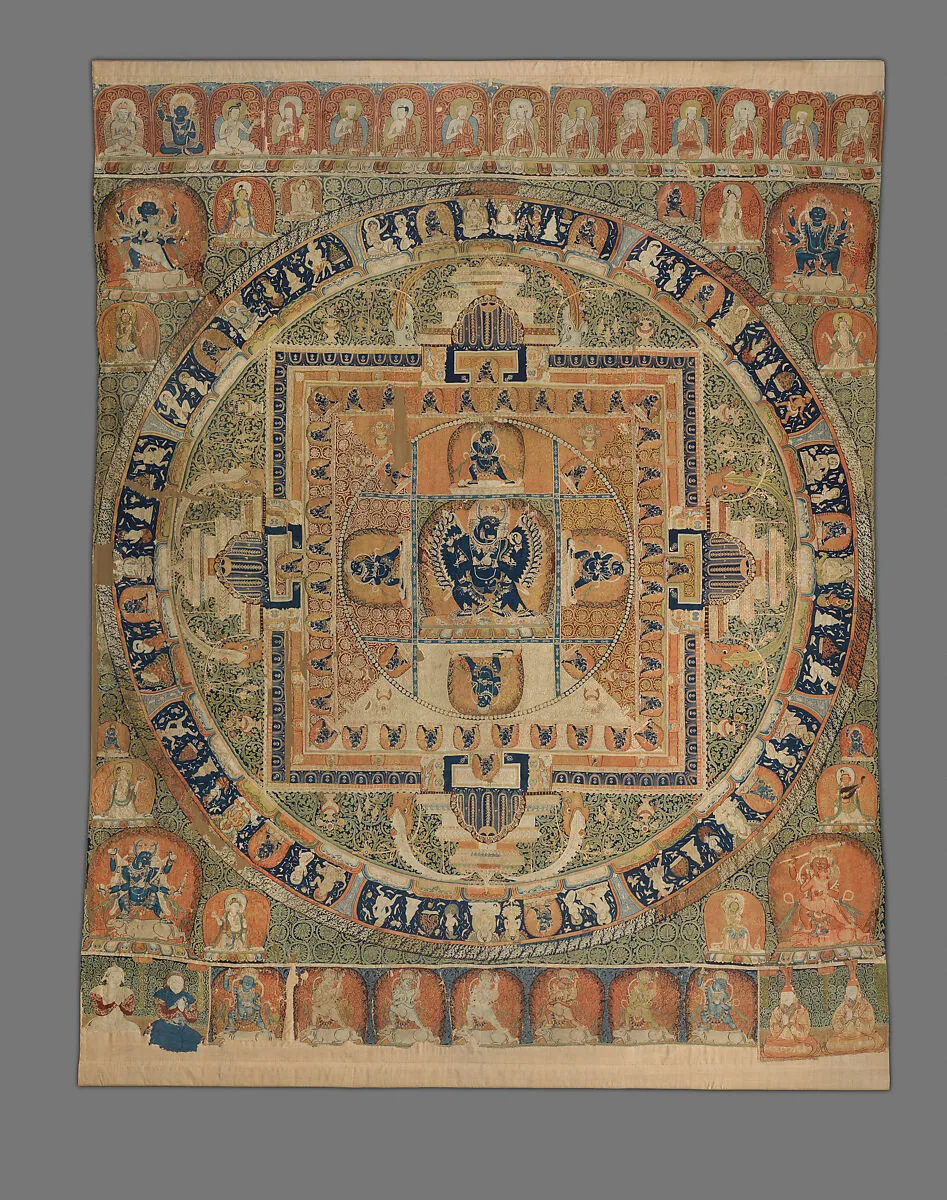
In the fourteenth century, China was ruled by the Mongol Yuan dynasty, established by Khubilai Khan (1215–1294), grandson of Genghis Khan (1162–1227). The Mongol rulers were adherents of Tibetan Buddhism, and they were also lavish patrons of luxury arts, including sumptuous woven silk textiles. This is an example of the fanciest type of textile, kesi, in which each colored thread is woven individually to form an image. The central focal point is the fierce deity Vajrabhairava, the buffalo-headed, blue-skinned conqueror of death, a focus of devotion for the Yuan emperors. At the bottom are portraits of the patrons, from left to right: Tugh Temür, the great-grandson of Khubilai Khan, who briefly served as emperor of the Yuan dynasty, his older brother, and their wives.
- Artist
- Unknown
- Date
- ca. 1330–32
- Medium
- Silk tapestry (kesi)
- Culture
- China
- Department
- Asian Art
- Credit line
- Purchase, Lila Acheson Wallace Gift, 1992