Gold Bracteate
Unknown
400–600 · Gold · Medieval Art
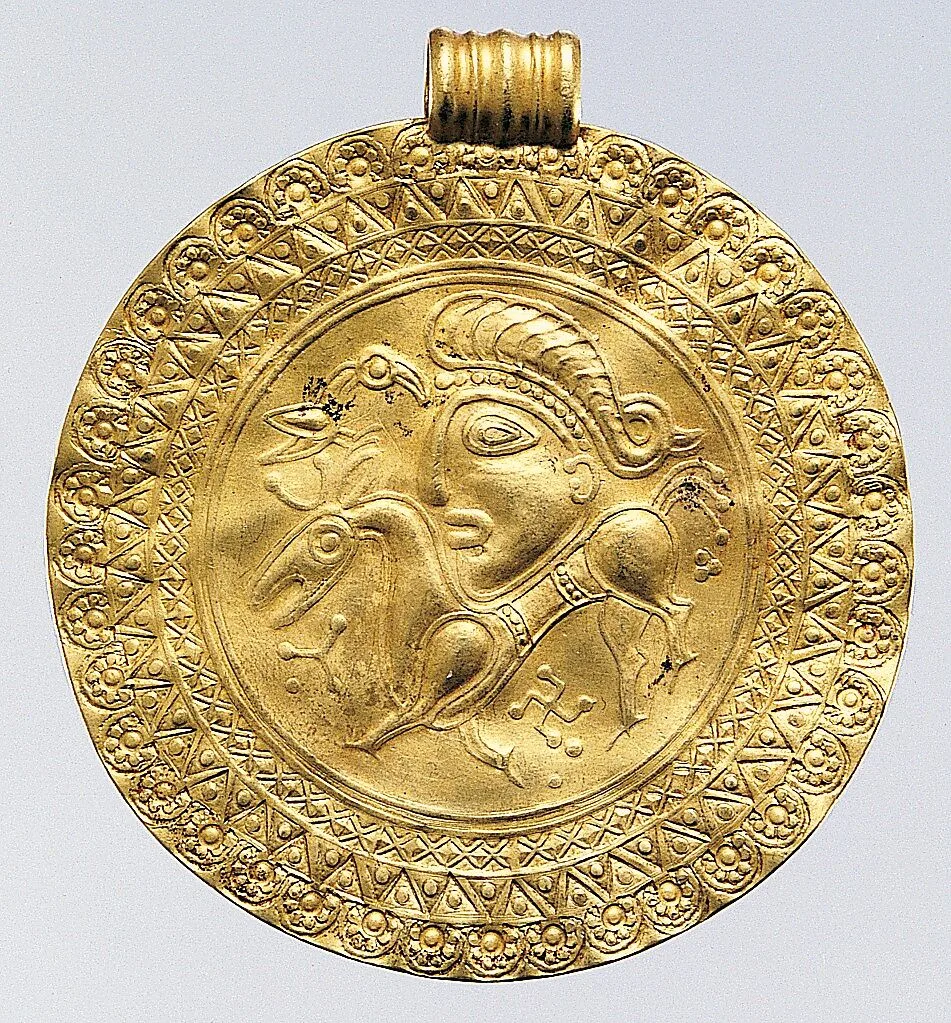
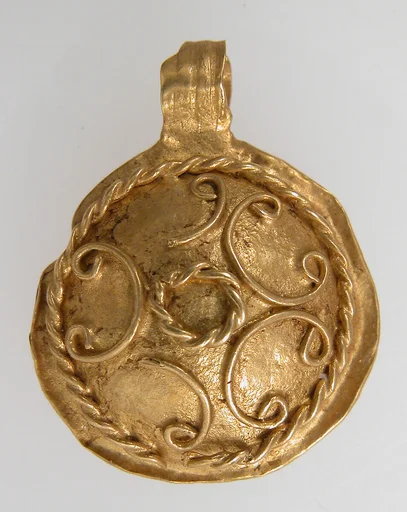
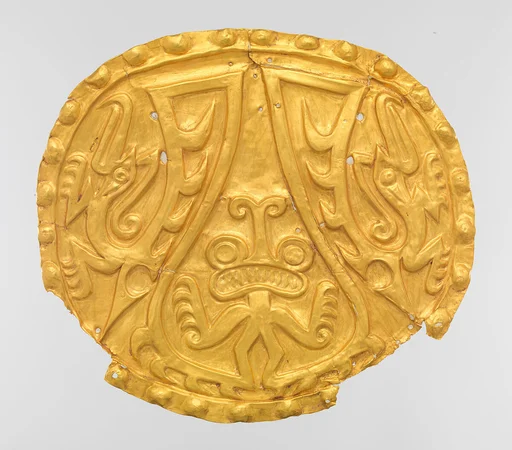
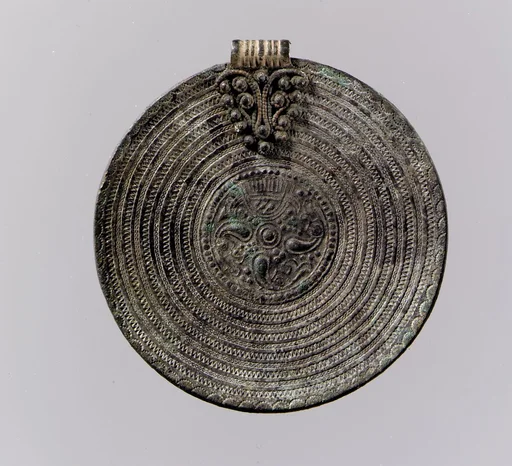
This thin gold pendant, known as a bracteate, displays a deft and spirited design defined by bold, sweeping lines. The central face exemplifies the exuberant, highly abstact style of early medieval Scandinavian artists. The border zone, formed by intricate and orderly rows of repeated punchwork, reveals the great technical competency of goldsmiths working in northern Europe during the fifth and sixth centuries. The manufacture of bracteates probably originated with Roman and Byzantine portrait medallions, presented by the emperor as gifts to important figures. Here, however, the imperial image has been transformed into the depiction of a god, perhaps Odin, chief of Nordic pantheon; his oversize face is balanced atop a galloping horse with horns. With their fine workmanship and allusions to the Roman and Byzantine worlds, gold bracteates conveyed both the sophisticated taste and the high social status of their owners, who wore them as fine jewerly and hoarded them as treasure.
- Artist
- Unknown
- Date
- 400–600
- Medium
- Gold
- Culture
- Scandinavian
- Department
- Medieval Art
- Credit line
- Purchase, Gift of Dr. Mortimer D. Sackler, Theresa Sackler and Family, and John W. Byington Trust Gift, 2001