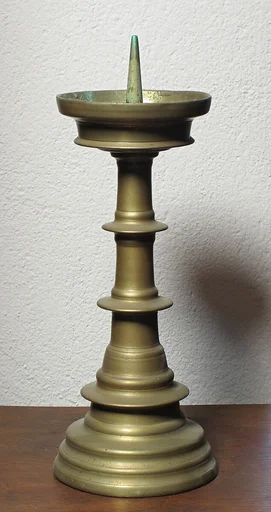
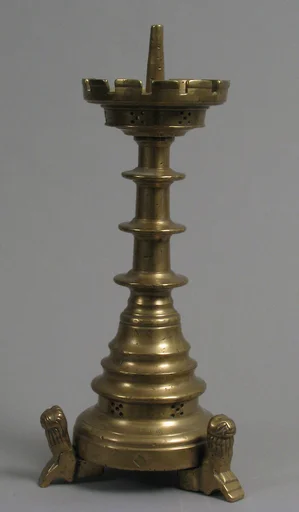
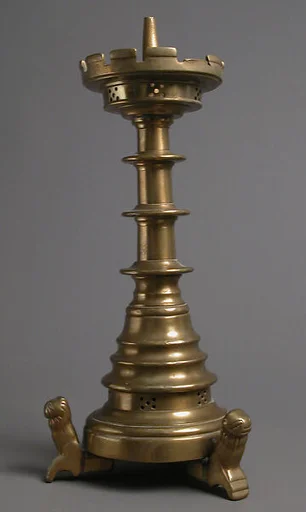
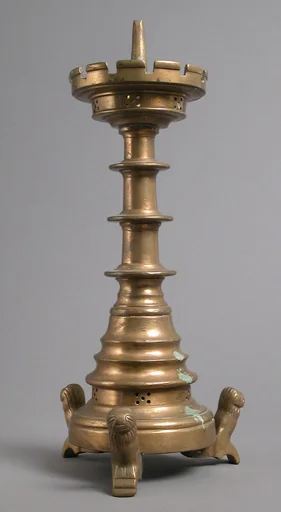
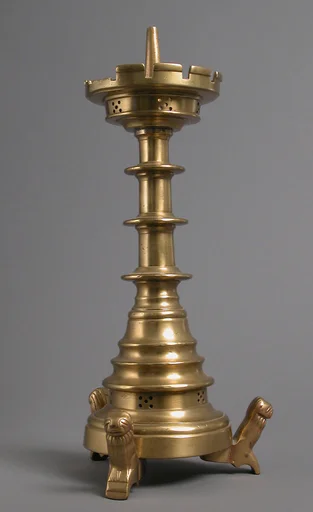
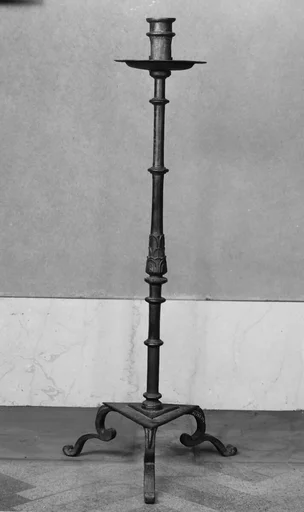
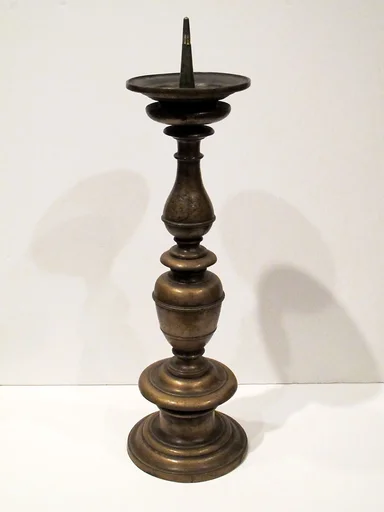
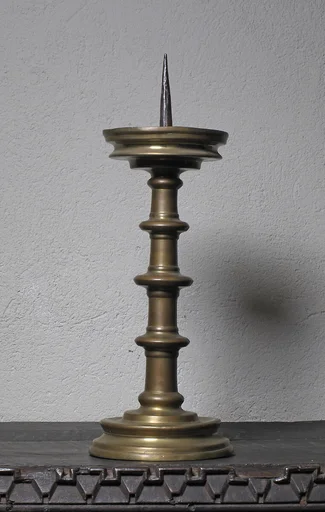
Candlestick
Unknown
15th or 16th century · Copper alloy · The Cloisters
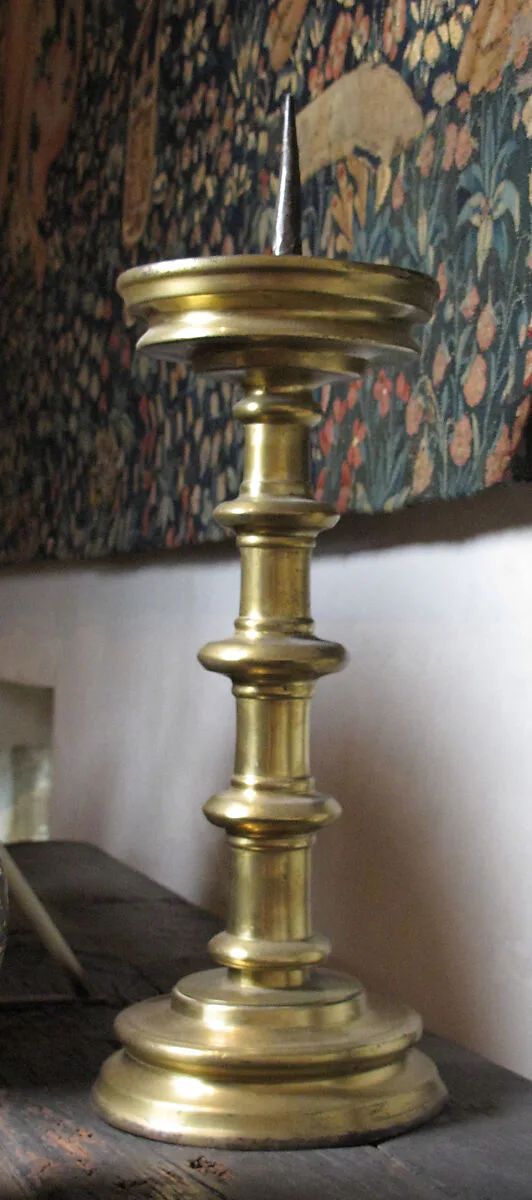
Medieval man took advantage of the light of day as much as possible, but, in the early dark of winter, he had to have recourse to other forms of light, most frequently that of the fireplace. In the fourteenth and fifteenth centuries, the smoky torches of resinous wood, which formerly had been used to provide additional light in the rooms of castles, were generally restricted to use at outdoor events. Candles mounted in wall brackets, chandeliers, or candlesticks, and in some cases, oil lamps, were used to light interiors. Common candles made of tallow had wicks that needed constant trimming and burned with an unpleasant smell. The better quality candles, made of beeswax and used with pricket candlesticks, were so expensive that only the wealthy could afford them. Although in the late Middle Ages large pricket candlesticks were more commonly found in the church, were are some representations of them in use of the dinner table or for other domestic purposes.
- Artist
- Unknown
- Date
- 15th or 16th century
- Medium
- Copper alloy
- Culture
- South Netherlandish or German
- Department
- The Cloisters
- Credit line
- The Cloisters Collection, 1955