Horse Bit
Unknown
7th–9th century · Iron inlaid with copper alloy, gold, and silver · Medieval Art
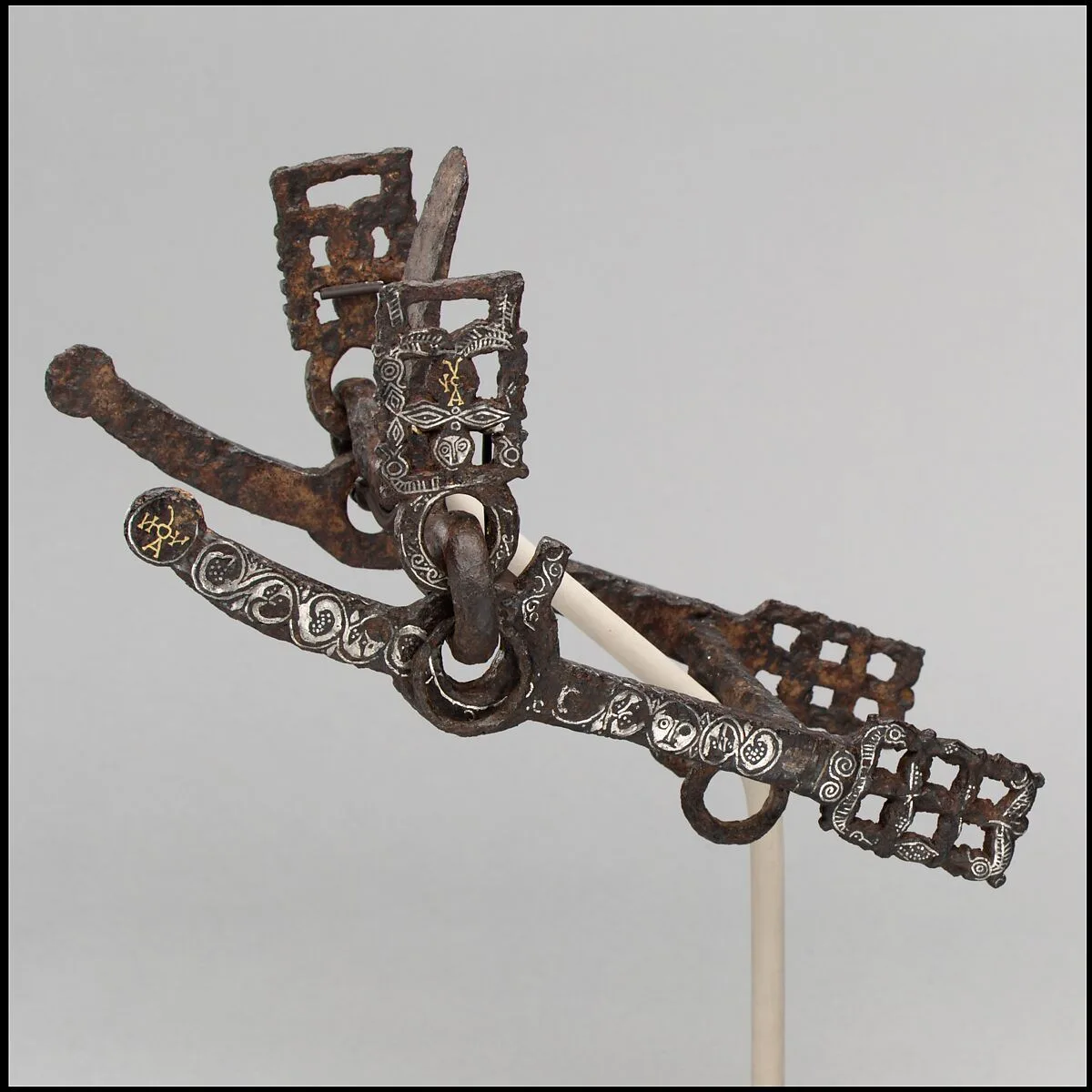
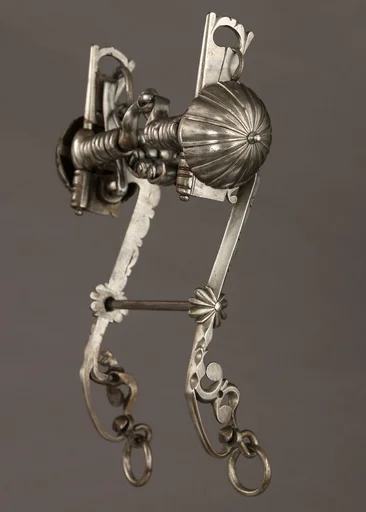
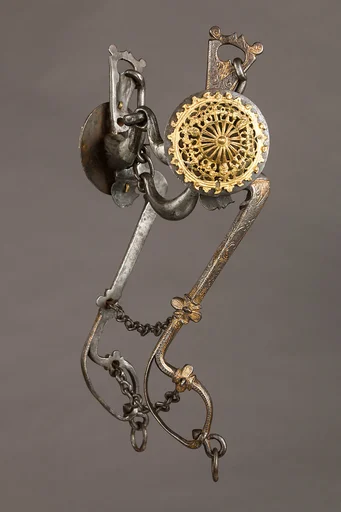
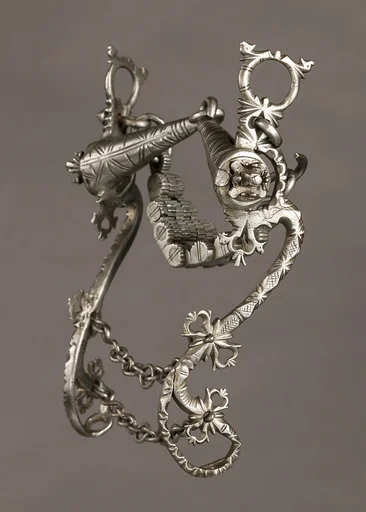
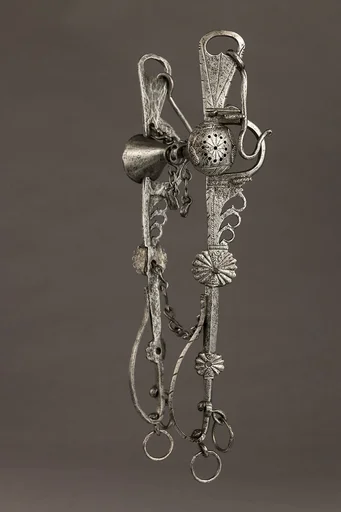
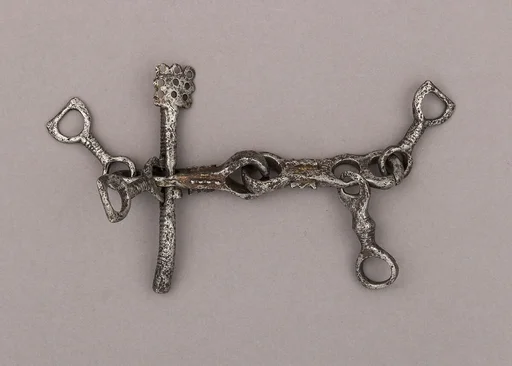
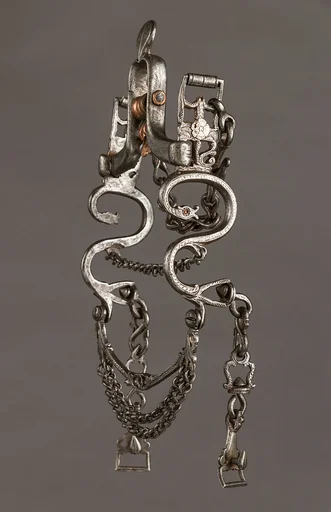
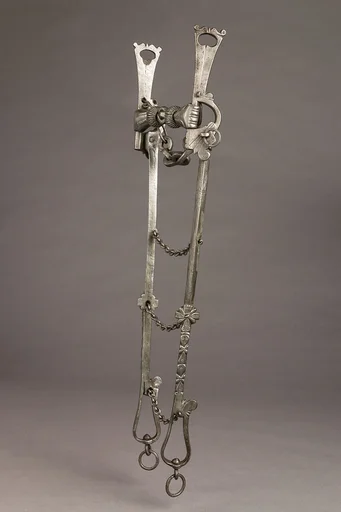
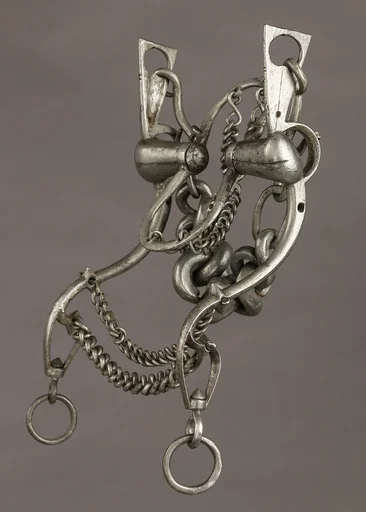
This elaborately decorated bit, resembling the spade bit used by some (Western-style) riders today, has a large projecting tongue, or port, that would have been inserted into the horse’s mouth. The bridle was attached to the moveable rectangular plaques, while the reins were strung through the rings on the straight bar, beneath the horse’s jaw. The severity of the bit implies both a well-schooled horse and a skilled rider; a misstep by either would inflict great pain on the beast. The rich inlaid decoration includes Greek monograms, human faces, animal heads, and vine scrolls. Perhaps copied from or inspired by Byzantine art, the Greek monogram likely indicated the importance of the horse’s owner.
- Artist
- Unknown
- Date
- 7th–9th century
- Medium
- Iron inlaid with copper alloy, gold, and silver
- Culture
- Visigothic or Byzantine
- Department
- Medieval Art
- Credit line
- Fletcher Fund, 1947