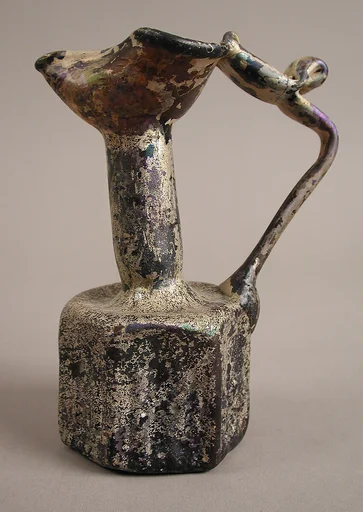
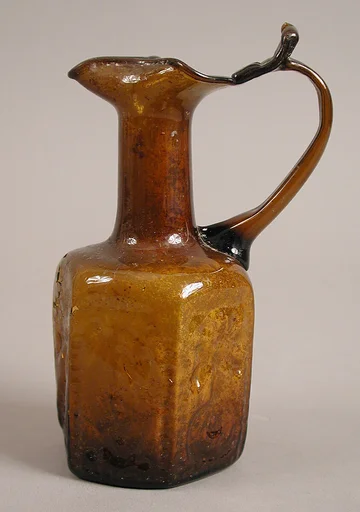
Hexagonal Jug
Unknown
500–650 · Moulded glass · Medieval Art
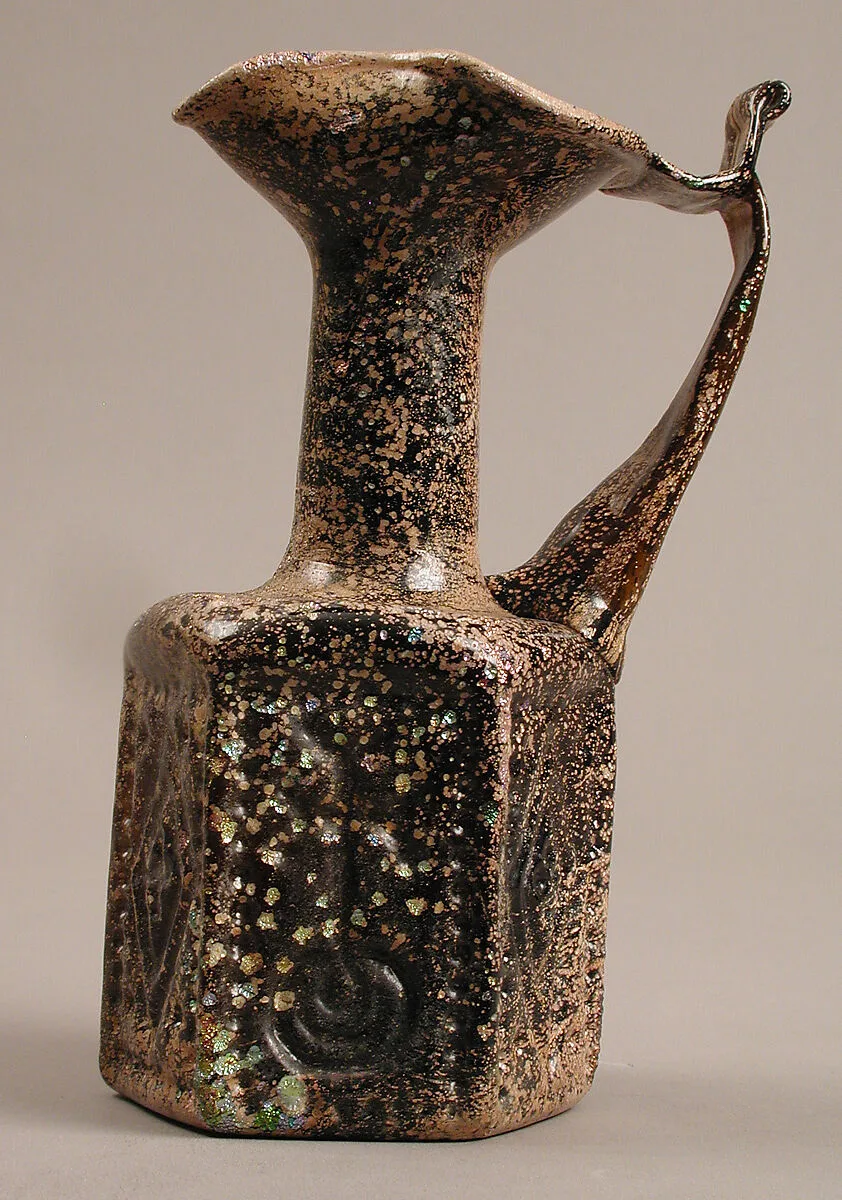
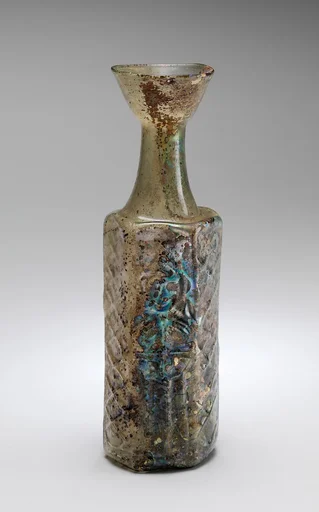
This vessel of the Jerusalem type was perhaps taken to Syria as a memento of a visit to the Holy Land. These vessels were made for Jews and Christians, possibly as tokens for pilgrims visiting the holy sites in Jerusalem or for use in burial rites. They appear to have been mass-produced in a single workshop, since the vessels for the two religions closely resemble each other in shape and style and differ only in the symbols decorating them. The Jewish vessels depict the menorah (candelabrum), shofar (ram's horn), incense shovel, and lulav (palm branch). The Christian vessels are decorated with several types of crosses. The relief designs were produced by blowing molten glass into a mold.
- Artist
- Unknown
- Date
- 500–650
- Medium
- Moulded glass
- Culture
- Byzantine
- Department
- Medieval Art
- Credit line
- Mr. and Mrs. Isacc D. Fletcher Collection, Bequest of Isaac D. Fletcher, 1917
![Perfume Sprinkler [Qumqum] with Birds](https://d2pvxr3eb77vb4.cloudfront.net/assets/v1/42/4289030261520aca58033918aab6633693ffe5e30e54c9129281a9520743cd7d/graph.webp)