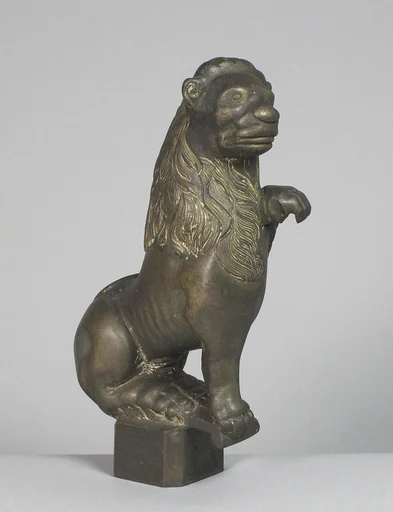
Aquamanile in the Form of a Lion
Unknown
ca. 1230 or early nineteenth century · Bronze; binary copper alloy (approx. 88% copper, approx. 8% tin) hollow cast, chased, engraved, and gilded. · Robert Lehman Collection
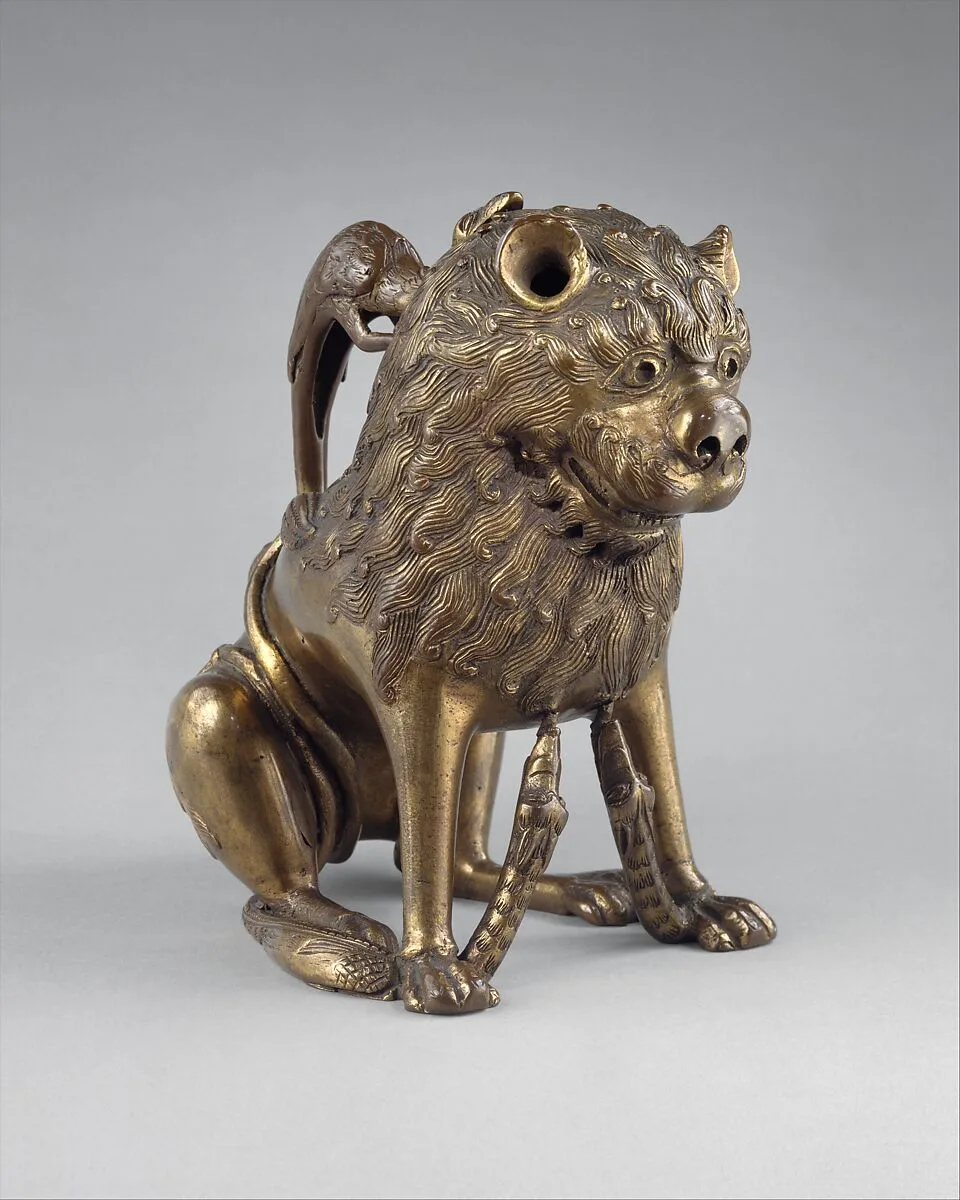
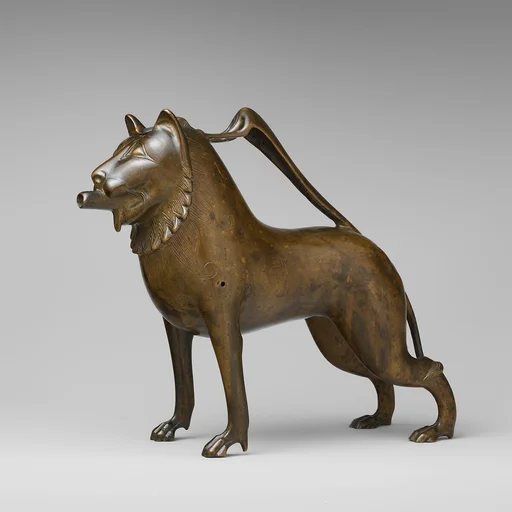
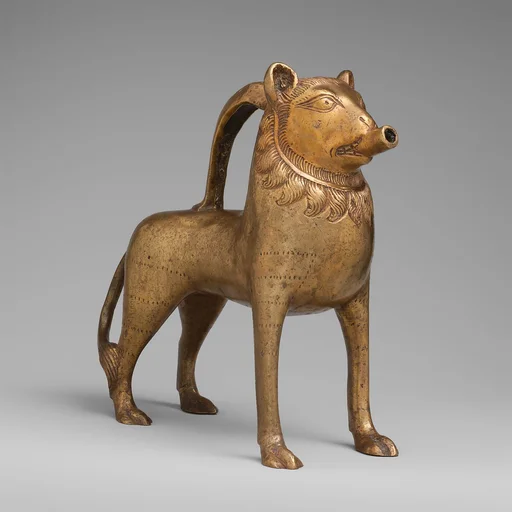
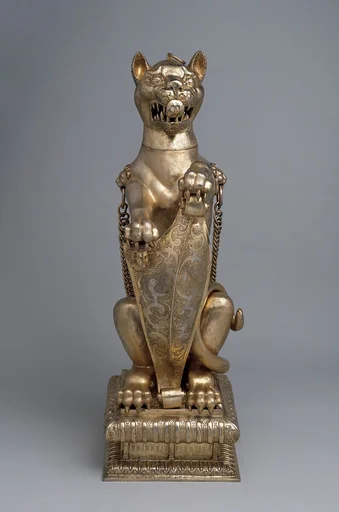
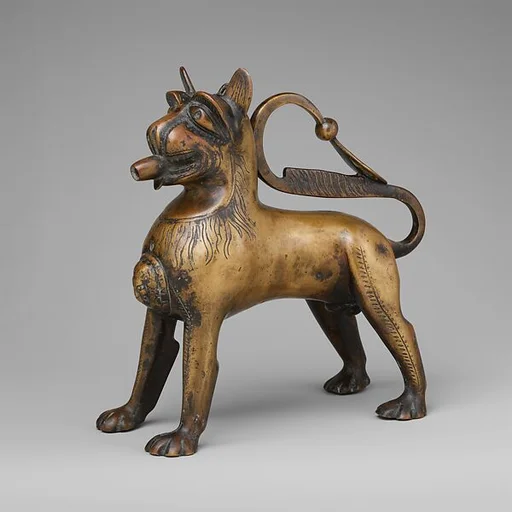
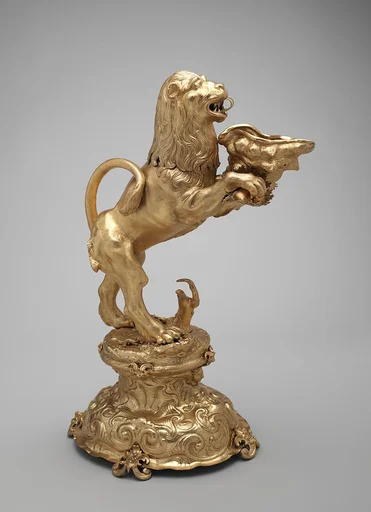
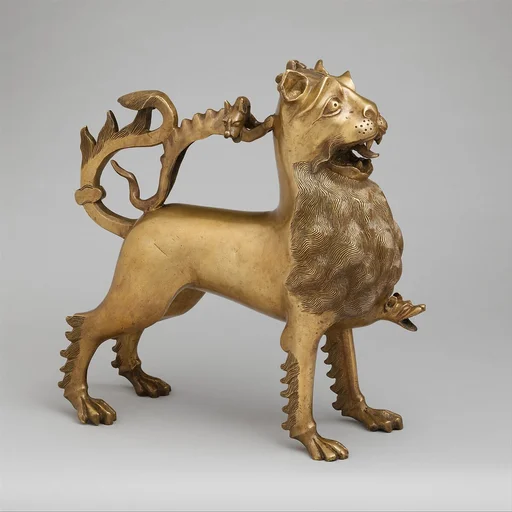
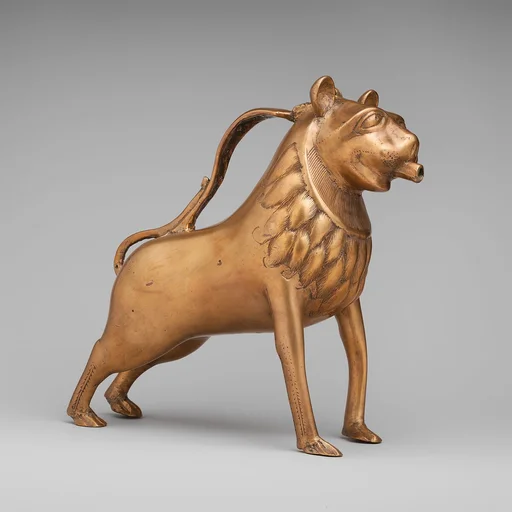
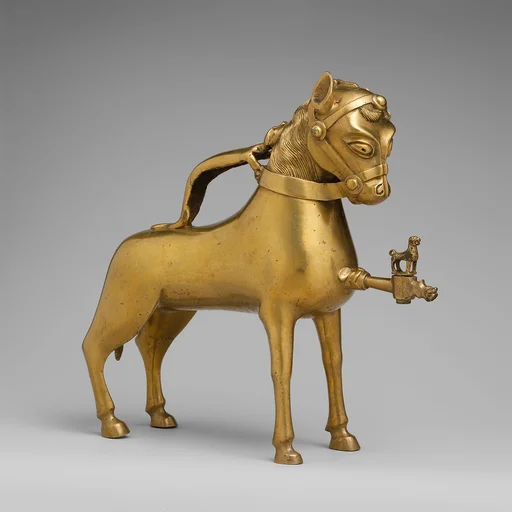
An aquamanile, from the Latin words for water (aqua) and hand (manus), is a vessel used in the ritual of hand washing in both religious and secular contexts—by the priest before Mass and in a private household before a meal. Surviving medieval examples were cast in copper alloy in the form of animals or figures. This crouching lion may have been made in Germany in the early thirteenth century, although some technical aspects point to a much later date. Thus, it may be an example of a medieval revival piece from northern Germany dating to the early nineteenth century.
- Artist
- Unknown
- Date
- ca. 1230 or early nineteenth century
- Medium
- Bronze; binary copper alloy (approx. 88% copper, approx. 8% tin) hollow cast, chased, engraved, and gilded.
- Culture
- North German, Lubeck (?)
- Department
- Robert Lehman Collection
- Credit line
- Robert Lehman Collection, 1975