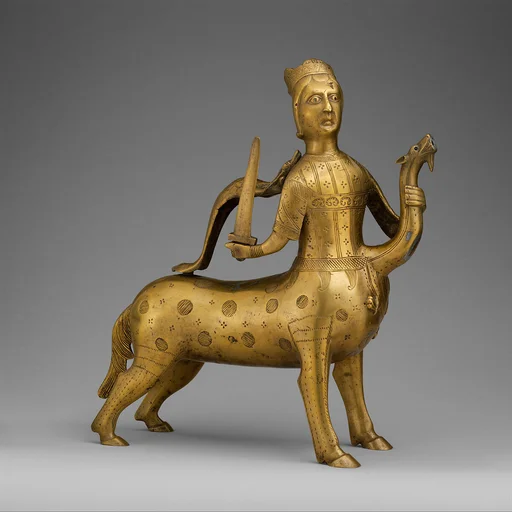
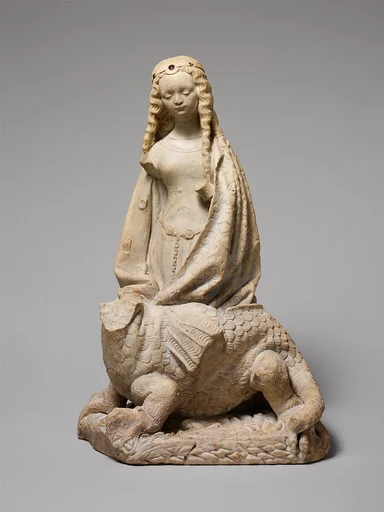
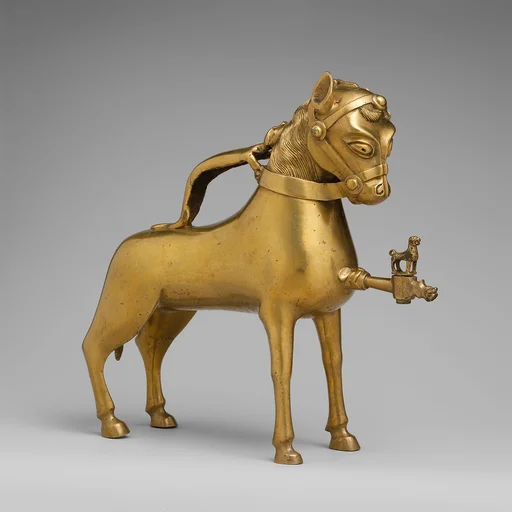
Aquamanile in the Form of Aristotle and Phyllis
Unknown
late 14th or early 15th century · Bronze; Quaternary copper alloy (approx. 72% copper, approx. 17% zinc, approx. 6% lead, approx. 3% tin). · Robert Lehman Collection
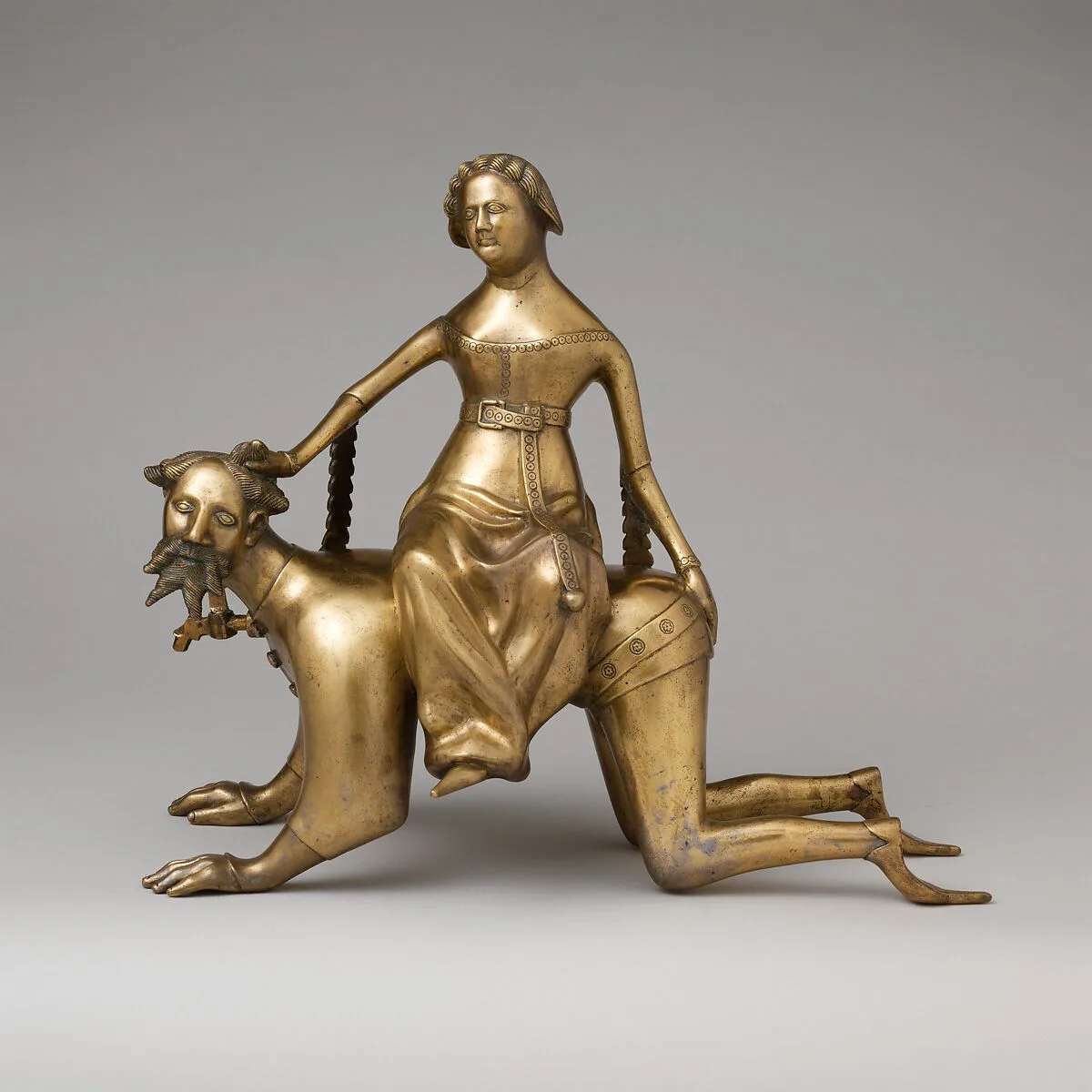
An aquamanile is a vessel for pouring water used in the ritual of washing hands in both religious and secular contexts—by the priest before Mass and in a private household before a meal. The subject of this celebrated example is the moralizing legend of Aristotle and Phyllis, which achieved popularity in the late Middle Ages. Aristotle, the Greek philosopher and tutor of Alexander the Great, allowed himself to be humiliated by the seductive Phyllis as a lesson to the young ruler, who had succumbed to her wiles and neglected the affairs of state. Encouraging Alexander to witness his folly, Aristotle explained that if he, an old man, could be so easily deceived, the potential consequences for a young man were even more perilous. The ribald subject indicates that this aquamanile was made for a domestic setting, where it would have doubled as an object of entertainment for guests at the table.
- Artist
- Unknown
- Date
- late 14th or early 15th century
- Medium
- Bronze; Quaternary copper alloy (approx. 72% copper, approx. 17% zinc, approx. 6% lead, approx. 3% tin).
- Culture
- South Netherlandish
- Department
- Robert Lehman Collection
- Credit line
- Robert Lehman Collection, 1975