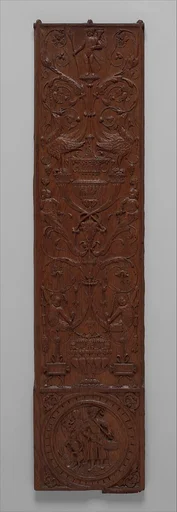
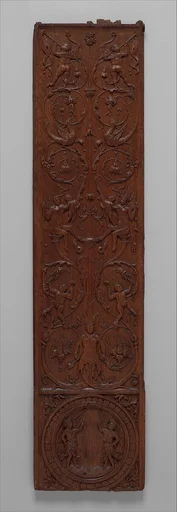
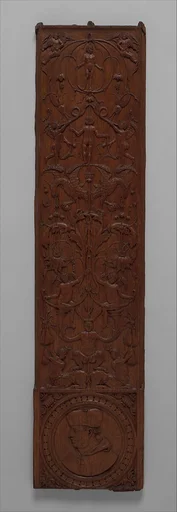
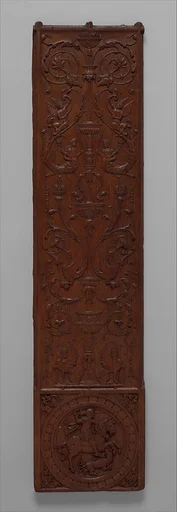
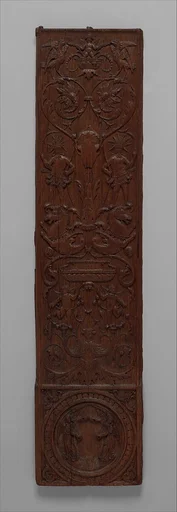
Panel from a Door or Minbar
Unknown
late 8th–first half 9th century · Wood (teak); carved · Islamic Art
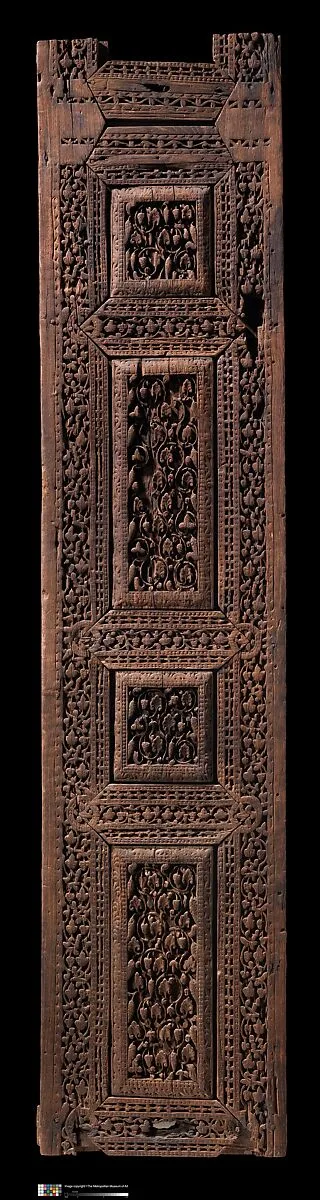
This panel’s decoration continues Late Antique traditions of scrolling vines and bunches of grapes attested in objects from the Mediterranean to South Asia. In Iraq, comparisons with stucco paneling from the Sasanian capital Ctesiphon illustrate the local continuity before and after the rise of Islam in the seventh century. A nearly identical panel now in the Benaki Museum in Athens, also made of teak wood, suggests that they may have formed a two-paneled door. Imported to Iraq probably from South Asia, teak was highly prized in Abbasid monumental architecture of the eighth and ninth century. The value of such objects endured through time, and they were often reused for a variety of purposes in later centuries.
- Artist
- Unknown
- Date
- late 8th–first half 9th century
- Medium
- Wood (teak); carved
- Department
- Islamic Art
- Credit line
- Rogers Fund, 1931