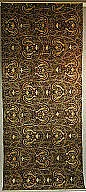
Moroccan Wedding Sash
Unknown
late 19th–early 20th century · Silk; woven · Islamic Art

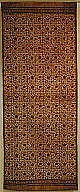
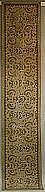
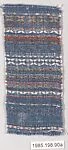
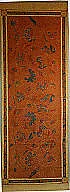
Sashes (l’ahzem) such as this one are an indispensable element of a woman’s wedding ensemble, and would be worn tied around the waist. This sash is ornamented with four patterns, which repeat horizontally. Sashes were always folded lengthwise (evidenced here by the crease down the center) and wrapped several times around the waist, over the kaftan. They served as a decorative element as well as a substitute for a corset. While sashes are decorated with a wide variety of design patterns, the ornament always begins with a plain border two to three centimeters wide, followed by a section with the so-called "hand of Fatima" or "khamsa" pattern. While mostly worn in Muslim ceremonies, sashes such as this one may have been woven by Berbers or Jews living in nearby communities, who were known to manufacture some of the finest Moroccan textiles.
- Artist
- Unknown
- Date
- late 19th–early 20th century
- Medium
- Silk; woven
- Department
- Islamic Art
- Credit line
- Louis E. and Theresa S. Seley Purchase Fund for Islamic Art, 2008



![[Hand-painted Sign: Menu of Fish and Seafood "Nova Scotia…" ]](https://d2pvxr3eb77vb4.cloudfront.net/assets/v1/0c/0c7f09768fc23b37dff4208aeee7a3bdb7149692b9741c57f518e2bc44a14622/graph.webp)