Armor for Man and Horse
Unknown
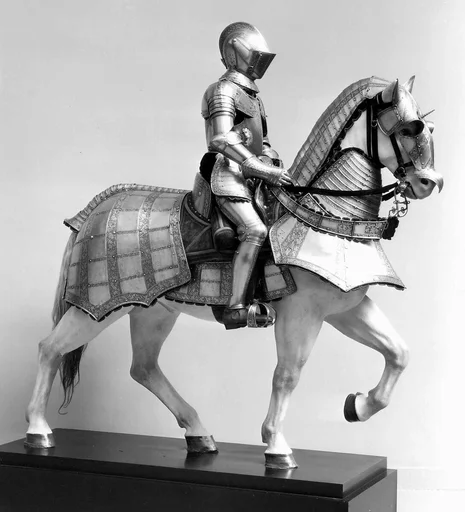
man's armor, ca. 1570 and later; horse armor, ca. 1580–90 and later · Steel, leather, copper alloy, textile · Arms and Armor
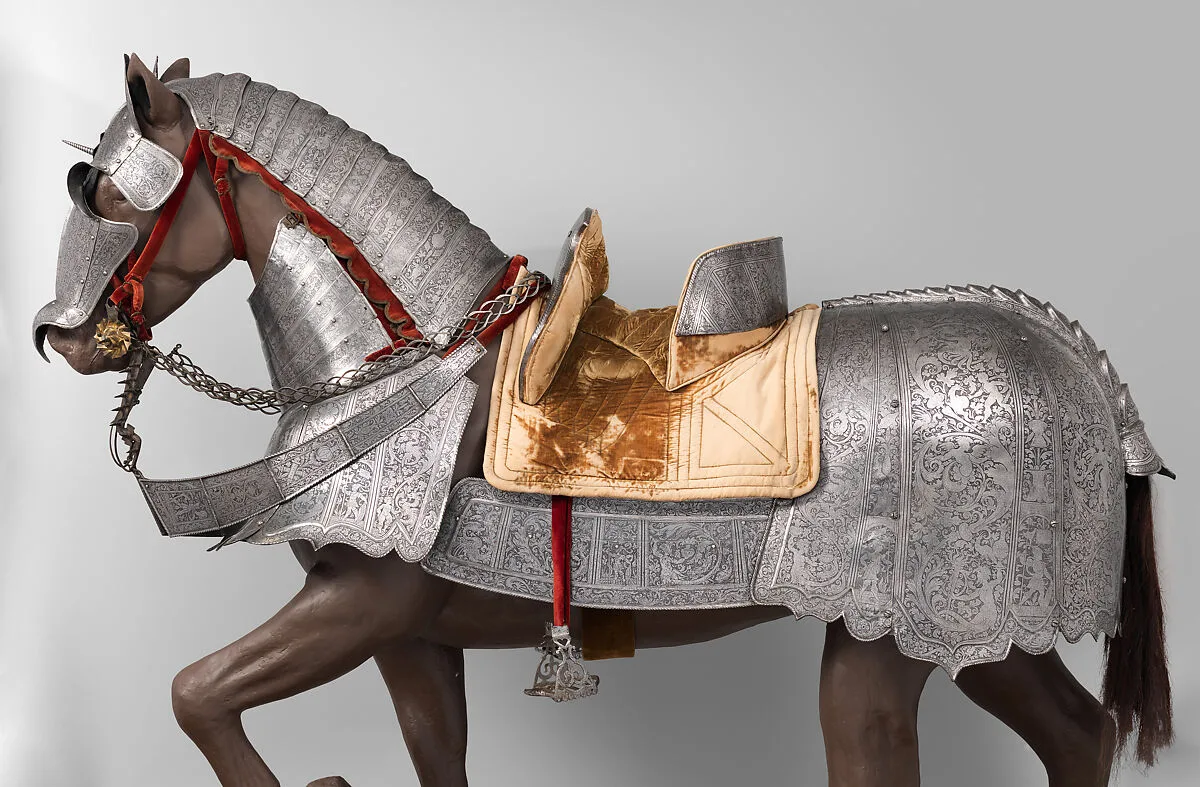
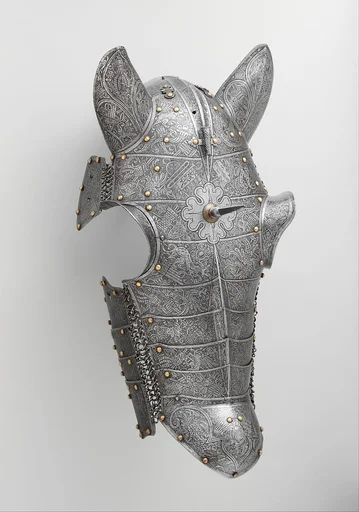
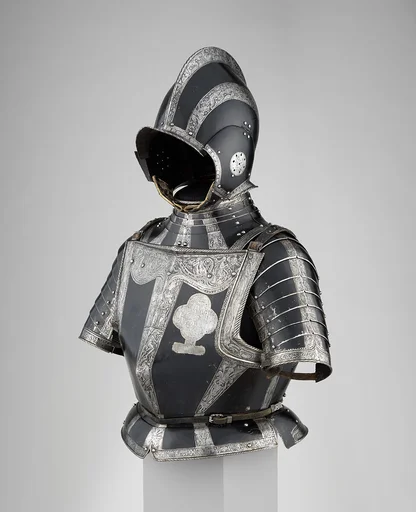
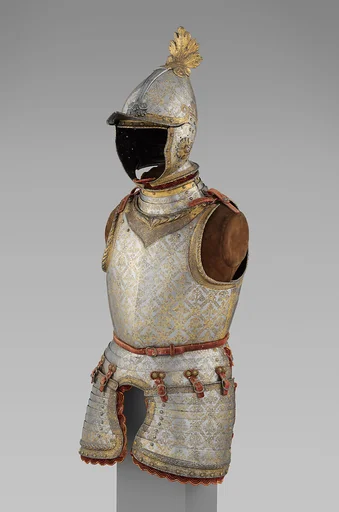
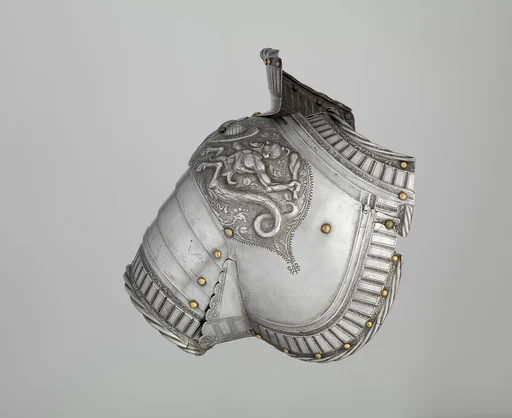
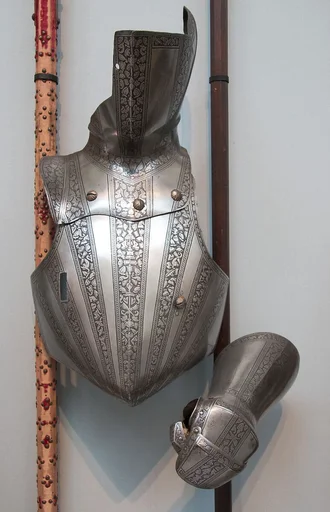
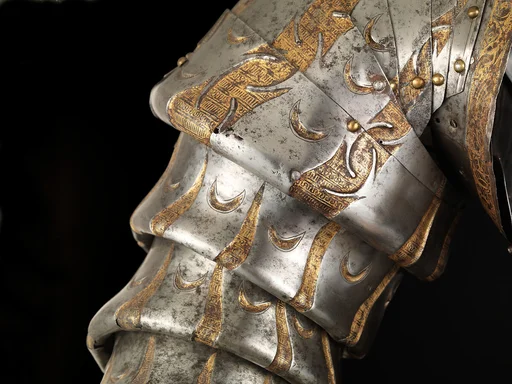
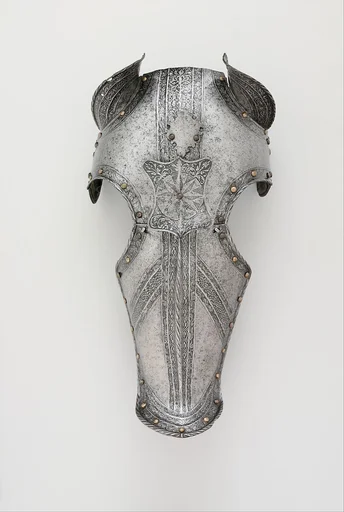
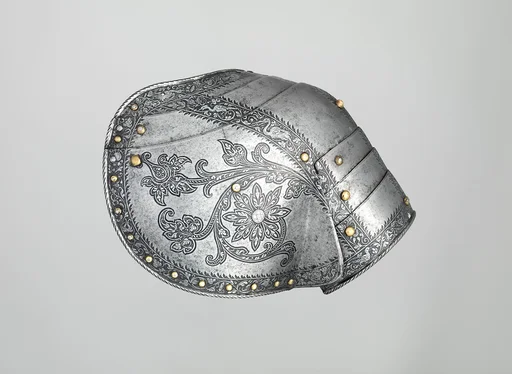
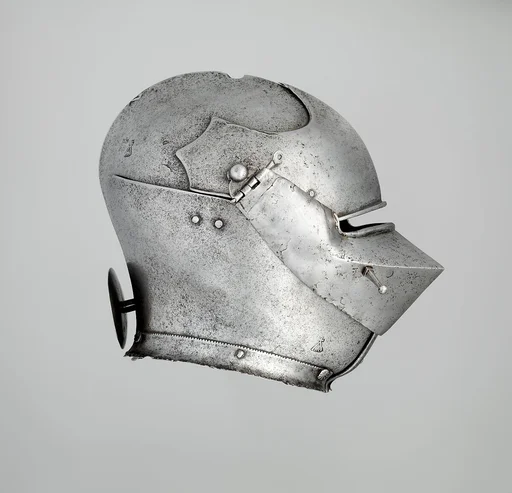
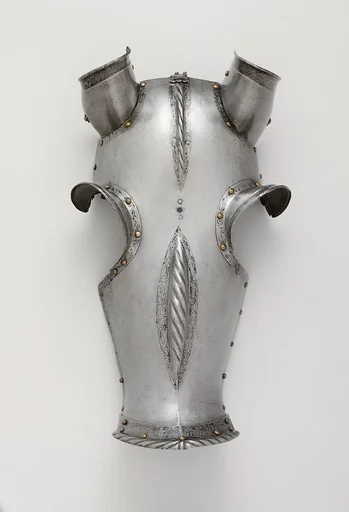
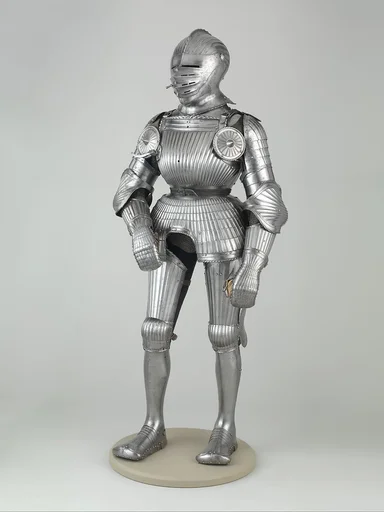
The horse armor is covered with etched ornament that includes undulating foliage, mythological creatures, winged putti, and heroes from Biblical and Classical history, such as David and Goliath and Marcus Curtius. The exuberant sketchlike quality of the etching and the preference for overall decoration suggest an origin in Brescia, the second most important armor-producing center in northern Italy after Milan. Brescia was the principal supplier of arms to the Venetian Republic. Like the adjacent Italian horse armor, this example comes from the armory of the counts Collalto at the castle of San Salvatore, near Treviso. It is one of the few complete horse armors to survive from the late sixteenth century, when heavily armored cavalry played a diminishing role in warfare. It was probably made for Count Antonio IV Collalto (1548–1620), possibly in 1589, when he was appointed commander of the Venentian army. The man's armor is a composite of old and new pieces. Genuine elements from an Italian garniture of about 1570 are combined with restored pieces that were made as substitutions for the missing original parts.
- Artist
- Unknown
- Date
- man's armor, ca. 1570 and later; horse armor, ca. 1580–90 and later
- Medium
- Steel, leather, copper alloy, textile
- Culture
- Italian, Milan and Brescia
- Department
- Arms and Armor
- Credit line
- man's armor: Gift of William H. Riggs, 1913; horse armor, bit, rear plate of saddle: Fletcher Fund, 1921; part of a greave: Rogers Fund, 1984