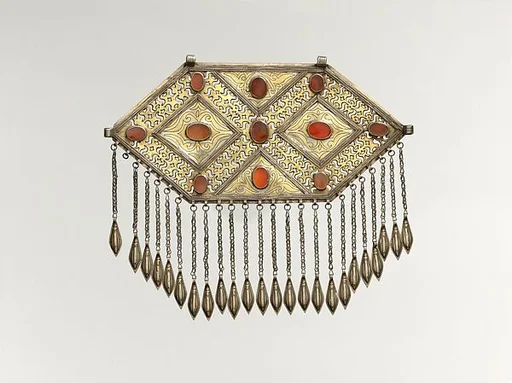
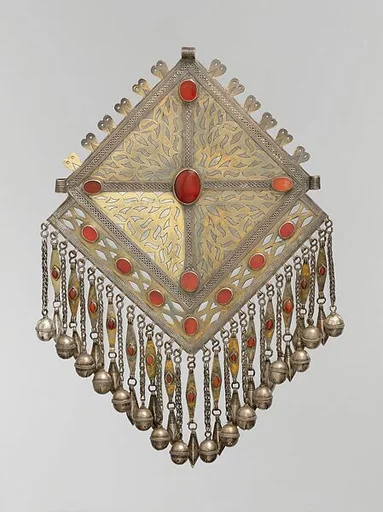
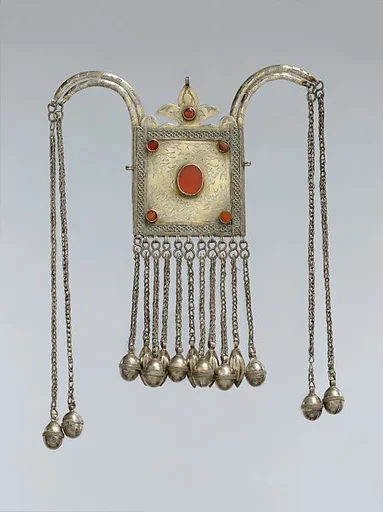
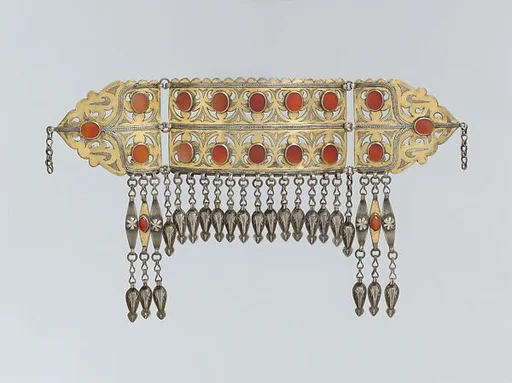
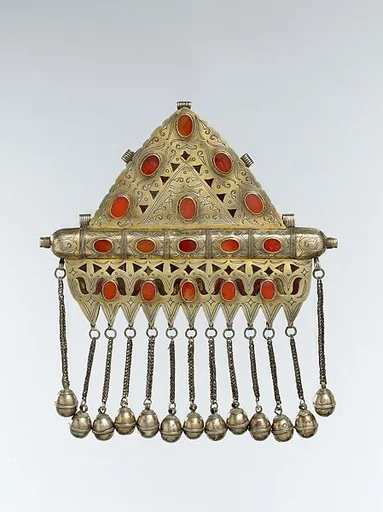
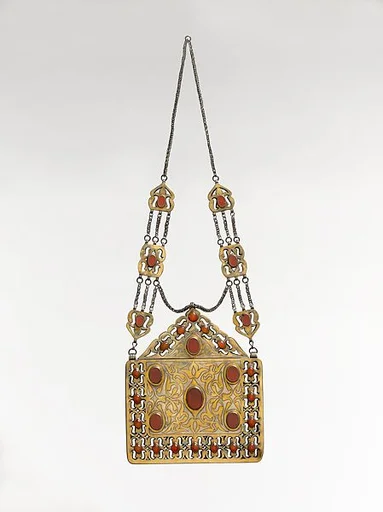
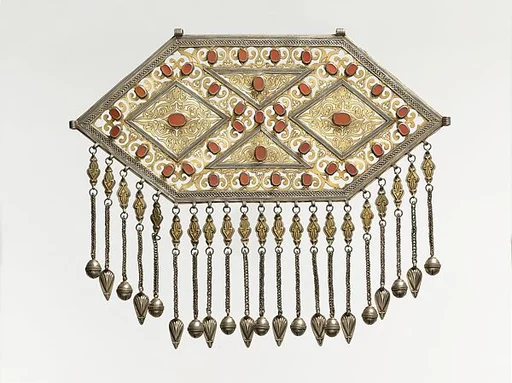
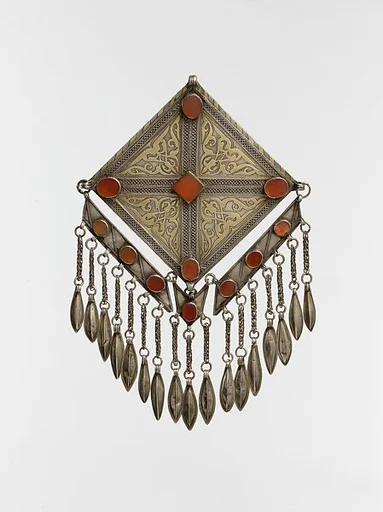
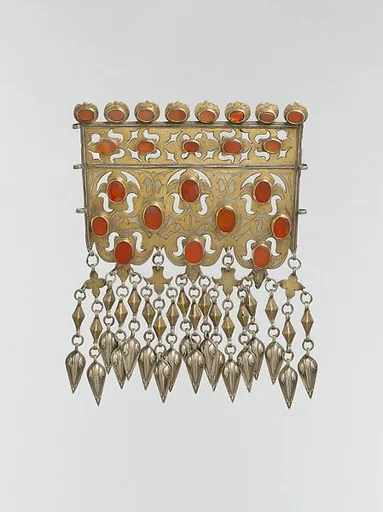
Pectoral Ornament
Unknown
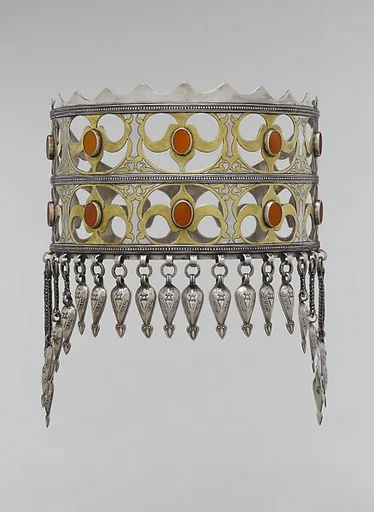
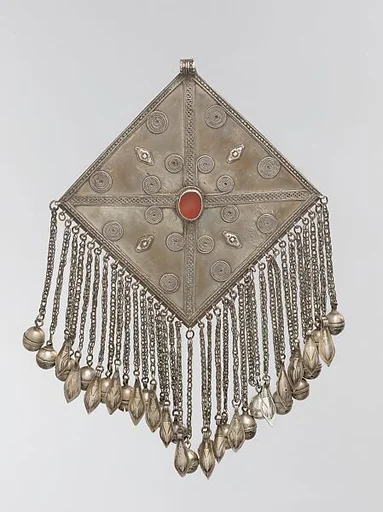
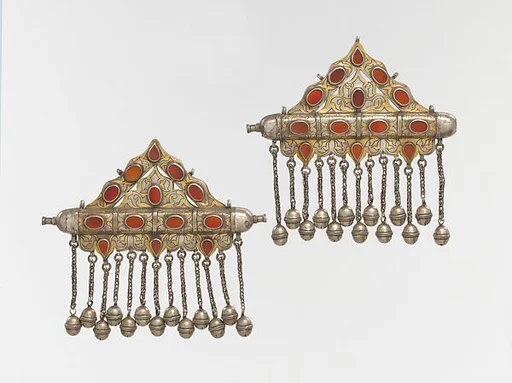
late 19th–early 20th century · Silver; fire-gilded, with stamping, decorative wire, openwork, wire chains with embossed pendants, and table-cut carnelians · Islamic Art
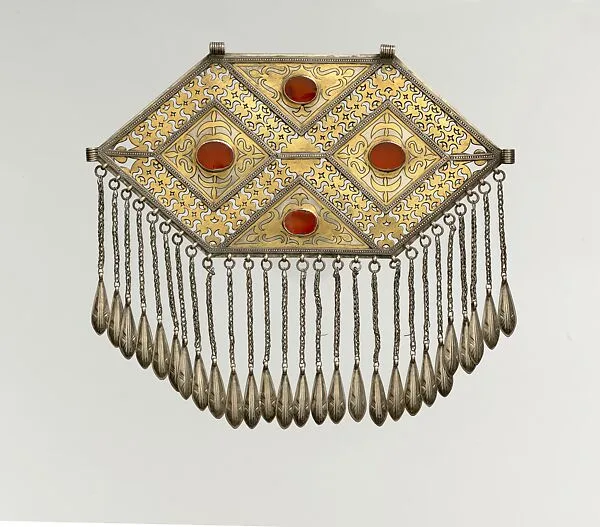
The hexagonal shape, or gönzuk, represents the mountain motif; the table-cut carnelians protect the wearer from illness, and the openwork decoration of double-leaf designs is a motif symbolizing the growth and endurance of human existence. The hexagon, rhombus, and triangle are the most common shapes used in pectoral jewelry; they were believed to ward off evil in addition to fulfilling the practical purpose of fastening clothing.
- Artist
- Unknown
- Date
- late 19th–early 20th century
- Medium
- Silver; fire-gilded, with stamping, decorative wire, openwork, wire chains with embossed pendants, and table-cut carnelians
- Department
- Islamic Art
- Credit line
- Gift of Marshall and Marilyn R. Wolf, 2008