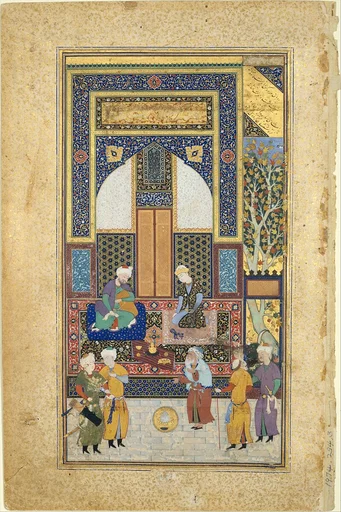
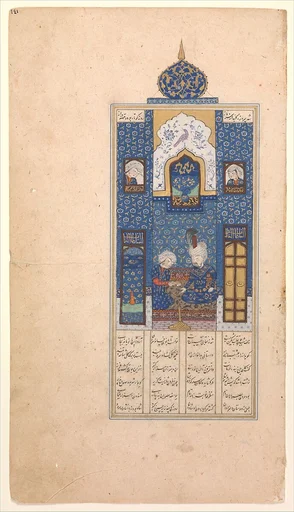
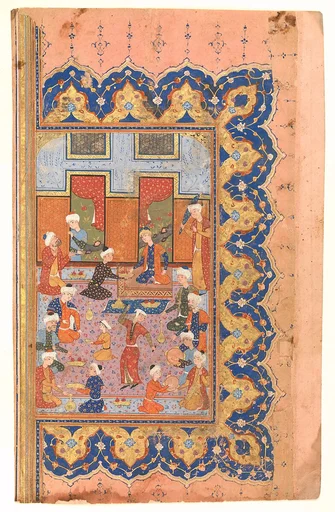
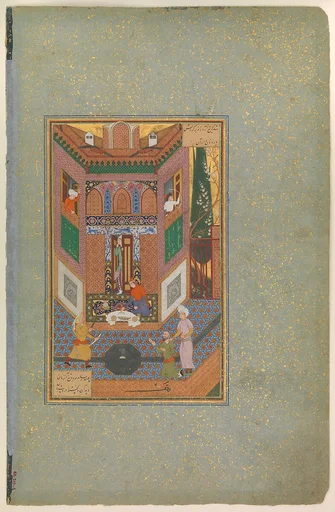
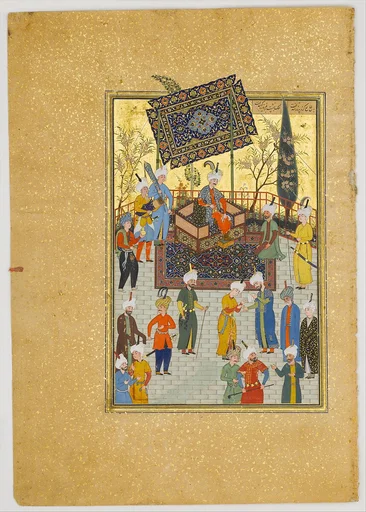
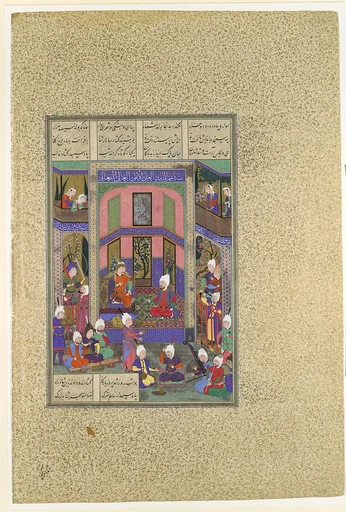
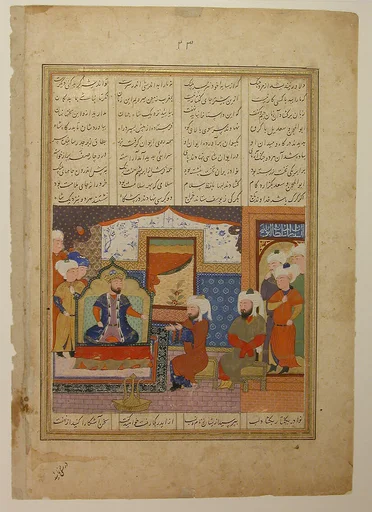
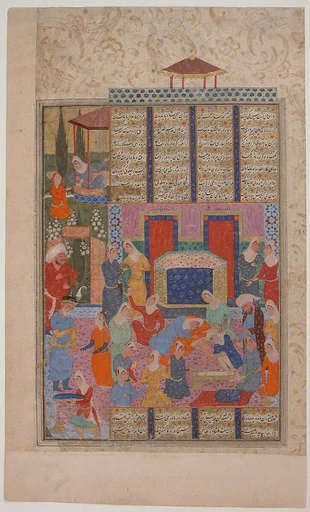
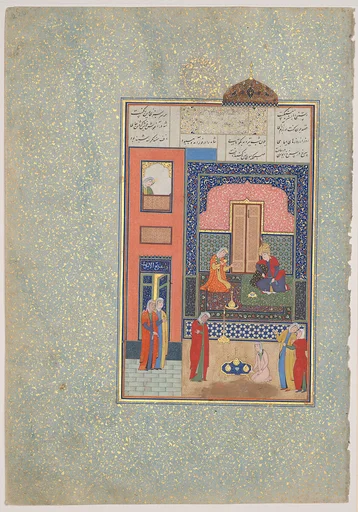
"Laila and Majnun at School", Folio from a Khamsa (Quintet) of Nizami of Ganja
Ja'far Baisunghuri|Nizami
A.H. 835/ 1431–32 CE · Ink, opaque watercolor, and gold on paper · Islamic Art
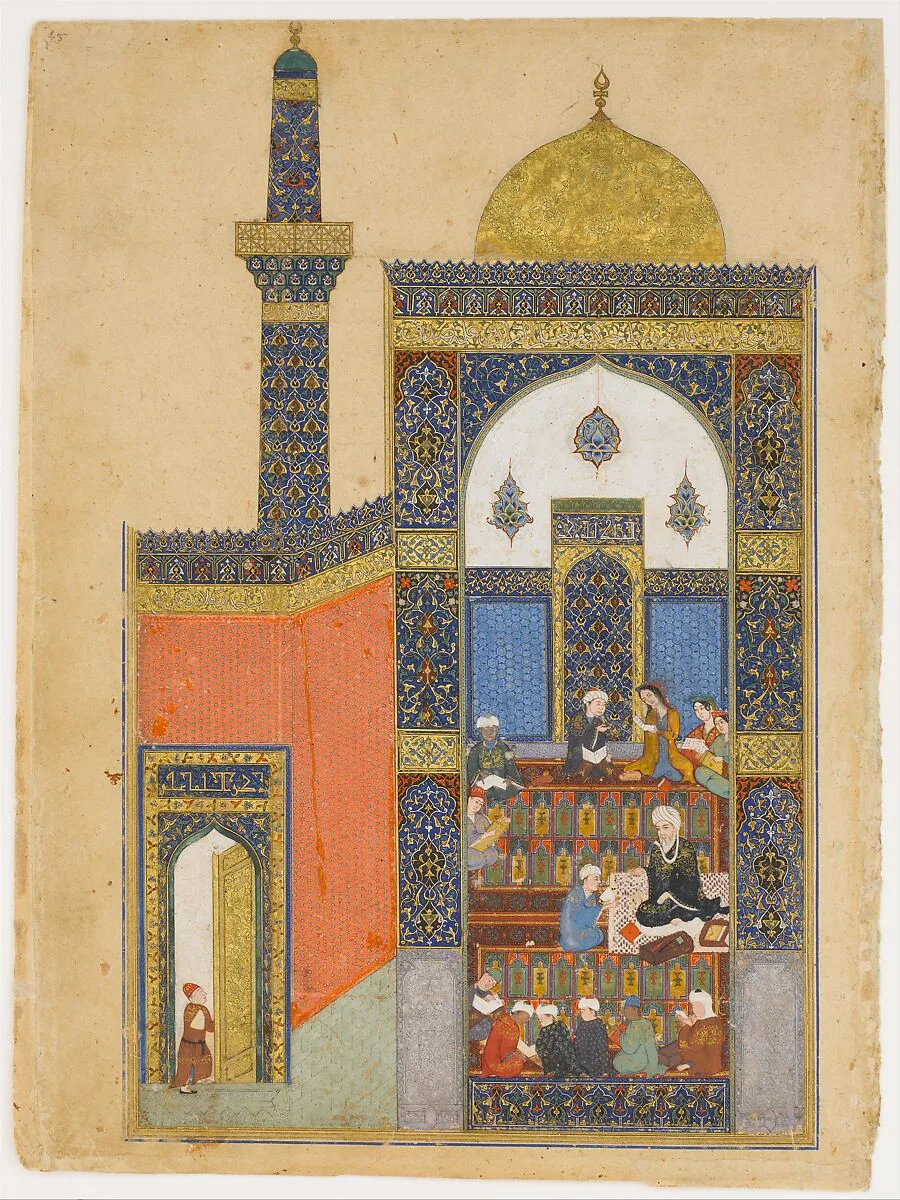
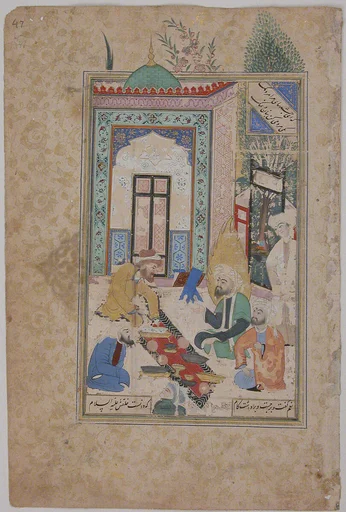
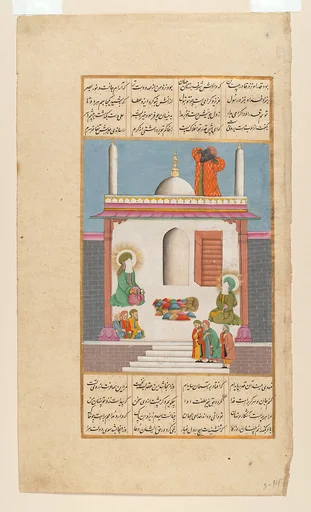
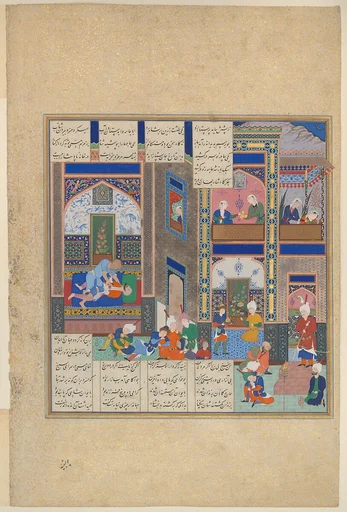
This splendid painting is from a manuscript of the frequently illustrated story of Laila and Majnun by the twelfth-century Persian poet Nizami. It was commissioned by the Timurid prince Baisunghur of Herat, one of the greatest bibliophiles in all Islamic history, who gathered at his court the very best painters from Baghdad, Tabriz, Shiraz, and Samarkand to illustrate his matchless collection of books. This illustration depicts Qais, the future "mad one" (Majnun) for love, and Laila, his beloved, who meet for the first time as children at a mosque school. The painting underscores the closely related aesthetics of figural painting and abstract calligraphy, architectural tiling and royal carpet weaving in traditional Islamic civilization, united here in a visual symphony of flat but dramatically colored patterns. The scene depicts the child lovers framed in the mosque's prayer niche in order to emphasize their mystical status. These visual conventions of Persian art, usually laden, as here, with Neoplatonic symbolism, crystallized in the royal cities of Tabriz and then Herat at the turn of the fourteenth and fifteenth centuries and endured for another 250 years in the court paintings of Iran, Turkey, and India.
- Artist
- Ja'far Baisunghuri|Nizami
- Date
- A.H. 835/ 1431–32 CE
- Medium
- Ink, opaque watercolor, and gold on paper
- Department
- Islamic Art
- Credit line
- Purchase, Lila Acheson Wallace Gift, 1994