Goa Stone and Gold Case
Unknown
late 17th–early 18th century · Container: gold; pierced, repoussé, with cast legs and finials Goa stone: compound of organic and inorganic materials · Islamic Art
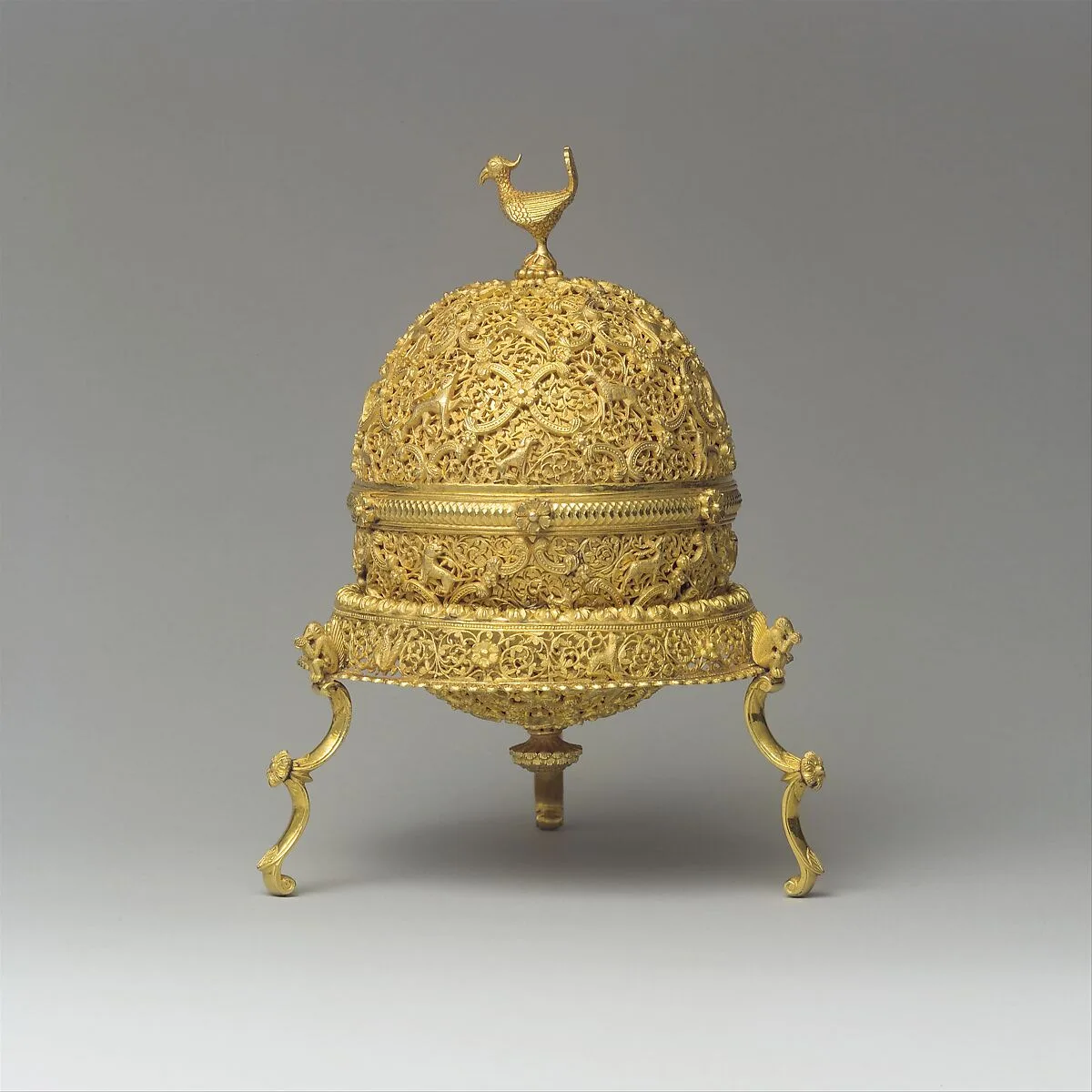
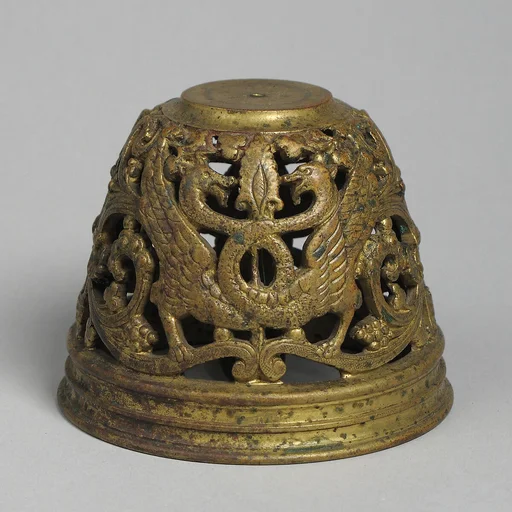
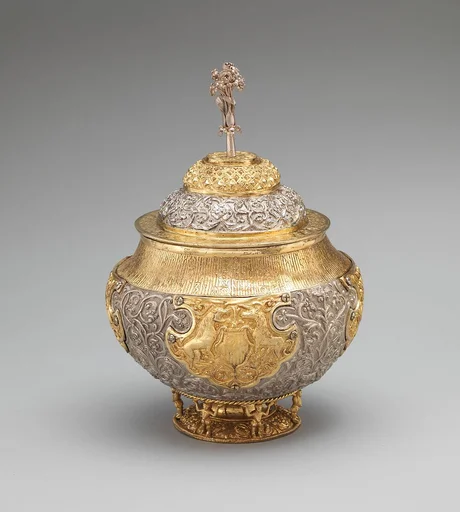
Goa stones, named for the place where they were manufactured by Jesuits in the late seventeenth century, were manmade versions of bezoars (gallstones from ruminants). Both types were used for their medicinal and talismanic powers. These treasured objects were encased in elaborate containers made of gold and silver and often exported to Europe. Surviving examples are recorded in European treasuries, including one made for the duke of Alba in the late sixteenth century (Kunsthistorisches Museum, Vienna). The stone was usually a compound of organic and inorganic materials, including bezoar, shell, amber, musk, resin, and crushed precious gems, which would be scraped and ingested with tea or water. The egg-shaped gold container enclosing this stone consists of hemispherical halves, each covered with a layer of pierced, chased, and chiseled gold foliate openwork. An arabesque surface pattern is overlaid with an ogival trellis containing a variety of beasts, some highly Europeanized, including unicorns and griffins. The source of these images is likely to have come to Goa through the Portuguese and may also reflect a particular European patron. (This example was brought to England in the eighteenth century by a British officer in the East India Company.)
- Artist
- Unknown
- Date
- late 17th–early 18th century
- Medium
- Container: gold; pierced, repoussé, with cast legs and finials Goa stone: compound of organic and inorganic materials
- Department
- Islamic Art
- Credit line
- Rogers Fund, 2004