Plait Ornament (Jadanagam)
Unknown
18th–19th century · Gold; inset with rock crystal, rubies, emeralds, and amethysts · Islamic Art
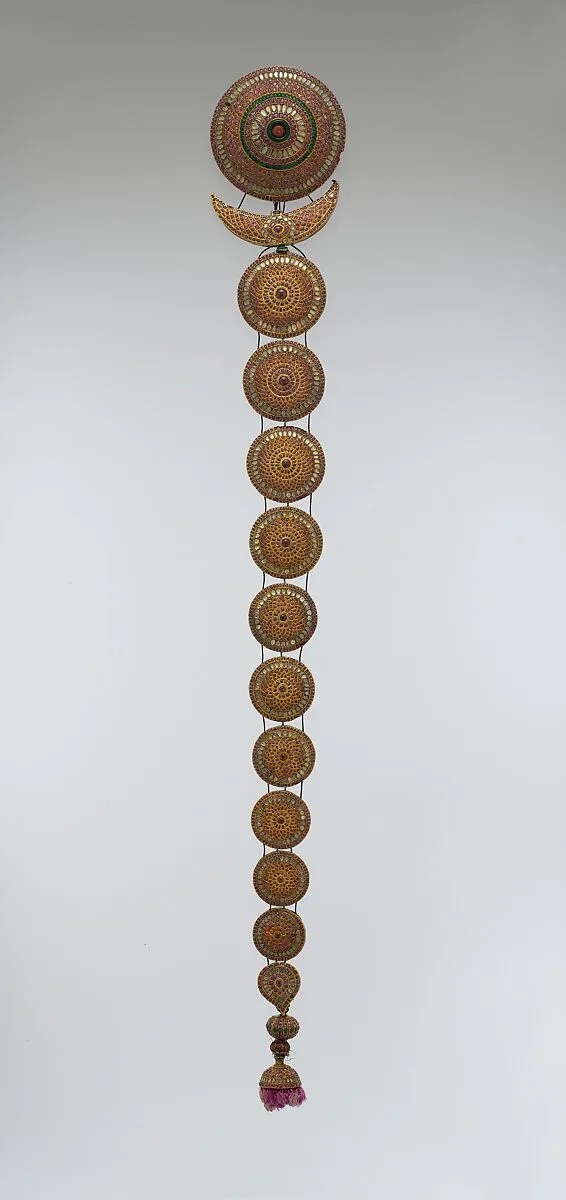
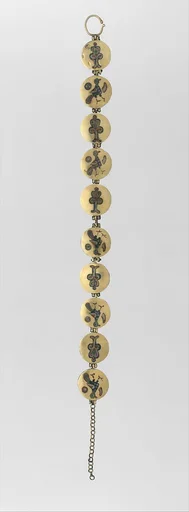
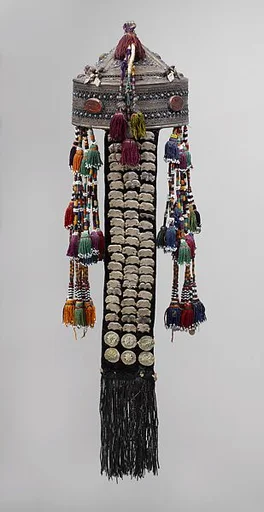
This type of plait ornament, typically worn by brides and dancers, is called a jadanagam (hair serpent) for the grouping of snakes that may once have been attached to its topmost disk. This disk and the crescent shape below represent the sun and the moon. Decorated in the kundan technique in which hundreds of rubies, emeralds, amethysts, and pieces of rock crystal were inset into malleable gold foil and made flush with the surface of the ornament, the entire object would have sparkled with the movement of its wearer. In Hindu tradition, a woman’s braid was associated with Triveni Sangam, the sacred confluence of three rivers — the Ganges, the Yamuna, and the mythic Saraswati.
- Artist
- Unknown
- Date
- 18th–19th century
- Medium
- Gold; inset with rock crystal, rubies, emeralds, and amethysts
- Department
- Islamic Art
- Credit line
- Rogers Fund, 1919