Ewer with Persian Inscriptions
Unknown
late 19th century · Steel; forged, chased, and gilded · Islamic Art
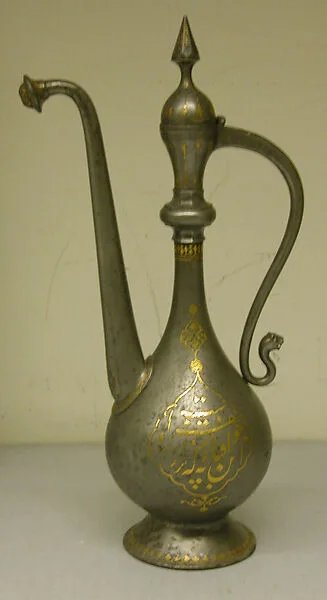
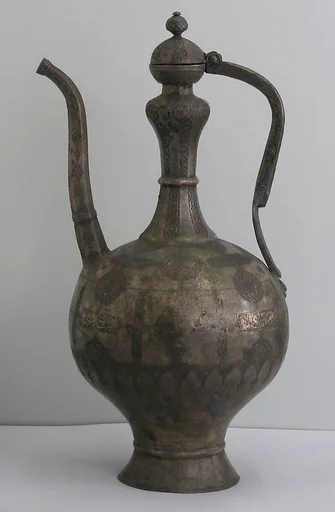
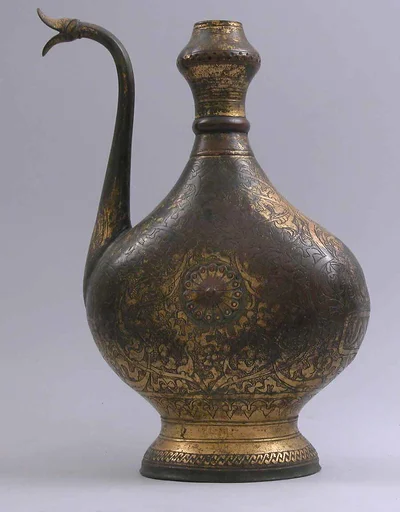
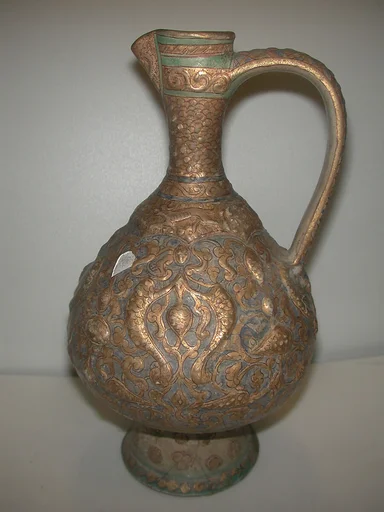
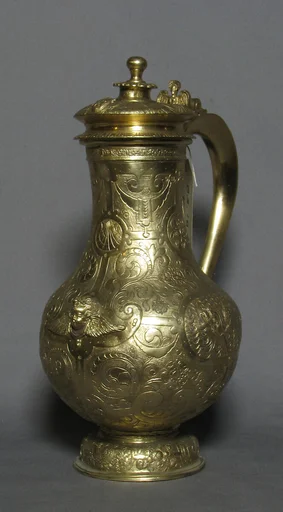
The form of this ewer goes back to the 16th century, as seen in illustrated manuscripts of the Shahnama of Shah Tahmasp, as well as in album folios from the early Safavid period. Artisans in Iran continued to produce this elegant and timeless shape for centuries. This form enjoyed popularity in the 18th and 19th centuries and was most likely intended to hold wine. Two gilded cartouches containing inscriptions in Persian decorate the two sides of the body. One indicates the name of the artist (Hajji `Abbas) and the other consists of praises for the beauty and fineness of this object.
- Artist
- Unknown
- Date
- late 19th century
- Medium
- Steel; forged, chased, and gilded
- Department
- Islamic Art
- Credit line
- Louis E. And Theresa S. Seley Purchase Fund for Islamic Art, 1982