Pair of Earrings
Unknown
11th century · Gold; filigree and granulation · Islamic Art
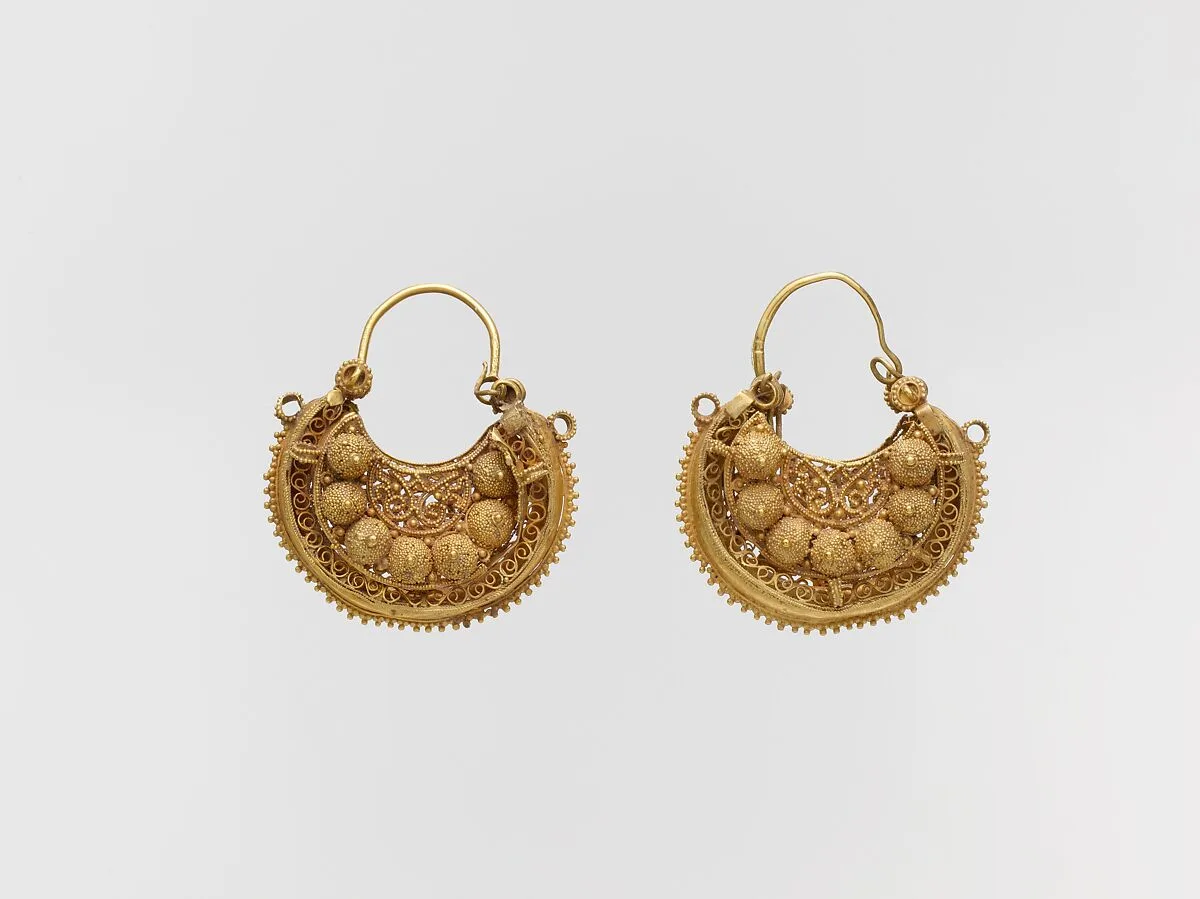
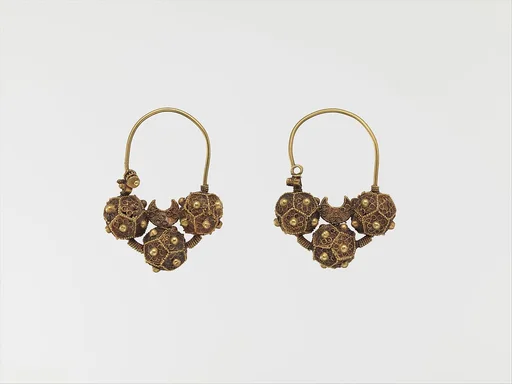
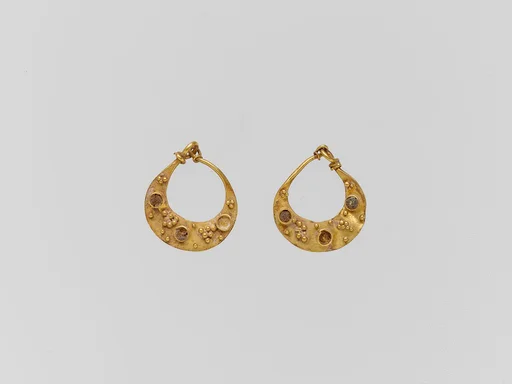
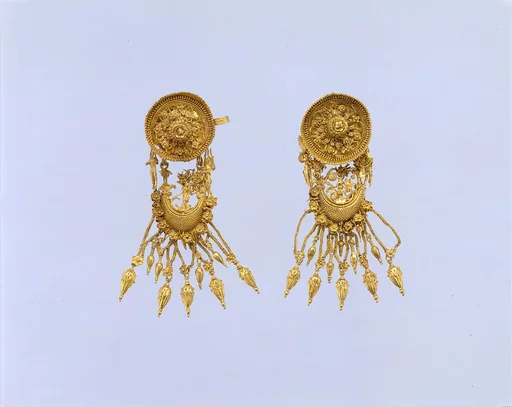
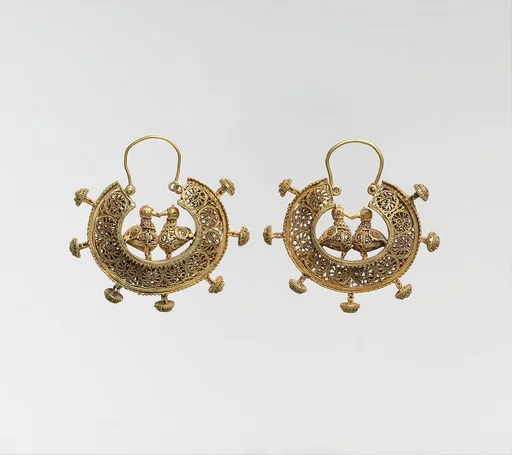
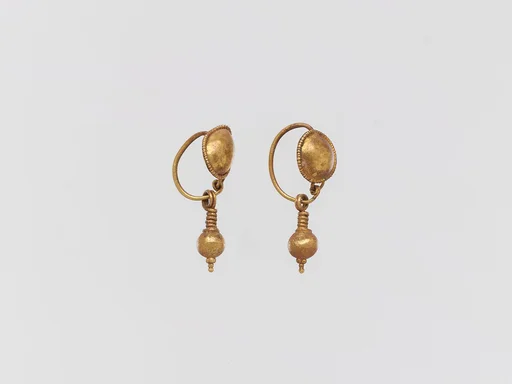
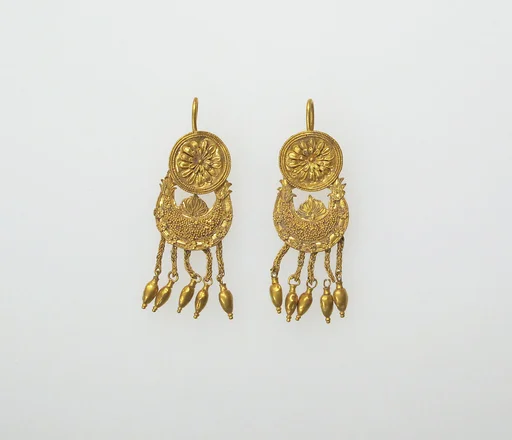
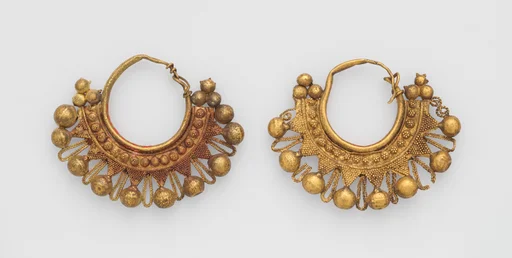
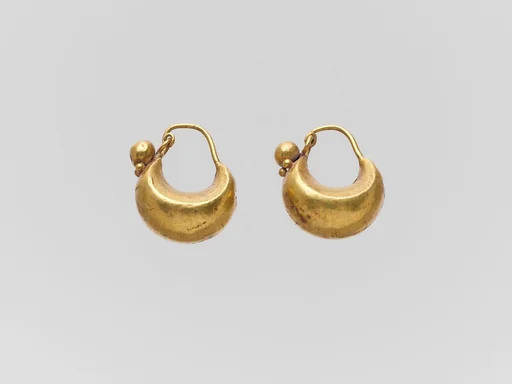
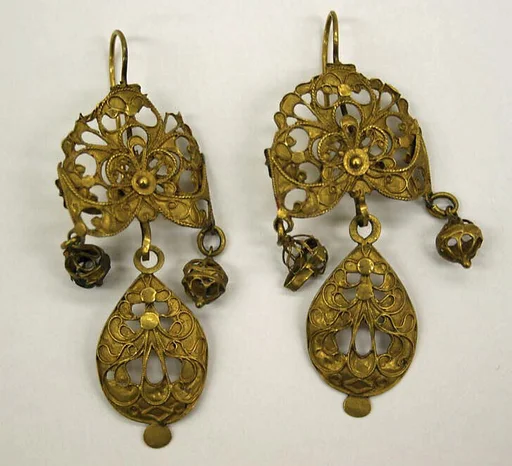
An elaborate example of filigree and granulation work from the Fatimid period in Egypt and Greater Syria (969–1171), this pair of earrings is illustrative both of the most characteristic goldsmith work and of one of the most popular shapes for jewelry of this period–the hilal, or crescent (moon). The basic vocabulary–a box construction, rings for stringing pearls or semiprecious stones, openwork S-curves, arabesque designs, and the crescent shape itself–seems to have dominated jewelry production in the Fatimid world into the second half of the eleventh century and perhaps later. The influence of this vogue was widespread. Goldsmiths working under the Mamluks (1250–1517) adapted this vocabulary, as did jewelers of Nasrid Spain (1232–1492), while echoes reverberated into Kievan Russia, Ottoman Turkey, Mughal India, and North Africa.
- Artist
- Unknown
- Date
- 11th century
- Medium
- Gold; filigree and granulation
- Department
- Islamic Art
- Credit line
- Purchase, Gifts in memory of Richard Ettinghausen and Harris Brisbane Dick Fund, 1979